23, July 2018
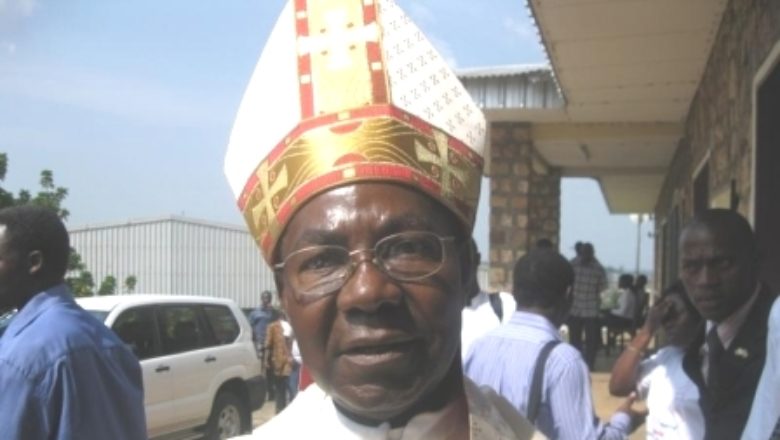
Bishop Francis Teke Lysinge – An Eschatological Sign of Holiness 0
Sermon by Fr. Maurice Ashley Agbaw-Ebai (AMDG)
Mulhiem an der Ruhr, Germany, July 22, 2018
Dear Brothers and Sisters in Christ,
Praise Be Our Lord Jesus Christ, Both Now and Forever, Amen!
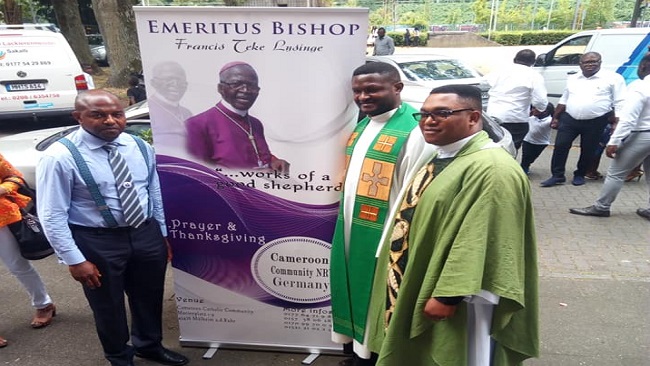
During this Liturgy on this Sixteenth Sunday of Ordinary Time, July 22, 2018, we are gathered in this beautiful Church here at Mulhiem an der Ruhr, Germany, for two reasons: Firstly, to worship God, Father, Son and Spirit, on this Day of the Lord, Dies Domini, as all good Catholics should. More specifically, and this is the second reason for our gathering here today, this time of worship together has the particular intention of praying for the Emeritus Bishop of Mamfe, Francis Teke Lysinge. We are praying for Bishop Lysinge today because he is, in a certain sense, the spiritual grandfather of this Cameroon Catholic Community here at Mulhiem, Germany. Thank you for being here. Thank you for your generosity in many ways.
Given my relationship with Bishop Lysinge, I thank God that I am able to be here in Mulheim, Germany, for this mass offered for Bishop Lysinge. I am also grateful to Fr. Constant Leke, your beloved pastor of this Cameroon Catholic Community, and my dear friend, for the privilege to both preside and preach at this Holy Mass. In the name of Fr. Constant Leke and the Cameroon Catholic Community here at Mulhiem, I offer a warm welcome to all of you here present, especially our non-Catholic friends that have responded to our invitation. Living in a social media age, I am conscious that even as I speak, this celebration is a “happening now” on many Facebook pages, WhatsApp accounts, Twitter, Instagram, et cetera. On this note, I offer warm greetings to all those the world over who might be live streaming this event on social media. May Jesus bless you with peace, health and joy, wherever you might be on God’s good planet.
Dear Brothers and Sisters, today’s liturgy of the word offers us the account of the return of the apostles from the evangelization mandate commissioned by Our Blessed Lord – Mk. 6:30-34. Last Sunday, Jesus had sent them out two by two, with authority over unclean spirits, to cast out demons, to preach repentance for the forgiveness of sins, and to heal the sick (Mk. 6:7-13). This Sunday, we get the feedback. The apostles are back, and apparently recorded great success. With the Lord, success in terms of fruitfulness is often the likely outcome, even when we feel that we are useless servants, doing no more than our duty (Lk. 17:10).
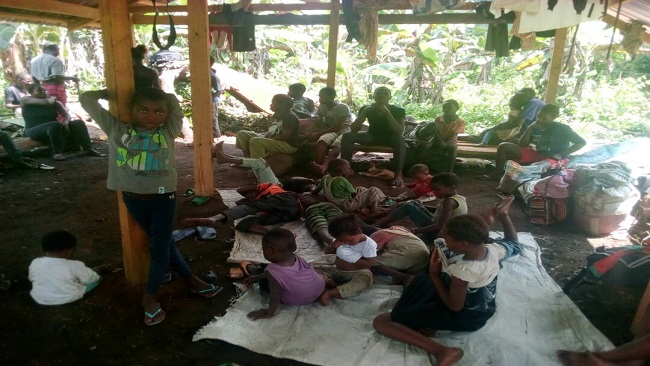
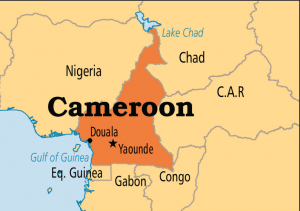
Dear Brothers and Sisters, the urgency of this mandate to bring men and women to Christ is reflective even in the post-evangelization reporting in the gospel text of today’s liturgy: “When he (Jesus) disembarked and saw the vast crowd, his heart was moved with pity for them, for they were like sheep without a shepherd; and he began to teach them many things.” How can we too not be moved, even today, when we see the brokenness of lives, almost littered all around us? Yes, even today, the Lord looks on us with pity, for he seeks our broken lives, our poor lives, marked often times, by the desire to do the good, to want to be better, yet, failing, again and again, falling from the mark, which is etymologically what sin is, that is, to miss the mark! We too, as responsible beings, miss the mark when we allow ourselves to be seduced by the triple concupiscence enlisted in 1John 2:16: the lust of the flesh, the lust of the eyes, and the pride of life. Even our beloved homeland has become a battle field, with people being massacred on a daily basis, while the so-called International Community, in words reminiscent of the Soldiers on Good Friday on that Sacred Hill of Calvary, are sitting and watching (Mathew 27:36)! The Soldiers on Calvary seem to be the Patron Saints of the International Community: they sit and watch, as lives are being lost on a daily basis in the new Calvary of Southern Cameroons.
Benedict XVI captured this drama of evil, pain and brokenness in the world, with admirable precision and heightened intensity, in his homily inaugurating his Petrine Ministry. Using the image of the Pallium, which is the piece of cloth worn by Metropolitan Archbishops, the Holy Father captured the existential drama of contemporary life with evocative and trenchant imagery. Permit me cite him:
“For the Fathers of the Church, the parable of the lost sheep, which the shepherd seeks in the desert, was an image of the mystery of Christ and the Church. The human race – every one of us – is the sheep lost in the desert which no longer knows the way. The Son of God will not let this happen; he cannot abandon humanity in so wretched a condition. He leaps to his feet and abandons the glory of heaven, in order to go in search of the sheep and pursue it, all the way to the Cross. He takes it upon his shoulders and carries our humanity; he carries us all – he is the good shepherd who lays down his life for the sheep. What the Pallium indicates first and foremost is that we are all carried by Christ. But at the same time, it invites us to carry one another. Hence the Pallium becomes a symbol of the shepherd’s mission, of which the Second Reading and the Gospel speak. The pastor must be inspired by Christ’s holy zeal: for him it is not a matter of indifference that so many people are living in the desert. And there are so many kinds of desert. There is the desert of poverty, the desert of hunger and thirst, the desert of abandonment, of loneliness, of destroyed love. There is the desert of God’s darkness, the emptiness of souls no longer aware of their dignity or the goal of human life. The external deserts in the world are growing, because the internal deserts have become so vast. Therefore, the earth’s treasures no longer serve to build God’s garden for all to live in, but they have been made to serve the powers of exploitation and destruction. The Church as a whole and all her Pastors, like Christ, must set out to lead people out of the desert, towards the place of life, towards friendship with the Son of God, towards the One who gives us life, and life in abundance” (Benedict XVI, April 24, 2005).
Dear Friends in Christ, it is clear that the Gospel text places the figure of the Shepherd, the Apostles, front and center, in the Lord’s mandate of bringing hope to the people. Pastores dabo vobis, iuxta cor meum, the Lord says to the Prophet Jeremiah (Jer. 3:15) – I will give you shepherds after my own heart! Given that we are gathered here this Sunday in a special way to pray for Francis Teke Lysinge, our beloved Bishop Emeritus of Mamfe, it is in place to say a few words about the calling of this good and holy bishop. But first, we must remind ourselves that in the light of the Gospel text of today’s liturgy, bishops as pastors, are the successors of these apostles that we read of in the gospel of this liturgy. That is how the Catholic tradition has understood it.
And this process of self-understanding, of ecclesial maturation, has unfolded in the Church’s long history. At the First Vatican Council (1869-1870), in the Dogmatic Constitution on the Church, Pastor Aeternus, the Council taught the infallibility of the Bishop of Rome. It taught that the Bishop of Rome as Supreme Pontiff, when he teaches ex cathedra, that is, from the chair, meaning in his capacity as Pope, Successor to the Apostle Peter, what he teaches, pertaining to faith and morals, is solemnly binding on the universal church and Catholics are expected to give an assent of mind and heart to such a proclamation. The outbreak of the Franco-Prussian War (1870-1871), interrupted the Council and prematurely ended it. That left Catholicism with an unbridled monarchical papacy, in which the Bishop of Rome was left hanging alone, as it where, above the Church.
With the Second Vatican Council (1962-1965), the Bishops gathered in Council, as Successors of the Apostles, sought to do an ecclesial balancing act of the unfinished business of the First Vatican Council. In the Dogmatic Constitution on the Church, Lumen Gentium, and in the Decree Concerning the Pastoral Office of Bishops in the Church, Christus Dominus, the Bishops taught that as Successors of the Apostles, Bishops were not mere emissaries or ambassadors of the Pope. Pertaining to their local churches, they are proper pastors who, certainly, together with the Pope, sub and cum Petro, constitute an apostolic college charged with the governance of the universal Church. In this way, Vatican II enfleshed the monarchical character of governance of the Petrine ministry with a collegial character of the Episcopate.
This is the body, the Episcopate, into which on April 21, 1999, Francis Teke Lysinge was called into, by the Grace of God and the Apostolic See. Born in Bokwango on December 28, 1938, to Albert Lysinge and Juliana Jofi Mbua, both long called to eternal rest, Francis Teke Lysinge is the second son in a family of four boys and three girls. His father was from Bokwango Village while his mother was from Buea Town. His father was a teacher in the Native Authority (NA) School of Muea and so eventually moved from Bokwango to Muea. His parents were Protestants, and so originally Bishop Lysinge was baptized in the Basel Mission Church Bimbia-Victoria where he started his Primary School in 1945 as Godwill Teke Lysinge.
As a young man, Godwill Teke Lysinge, as he was then known, had gone to Sasse College, the Premier Secondary School in the then West Cameroon, – which we say now with clear nostalgia, – to pursue the dreams of a brighter future the aspiration of every young person. He studied in Sasse from 1953-1958. Bishop Lysinge did not go to Sasse to become a priest! It was in 1955, while in Sasse, that the young Lysinge felt that the Lord, whom he had always loved and knew, might have other plans for him. He repeatedly told me that priesthood was never in his mind when he entered Sasse. He will later on say YES to the Lord, proceeding to Bigard Memorial Seminary, Enugu, Nigeria, for Major Seminary Studies in Philosophy and Theology. On April 17th 1966, together with his lifelong friend, Christian Cardinal Tumi, Emeritus Archbishop of Douala and others, Godwill Teke Lysinge who, upon “converting” to Catholicism had taken the name Francis after St. Francis Xavier, said ad sum to the Lord’s call, and was ordained a priest of God, secundum ordine Melchizedek. His service as Spiritual Director in St. Thomas Aquinas’ Major Seminary is legendary.
Now is not the time to offer an assessment of the rich episcopacy of Francis Teke Lysinge. I will offer two indications that are pointers to what I consider to be the most enduring legacy of our beloved Francis Teke Lysinge. And all are derived from the choices he made from the Word of God, first, at his ordination as priest, and secondly, as bishop.
At his ordination as a priest, the young Fr. Francis Lysinge chose as his ordination motto, the self-effacing words of St. Paul, Apostle to the Gentiles: I am what I am, by the grace of God (1 Corinthians 15:10). Anyone who has ever encountered this Priest of God knows that it is never about Francis Lysinge. Meeting Lysinge, it is always about God. His instinctual temperament could best be described with the words of John the Baptist vis-à-vis Our Lord: He must increase, I must decrease (Jn. 3:30).
If the date of one’s birth can have a significance for one’s life, then the birth of Francis Teke Lysinge on December 28, 1938, could very well be read as prophetically symbolic. December 28 is still within the Octave of Christmas, which is a time when the Church recalls in her liturgical and spiritual life, that at the fullness of time, God sent his Son into the world (Gal. 4:4). At the heart of Christmas is the basic, essential truth: God has entered the world. God is close to us. God is near us. We are not alone. I am not alone.
I am what I am, by the grace of God! Isn’t this essentially what the Christmas message causes to happen? Because God has entered history, I am! I am! I have being. I am not nothingness. I am someone. I have a name. God knows my name. Even if the powerful of the world do not know me, do not acknowledge me, do not recognize me, I am, by God’s grace. In this priestly ordination motto of the young Lysinge, one encounters a deeper theological metaphysics. It is an affirmation that my life is grounded on the firmer ground of the Lord: “The rain came down, the streams rose, and the winds blew and beat against that house; yet it did not fall, because it had its foundation on the rock” (Matthew 7:25).
On April 21,1999, Francis Teke Lysinge who all along had always seen himself as being, thanks to grace of God, -I am what I am by the grace of God,- entered into a new consciousness of what it means to live by the grace of God. For his episcopal motto, he chose, Fiat Voluntas Tua (Matthew 6:10). This is taken from the prayer of Jesus to the Father. The Our Father mirrors the relationship of intimacy between the Father and the Son. With this choice, Francis Teke Lysinge, in his unassuming way, manifested the core of his rich spiritual life: God is the center. My responsibility is to follow God.
But what does it mean to follow God? Essentially, and Lysinge’s life is a testimony to this, it is not a calculatedness in which I fashion God into my own image and likeness. To follow God is to place my life in the hands of God, knowing that it will ultimately end well, for even if I walk through the valley of the shadow of death, I fear no evil, for your shepherd rod and staff protects me (Ps. 23:4).
I am what I am by the grace of God! Thy Will Be Done! Dear Brothers and Sisters, in these two texts from Scripture, and the consistent and admirable way in which Francis Teke Lysinge lived them, we can be sure, that in Francis Lysinge, the Diocese of Mamfe and the Church in Africa, is offering the universal Church a sign of God’s presence, a mark of lowliness and humility, a presence of translucent holiness. Francis Teke Lysinge is a holy man. Francis Teke Lysinge is a holy priest. Francis Teke Lysinge is a holy bishop of the One, Holy, Catholic, and Apostolic Church. It wouldn’t be presumptuous and out of place to hope that someday, God willing, the pilgrim Church will call on him from the triumphant church for help on the way, as the Church here, in the words of legendary Bishop of Hippo, Augustine, sails through the vicissitudes of the world, amidst the persecutions of the world and the consolations of God.
On January 25, 2014, our beloved Bishop Francis Lysinge handed over the See of Mamfe to his younger spiritual son, Most Rev. Andrew NKEA, current Bishop of Mamfe. Two years ago, Bishop Andrew Nkea sent Bishop Lysinge to Rome for medical attention, regarding his eyes. I was anxious that he Lysinge might not be able to “see” me again in this life, given the deteriorating condition of his eyes. From Regensburg, Germany, I quickly flew to Rome, to spend time with Bishop Lysinge. I can never forget that moment, in which I entered his room at the Mater Ecclesiae house in Rome. It was for me great joy that he could see me. It was a great joy for both of us, for in a unique way, which perhaps none of you sitting here in this Church might fully comprehend,in Francis Teke Lysinge, God gave me a fatherly love that I might never have had. I was anxious for him to see that a book I was working on, On the Question of God in the Theology of Joseph Ratzinger, is being dedicated to him. I showed him the manuscript and asked him to read the dedication page. When he read it and read his name, he smiled. Tears welled up in my eyes. He then said to me that though he is retired, he has not retired from prayers. And that he prays for me daily. He said the only work he does now for Mamfe is to pray for his successor and for Mamfe diocese, that the diocese will continue to grow.
We can be sure, that now that his sight is failing him, Francis Teke Lysinge is seeing much more now with the heart, like Blessed John Henry Newman – Cor ad cor loquitur – Heart speaks to heart. The one who throughout his life has spent countless hours before the Lord in the Blessed Sacrament, gazing at the Lord, looking at him, listening to him, falling in love with the Lord, speaking with the Lord, now has those biological eyes that give him physical sight, almost taken away. Bishop Lysinge, like the saints before him, has entered into his own via Crucis. And like most of the saints, has accepted the crosses that come with aging:
“O Lord, it is you who are my portion and cup; it is you yourself who are my prize.
The lot marked out for me is my delight: welcome indeed the heritage that falls to me!
I will bless the Lord who gives me counsel, who even at night directs my heart.
I keep the Lord ever in my sight:
since he is at my right hand, I shall stand firm.
And so, my heart rejoices, my soul is glad;
even my body shall rest in safety.
For you will not leave my soul among the dead, nor let your beloved know decay.
You will show me the path of life, the fullness of joy in your presence, at your right-hand happiness forever” (Ps 16:5-11).
Thank you, God, for the gift of your priest, holy Bishop Francis Teke Lysinge. May your grace sustain him during this Nunc Dimittis period of his life. And may his prayers for the world continue to keep the window of the world open to the life-giving breath of God, saving us from a suffocating despairing nihilism! Amen.

 Father Sob and Father Constant
 Father Sob and Father Constant(Douala airport)














29, July 2018
Ghanaian Pastor Killed In Southern Cameroons: President Nana Akufo-Addo admin to help return body 0
The Government of Ghana has promised to help return the body of the late Ghanaian missionary who was gruesomely killed in Cameroon .
This follows complaints by the family of the 28-year old missionary to the effect that the government had ignored their calls for help.
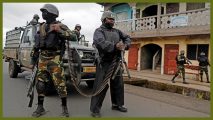
The deceased, Apostle Isaac Attoh, who is survived by a young widow and a two-month old baby boy was shot dead in the troubled town of Batibo in Cameroon.
The deceased was dressed with his clerical when he was killed.
Observers have condemned the death of the pastor, but the church in Cameroon is yet to make an official intervention.
Unconfirmed reports say Attoh was killed alongside two other Ghanaians who are yet to be identified.
Efforts by some stranded Ghanaian pastors and friends in Cameroon to retrieve the body of the deceased had proven futile, as the military was unwilling to release the body to anyone.
The late Isaac Attoh, the third of four siblings is survived by his wife and a 2-month-old baby boy.
His family had earlier urged the Ghanaian government and the International community to intervene and get his remains ferried to Ghana for burial.
It is unclear why the pastor will be shot, but there is currently a fast-escalating chaos in Cameroon after some activists began peaceful protests to request that English language be used in the courtrooms and public schools of the country’s two anglophone regions including Bamenda.
Dozens of people have so far died, with hundreds imprisoned, and thousands escaping across the border to Nigeria as a result of the situation.
If the situation is not defused through dialogue, the entire country could be destabilised ahead of elections in the autumn, according to the International Crisis Group.
Source: Modern Ghana