11, June 2018
The Holy Father’s official itinerary for Irish visit in August revealed 0
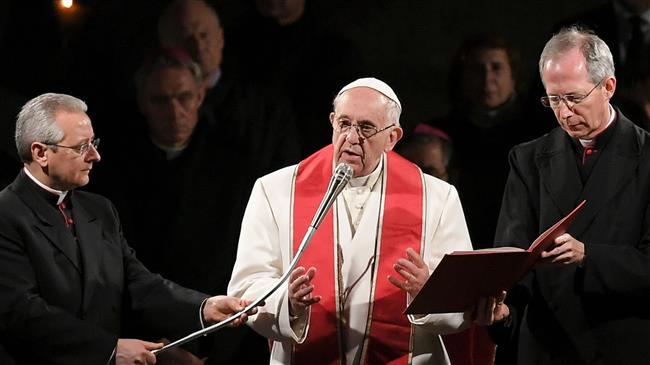
Pope Francis’ official itinerary for his visit here in August has been revealed.
Among visits on his agenda will be with President Higgins at the Aras, the Capuchin Day Centre and Knock.
He will be in Ireland for just over 36 hours.
His full agenda is:
Saturday 25 August 2018
08:15
Departure by plane from Rome/Fiumicino for Dublin

10:30
Arrival at Dublin International Airport
OFFICIAL WELCOME
10:45
Transfer to Áras an Uachtaráin

11:15
Arrival at the Presidential Residence
WELCOME CEREMONY in front of the main entrance of the Residence
11:30
COURTESY VISIT TO THE PRESIDENT in the Presidential Residence
12:00
Transfer to Dublin Castle

12:10
Arrival at Dublin Castle
MEETING WITH AUTHORITIES, CIVIL SOCIETY AND DIPLOMATIC CORPS in Dublin Castle
Speech of the Holy Father
15:30
Arrival at St Mary’s Pro-Cathedral
VISIT to the CATHEDRAL
16:15
Transfer to the Day Centre of the Capuchin Fathers
16:30
PRIVATE VISIT to the DAY CENTRE FOR HOMELESS FAMILIES of the CAPUCHIN FATHERS
19:30

Arrival at Croke Park Stadium
19:45
FEAST OF FAMILIES in Croke Park Stadium
Speech of the Holy Father
Sunday 26 August 2018
08:40
Departure by plane for Knock
09:20
Arrival at the Airport in Knock
Immediate transfer to the Shrine

09:45
Arrival at Knock Shrine
VISIT to the CHAPEL of Knock Shrine
ANGELUS on the square in front of the Shrine
Angelus of the Holy Father
10:45
Transfer to the airport in Knock
11:10
Arrival at the airport in Knock
11:15
Departure by plane for Dublin
11:50
Arrival at Dublin International Airport
Lunch with the Papal Delegation
14:30
Arrival at Phoenix Park
15:00
HOLY MASS in Phoenix Park

Homily of the Holy Father
MEETING WITH THE BISHOPS in the Convent of the Dominican Sisters
Speech of the Holy Father
18:30
Arrival at Dublin International Airport
FAREWELL CEREMONY
18:45
Departure by plane for Roma/Ciampino
23:00
Arrival at the Airport of Roma/Ciampino
It will be the first visit of a Pope to Ireland since Pope John Paul II visited here in 1979.
Source:MSN.Com












24, June 2018
Ex-Vatican diplomat jailed for possessing child porn 0
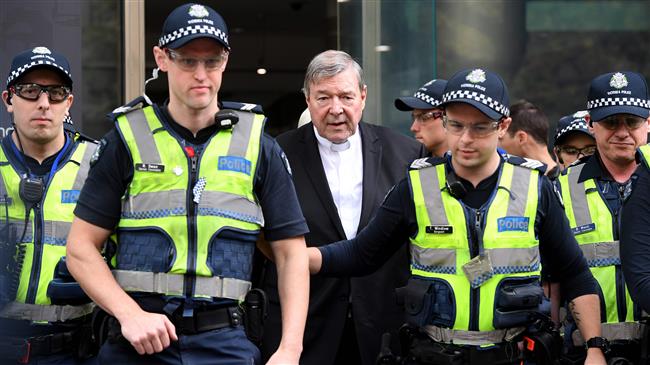
A former Vatican diplomat has been handed a five-year prison term for the possession of child pornography.
Carlo Alberto Capella received the sentence from a Vatican court on Saturday.
In addition to serving prison time in the small jail inside the Vatican police force headquarters, Capella is required to pay a fine of $5,800.
Capella’s trial lasted two days, and he admitted at the first hearing on Friday that he had developed a “morbid” desire while working at the Vatican Embassy in Washington DC in 2016.
The priest confessed that when he was in the United States as a diplomat, he had collected dozens of pornographic photos and videos on his mobile phone.
The US State Department notified the Vatican in August 2017 of a possible violation of laws relating to child pornography by a member of the diplomatic corps of the Holy See accredited to Washington and asked that Capella’s diplomatic immunity be lifted so the priest — who is an Italian — could face charges there.
However, the Vatican refused to do so and recalled Capella from the US that year.
Also, Canadian police had issued an arrest warrant for Capella on suspicion of possessing and distributing child pornography on the internet while visiting a church in the country.
This is the latest scandal to hit the Catholic Church, which has a notorious track record of child sexual abuse carried out by priests and subsequent cover-ups by church authorities.
Catholic Church sexual abuse victims include some as young as three years old, with the majority being between the ages of 11 and 14.
Pope Francis, who was appointed in 2013 with a mandate to overhaul the Vatican, has promised strong action in response to sexual abuse cases and cover-ups.