13, January 2025
Buea: Catholic Bishop wants nation to celebrate ‘good elections’ in a jubilee year 0
As Catholics look to celebrate jubilee year 2025 under the theme “pilgrims of hope,” a Catholic bishop in the Central African country has expressed the hope that the organization and the outcomes of the Presidential election that takes place later in the year will offer enough reason for Cameroonians to celebrate.
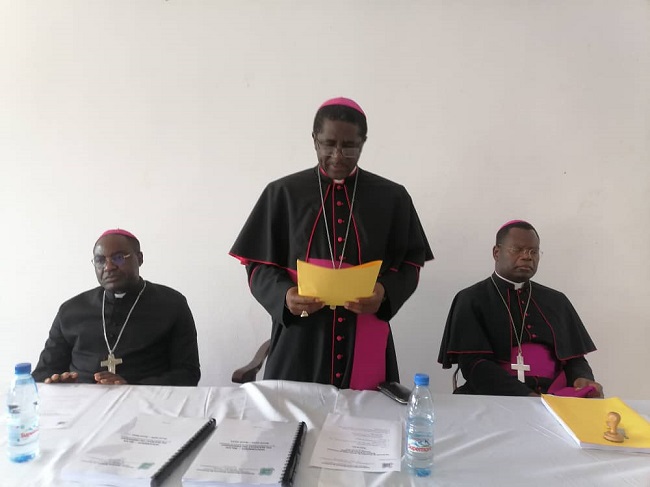
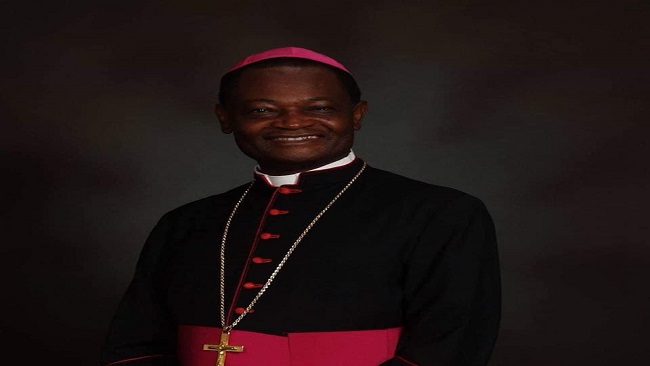
Speaking December 9 on the sidelines of the Annual Seminar of Catholic Bishops in Buea, the Bishop Emmanuel Dassi of Bafia Diocese in Cameroon’s Center region said he hoped that “all the people of Cameroon must be gathered as one body and jubilate this year.”
“It is very important that it is the same year of the elections. My wish for our country is that it should really be a year of jubilee, that all the people of Cameroon must be gathered as one body and jubilate this year. And for this, we must have good elections, good elections with good candidates,” he told Crux.
The bishop warned against candidates of opportunism whose only desire is to serve their narrow selfish desires.
“If you want to be a candidate, begin by praying, asking yourself if you are able to solve the problems of this country, if you have the health to solve the problems of this country, if you have the wisdom, if you are able to sacrifice yourself to solve the problems of this country, if you think that you are able to do it, okay, go ahead. But if you are not able to do it, please, please, please, please, I can tell you that the people of this country are suffering, and you must not be the reason for their sufferings,” Dassi said.
The bishop stopped short of following in the footsteps of Archbishop Samuel Kleda of Douala, Bishop Barthélemy Yaouda Hourgo of Yagoua in the Far North, and the Bishop of Ngaoundere, Emmanuel Abbo.
These bishops in recent weeks stirred controversy when they all said that President Paul Biya had become too old and too frail to continue ruling the country as President. They cited the country’s many problems: The high cost of living, the raging separatist crisis in the country’s two English=speaking regions as well as the Boko Haram crisis in the far north as some of the most visible failures of the Biya government.
Biya, 92, is the world’s oldest president, and having ruled the country for 42 of those years, the Bishops now argue it’s time for him to rest.
But the individual bishops aren’t yet voicing the position of the Bishops’ Conference.
Archbishop Andrew Nkea, the President of the Conference who might himself be seeking re-election in April, told Crux that he won’t give his personal opinion about the forth-coming presidential election “because my personal opinion will be taken as the position of the conference. And therefore, I like to talk about the position of the conference. And we are still in deliberation, so I cannot make any pronouncements about that.”
The archbishop, however, spoke, more generally about the concept of democracy and elections, suggesting that at a personal level, he would prefer what he termed “a benevolent dictatorship.”
“When I was growing up, when our local traditional rulers still had the powers that they had in those days, they were benevolent dictators … And they had such order and discipline in their villages,” he continued.
“They had such developmental projects going. They had all these tribal organizations and structures that helped to keep either discipline in the village, community work, and all those things. We can develop our own form of government, even at the national level, which we don’t necessarily need to take from the West,” Nkea said.
He also called on authorities to take a leaf from the Catholic Church’s approach to governance which is based on the idea of synodality – the idea of walking together on a shared path.
Pointing to the several projects realized by Bishop Michael Bibi of Buea in a span of just four years, Nkea said such achievements are based on the idea of a shared vision and shared responsibility, with Christians taking ownership of the projects. He also spoke at length about the achievements in his own Archdiocese of Bamenda where he took a year listening to the wishes and aspirations of the people.
Some of those aspirations had to do with transforming the Saint Joseph Metropolitan Cathedral into a modern edifice and turning Catholic schools to focus on technical education.
“We are getting close to finishing the Cathedral. I have not gotten a dime from outside. The people are funding it because they wanted it. So once you listen to the people and you discern together with them, it becomes a community exercise. Everybody is involved,” Nkea told Crux.
He said if governments around Africa could just begin to listen and discern with their people, in a spirit of synodality, many of the continent’s teething problems would be resolved.
“So if we help each other at the local level to listen to each other, it will force itself into the higher level. Authorities will listen to their subjects,” the archbishop said.
Source: Crux


13, January 2025
Buea: Catholic Bishops’ Annual Seminar Ends with Call for Urgent Action to Address National Crises, Promote Peace 0
Members of the National Episcopal Conference of Cameroon (NECC) have expressed concern about the deteriorating social, economic, and political conditions in the country, urging both government officials and citizens to embrace responsible governance, national unity, and ethical leadership as critical steps towards sustainable development and peace.
In a message addressed to the people of God in the Central African nation following their January 4-11 48th Annual Seminar in the Catholic Diocese of Buea, NECC members highlight the distress and suffering experienced by many Cameroonians.
“In recent times, the anxieties of the vast majority of Cameroonians have been transformed into cries of despair at the misery as they are living through and the degradation of our beautiful country, Cameroon. Our consciences as pastors and citizens cannot remain indifferent to these cries of distress,” Catholic Bishops in Cameroon say in their Saturday, January 11 message titled “Take Courage, Do not be Afraid.”
Addressing a Nation in Crisis
NECC members recall their 1990 pastoral letter, which called for an examination of conscience amid economic challenges, urging the state to prioritize the well-being of its people.
“In 1990, we addressed a pastoral letter to all our compatriots on the economic crisis in our country, in which we invited each of our fellow citizens to examine his or her conscience in the face of the two serious economic crises that our country was going through at the time. It was our hope that such an examination of conscience would lead to rapid and radical solutions,” the Bishops recall.
They continue, “We then appeal to the public authorities to ensure that the people in their distress would always and everywhere feel the support of the state. They should ensure that the interests of the nation and the well-being of our people were given priority in their actions. We also call on all Cameroonians to change their lives, to convert their hearts, the Cameroonian people in general and Christians in particular, to know that: We are not just victims of the crisis; we are also its causes and agents.”
Despite decades of appeals, they lament that the nation remains trapped in “economic and social stagnation,” with a future that remains uncertain.
“Unfortunately, 35 years after the alarm bells rang concerning the economic crisis and 65 years after our country gained independence, it must be said that we are still living in economic and social stagnation with an uncertain future,” NECC members lament.
Tax Burden
In their January 11 message, Catholic Bishops also decried the tax burden on citizens.
“One of the causes of Cameroon’s anguish is undoubtedly the tax burden, which increases year in, year out, to the detriment of the most vulnerable populations. It is seen as the ultimate means of suffocating those Cameroonians whose purchasing power is so low,” NECC members lament.
They add, “The proof of this is in the failure to apply Article 66 of our fundamental law and its implementing text, that is, Law No. 003-2006 of 25 April 2006, which requires all Cameroonians who assume important responsibilities in the service of the nation to declare their assets.”
“We wonder whether a country can only be built on and through taxation,” the Catholic Church leaders pose.
They add, “It is well known that Cameroon constitutes a real scandal of blessings because of the work of its forests and waters, its soil, its subsoil, and so forth and so on. On the other hand, we are witnessing the organized plundering of our economic heritage. We are thinking in particular of the sell-off and alienation of mining and agricultural concessions, which are being carried out through agreements signed here and there in a highly questionable manner.”
Corruption and Mismanagement
In their message, NECC members decry corruption as a “persistent cancer” undermining Cameroon’s progress.
Making reference to President Paul Biya’s recent end-of-year address the Catholic Bishops say, “The Head of State acknowledges that the malaise of Cameroonians also stems from bad governance and therefore poor management of public affairs. He cited, for example, the case of roads and urban infrastructure.”
NECC emphasize that corruption slows development, perpetuates poverty, and erodes trust in institutions.
“Each of us seems obliged to corrupt or be corrupted. It’s as if we are forced to live with corruption and accept it as part of our daily existence, reinforcing it,” they lament.
Infrastructure and Governance Failures
NECC members fault the government’s handling of infrastructure, highlighting inadequate road development and urban planning despite substantial budget allocations.
“How can we explain that the year 2024 ended with only 446 kilometers of asphalted roads and 228 kilometers of rehabilitated roads?” they pose.
The Catholic Bishops add, “How can we explain the fact that 65 years after independence, our development cannot guarantee basic human rights, such as the right to food, the right to education, the right to quality health care, the right to justice, in short, the right to life?”
“Cameroonians feel a real despondency because of the lack that is on the rise in our country. Many of our fellow citizens are living in dramatically precarious conditions and in deplorable, undignified conditions. Unemployment among young people seems to have no end in sight, even among graduates. Hence, the mass exodus from the country in search of greener pastures,” NECC members further lament.
Call for National Renewal and Dialogue in Crisis Regions
Amid ongoing violence in the Northwest and Northwest regions, the Catholic Bishops advocate for genuine dialogue and reconciliation.
“The crisis in the northwest and southwest regions, as well as the unrest in the far north, is certainly being contained, but it still remains and continues to cause the loss of so many lives. In the northwest region in particular, where reconstruction had begun, the violence continues with guerrilla groups wreaking havoc, sometimes even routing overwhelming military forces,” NECC members ay.
They pose, “The violence in the Southwest and Northwest regions has been going on for seven years now. Could it be that those who wage the war are getting scandalously rich and do not want the war drawn to an end?”
“Is it not time for the political class to sit down in humility and engage in calm dialogue, mindful of its responsibility to lead our people, our country, towards happiness, which requires justice, forgiveness, and reconciliation?” the Catholic Bishops say, noting that “true peace does not come from graveyards but from reconciliation.”
Recommendations for a Path Forward
In their message, NECC members outlines concrete steps for rebuilding Cameroon, calling on the state to “Promote transparent governance and responsible public service management, foster job creation, particularly for youth, combat corruption and recover embezzled funds, guarantee basic human rights, including access to education, healthcare, and justice, uphold meritocracy in professional exams and appointments, and invest in sustainable infrastructure and environmental stewardship.”
They also urge citizens to exercise their fundamental rights “responsibly”, emphasizing freedom of expression paired with “respect for others.”
NECC members also call on the media to “uphold truth and resist pressures that compromise ethical journalism.”
Hope Amid Challenges
Despite the grim assessment, NECC members urge Cameroonians not to be discouraged.
“We must not be discouraged by our country’s current dramatic situation. God is with us. And if God is with us, who and what can be against us?” they say.
The Catholic Bishops further urged the people of God to “trust in a happier, more prosperous future for our country based on adequate social, economic, and political structures.”
To achieve this, they appeal to “our individual sense of responsibility. Cameroon was betrothed to us by our forefathers, so we must make it prosperous as we sing in our national anthem. This is our collective duty. Let us resolutely accept to convert ourselves and above all, our mentalities and God will do the rest.”
“May God through the intercession of the Blessed Virgin Mary, Queen of Peace and Patroness of our country, watch over every citizen and grant us all the gift of true brotherhood and love for our common good,” NECC members implore.
Culled from aciafrica