
13, February 2020
Pope decides against ordaining married priests in the Amazon 0
Pope Francis declined Wednesday to approve the ordination of married men to address a shortage of priests in the Amazon, sidestepping a fraught issue that has dominated debate in the Catholic Church and even involved retired Pope Benedict XVI.
Francis, in an eagerly awaited document, did not refer to the recommendations by Amazonian bishops to consider the ordination of married men or women deacons. Rather, the pope urged bishops to pray for more priestly vocations and to send missionaries to a region where faithful Catholics in remote areas can go months or even years without Mass.
The papal dodge disappointed progressives, who had hoped he would at the very least put both questions to further study. It outraged liberal Catholic women’s groups. And it relieved conservatives who have used the debate over priestly celibacy to heighten opposition to the pope, whose strongest conservative critics have accused of heresy.
Francis’ document, “Beloved Amazon,” is instead a love letter to the Amazonian rain forest and its indigenous peoples, penned by history’s first Latin American pope. Francis has long been concerned about the violent exploitation of the Amazon’s land, its crucial importance to the global ecosystem and the injustices committed against its peoples.

I dream of Christian communities capable of generous commitment, incarnate in the Amazon region, and giving the Church new faces with Amazonian features.
Quoting poetry as frequently as past papal teachings, Francis addressed the document to all peoples of the world “to help awaken their affection and concern for that land which is also ours and to invite them to value it and acknowledge it as a sacred mystery.”
“Beloved Amazon” is in many ways a synthesized and focused version of Francis’ 2015 landmark environmental encyclical, “Praised Be,” in which he blasted wealthy countries and multinational corporations for destroying the world’s natural resources and impoverishing the poor for their own profit.
Francis said he has four dreams for the Amazon: that the rights of the poor are respected, that their cultural riches are celebrated, that the Amazon’s natural beauty and life are preserved, and that its Christian communities show Amazonian features.
Francis had convened bishops from the Amazon’s nine countries for a three-week meeting in October to debate the ways the church can help preserve the delicate ecosystem from global warming and better minister to the region’s people, many of whom live in isolated communities or in poverty in cities.
The Argentine Jesuit has long been sensitive to the plight of the Amazon, where Protestant and Pentecostal churches are wooing away Catholic souls in the absence of vibrant Catholic communities where the Eucharist can be regularly celebrated.
In their final document at the end of the October synod, the majority of bishops called for the establishment of criteria so that “respected” married men in their communities who have already served as permanent deacons be ordained as priests.
In addition, the bishops called for the Vatican to reopen a study commission on ordaining women as deacons, a type of ministry in the church that allows for preaching, celebrating weddings and baptisms, but not consecrating the Eucharist. Francis had created such a commission in 2016 at the insistence of religious sisters who want more say and roles in church governance and ministry, but the group ended its work without reaching consensus.
Francis didn’t mention either proposal in “Beloved Amazon” and didn’t cite the synod’s final document in his text or in a single footnote. But he did say in his introduction that he wanted to “officially present” the synod’s work and urged the faithful to read it in full, suggesting that he at least valued the input.
Francis did echo many of the synod’s recommendations, calling for greater lay participation in the life of the church and saying the training of priests in the Amazon must be overhauled so they are more able to minister to indigenous peoples. He said “every effort should be made” to give the faithful access to the Eucharist.
“This urgent need leads me to urge all bishops, especially those in Latin America, not only to promote prayer for priestly vocations, but also to be more generous in encouraging those who display a missionary vocation to opt for the Amazon region,” he wrote.
Francis dismissed suggestions that ordaining women to any ministry would serve them or the church. While agreeing that women should have greater decision-making and governance roles, Francis argued that they must find “other forms of service and charisms that are proper to women.”
Groups that advocate for women’s ordination and giving women greater roles in the Catholic Church blasted the document. Francis justified his refusal to consider ordained ministry for women as sparing them the risk of being “clericalized,” or placed on a pedestal.
“This is a dereliction of his duty as a leader with the power to make positive change and challenge discrimination,” said Miriam Duignan of the Wijngaards Institute for Catholic Research, a British-based progressive Catholic think tank.
Kate McElwee, executive director of Women’s Ordination Conference, said the document betrayed women in the Amazon and elsewhere who perform the lion’s share of the church’s work, pass the faith from generation to generation, and yet enjoy no official recognition or authority.
“Recognizing women’s work with diaconal ordination would be the first, most basic step towards righting the wrong of institutional sexism that hobbles our church as it attempts to respond to the moral crises of our time,” McElwee said in a statement.
The Catholic Church retains the priesthood for men, arguing that Christ and his apostles were male. While Eastern rite branches have married priests, and Anglican and Protestant priest converts can be married, the Roman rite church has had a tradition of priestly celibacy since the 11th century, imposed in part for financial reasons to ensure that priests’ assets pass to the church, not to heirs.
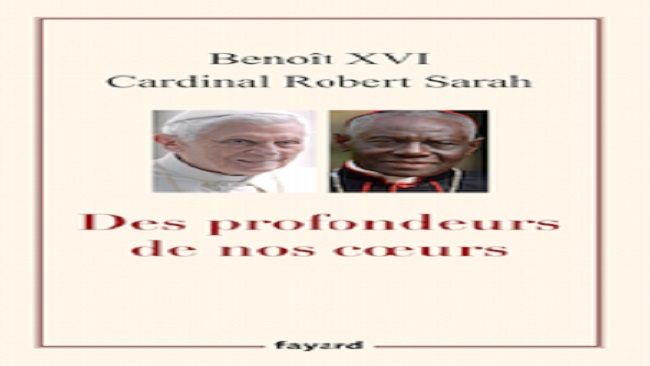
In the weeks leading up to the document’s release, the question of a celibate priesthood made headlines after the publication of a book penned by the retired pope, Benedict, and a conservative Vatican official, Cardinal Robert Sarah, reaffirmed the “necessity” of a celibate priesthood.
Benedict’s participation in the book sparked controversy, since it appeared the retired pope was trying to influence the thinking of the current one, despite his promises to remain “hidden from the world” when he resigned seven years ago.
Vatican spokesman Matteo Bruni noted that Francis finished the document in December, before the book came out, making clear the pope wasn’t swayed by Benedict’s intervention.
Francis avoided the issue altogether, dedicating instead the entire first half of the document to the “injustice and crime” committed against the Amazonian peoples and their environment by local governments, foreign corporate interests, and illegal mining and extraction industries.
“We cannot allow globalization to become a new version of colonialism,” he wrote.
He said the church in the Amazon must have social justice at the forefront of its spirituality, saying ministry that focuses excessively on discipline and rules will turn people away when in fact they need “understanding, comfort and acceptance.”
The traditionalist blog Rorate Caeli, which has been highly critical of Francis, said that by closing the door to a married priesthood and female deacons, the document was “the best possible document we could have hoped for in the current pontificate and in the current age.”
Clare Dixon, Latin America chief for the British Catholic aid agency CAFOD, focused on the environmental good it might do in the global debate about how to fight climate change.
“But Francis is also imploring us to listen to the wisdom of the people of the Amazon, insisting that we learn from the way they live with the environment rather than in competition with it,” she said.
Francis called for the church to incorporate indigenous traditions and cultures into its ministry, including song and dance, myth and festivals, and urged patience when confronted with apparently pagan practices and symbols.
It was a reference to the controversy that punctuated the synod over the appearance in the Vatican of wooden statues of a pregnant woman that critics said were pagan idols. At one point, a conservative activist stole the statues from a Vatican-area church and threw them in the Tiber River in a videotaped stunt that galvanized traditionalist opposition to Francis and the synod itself.
(AP)













1, March 2020
Pope Francis cancels planned retreat due to ‘cold’ 0
Pope Francis said Sunday he would not be taking part in a planned six-day spiritual retreat south of Rome after coming down with a “cold”.
The 83-year-old pontiff suffered two coughing spells that forced him to turn away from the crowd and cover his mouth with his fist on a windy and cloudy day on Saint Peter’s Square.
“Unfortunately, a cold forced me not to take part this year,” he said after reciting the traditional Angelus Prayer and addressing the unfolding migrant crisis on Turkey’s border with Greece.
The annual retreat will still start Sunday but only include members of the Roman Curia administration team of the Holy See.
The pope will be staying home while the rest of Italy battles Europe’s worst outbreak of the novel coronavirus that has spread from China to every continent except for Antarctica.
The number of cases in Italy surpassed 1,000 on Saturday and the toll continues to mount.
There have been 29 confirmed deaths and 105 people were receiving intensive care treatment in hospital — all of them in three adjacent northern regions near Milan.
The Vatican quickly shot down speculation that the pope himself had come down with COVID-19.
“There is no evidence to suggest a diagnosis of anything other than a slight ailment,” a Vatican spokesman told AFP Sunday.
The pope himself looked relatively strong on Sunday despite the coughing fits.
He smiled a few times and addressed a range of theological issues before turning his attention to the plight of thousands of migrants from Turkey who have been blocked at the rugged frontier with Greece.
“I am a little saddened by the news coming from many displaced people, so many men, women and children chased because of war,” Francis said.
The pontiff asked the faithful to share a prayer for “so many migrants who seek refuge in the world — and help”.
– Italy shuts down –
Concerns about the pope’s health have been mounting for days in a country where mass closures of public institutions and businesses due to the coronavirus are affecting the lives of millions.
He first looked like he might be sick on Wednesday and lightened his workload for the rest of the week.
The Vatican used the “mild ailment” term for the first time on Thursday to explain why the pope was spending his day around his Saint Martha’s guest house in the Vatican.
But he still continued celebrating the morning mass and receiving visitors even as football matches were being cancelled and businesses were telling their employees to work from home.
He met with the Ukrainian Greek Catholic Church head Sviatoslav Shevchuk on Saturday and spent almost 15 minutes speaking on Sunday from his Vatican window.
The Argentine-born pontiff has enjoyed a life of good health despite losing part of a lung as a young man and suffered from sciatica — a nerve condition that causes pain in his hip.
Yet he rarely cancels appointments and normally takes extra time to mingle with supporters and the faithful.
Source: AFP