
7, April 2020
Australian court overturns conviction of Cardinal Pell for child sex abuse 0
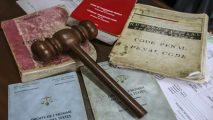
Australia’s highest court on Tuesday overturned former Vatican treasurer George Pell’s conviction for sexually assaulting two teenaged choirboys in the 1990s, allowing the 78-year-old cardinal to walk free from jail.
In a unanimous ruling, the High Court found that the jury in Cardinal Pell’s trial “ought to have entertained a doubt” as to his guilt.
The court’s seven judges ordered the convictions be quashed and verdicts of acquittal be entered in their place.
Pell, who has maintained his innocence throughout the lengthy court process, cannot be retried on the charges, ending the most high profile case globally of alleged sexual abuse by priests to have rocked the Roman Catholic Church.
Pell, a polarising figure in Australia for his conservative views, was the highest ranked Catholic official worldwide to have been jailed for child sex offences when he began serving a six-year sentence a year ago.
The cardinal was charged in 2017 with one charge of sexual penetration of a child under 16 and four charges of an indecent act with a child under 16, which the plaintiff said took place when Pell was archbishop of the city of Melbourne.
The judgment was delivered during Holy Week, the period leading up to Easter which is the most important day in the Christian calendar, following two days of hearings a month ago.
The decision was delivered to a largely empty courtroom in Brisbane because of national restrictions on travel and public gatherings amid the coronavirus pandemic.
Pell’s first trial ended in a hung jury, before the jury in a second trial unanimously found him guilty in 2018. Pell did not take the stand at either trial.
Under Australia’s court system, his first appeal went to a court in Victoria, where a majority of two judges against one upheld his conviction.
Pell’s lawyers then took the case to the High Court, arguing that the Victoria appeals court had erred in shifting the onus of proof to the defense and in finding that it was open to the jury to find Pell guilty beyond reasonable doubt.
The High Court said the lower court of appeal had “failed to engage with the question of whether there remained a reasonable possibility that the offending had not taken place, such that there ought to have bene a reasonable doubt as to the applicant’s guilt.”
The cardinal was appointed by Pope Francis in 2014 to overhaul the Vatican’s vast finances but lost his role last year after being jailed. Pope Francis has said he would only comment on the case after Pell exhausted all avenues of appeal.
He has remained a cardinal despite pressure on the church from victims of sexual abuse and their advocates to dismiss him.
(REUTERS)
















9, April 2020
The Church, A Story God Himself Has Created 0
Holy Thursday Catechesis: Ste Anne’s Parish, Salem MA,
Roman Catholic Archdiocese of Boston
Theme: “(…) As Christ loved the Church” (Ephesians 5:25)
(The Church, A Story God Himself Has Created – Joseph Ratzinger)
Dear Holy People of God of Ste Anne’s Parish,
1. Today, we begin our solemn celebration of the Sacred Triduum, that is, the three days that mark the peak of the Christian calendar. These days offer us the opportunity to enter sacramentally into the Suffering, Death and Resurrection of Our Lord and Savior, Jesus Christ. Three mysteries are central to the liturgical celebration of today: Firstly, the Mystery of the Commandment of Mutual Love: “I give you a new commandment, love one another as I have loved you” – the Lord says to us – (John 13:34); the Mystery of the Sacred Priesthood: “I Call You Friends, Because I have made known to you everything I have learnt from my Father” (John 15:15) – At the heart of the Catholic priesthood stands friendship with Christ. Without this friendship, this intimacy, the Catholic priesthood has NO meaning; and finally, the Mystery of the Eucharist: “Do this in Memory of Me” (Luke 22:19).
2. Initially, I was thinking of reflecting with you on the Eucharist, the Sacrament of the Real Presence of Christ. The Catechism of the Catholic Church explains the designation “real presence” this way: “This presence is called ‘real’ – by which is not intended to exclude the other types of presence as if they could not be ‘real’ too, but because it is presence in the fullest sense: that is to say, it is a substantial presence by which Christ, God and man, makes himself wholly and entirely present” (St. John Paul II, Catechism of the Catholic Church, # 1374).
3. The key word of this text is “substantial.” It is a word largely derived from Greek philosophy, especially in the metaphysics of Aristotle, in which one finds a distinction in the Ten Categories, between what Aristotle refers to as “substance” and “accidents. To allude to an example that might be helpful: the “substance” would be “wood.” The accidents will be “a chair,” “a black table,” “a short table,” “white papers,” “green papers,” et cetera, made from the “substance” of wood. That which remains when others change is the substance. A table might be dismantled and reassembled so that it takes the form of a chair. But the “woodness” remains. And the “woodness” is the substance.
4. In this sense, “real presence” means that Christ is present in the substance of the bread and wine, the Eucharistic species. It means in the form of bread and wine, we encounter Christ, not a symbolic presence, but in that substance, in that “breadness” and “wineness.” That means it is Christ we touch and receive in the bread and wine, even if, as Aquinas wrote in his beautiful hymn, the senses all fail us, for we see and touch bread and wine, but what we see and touch, in the bread and wine, is Christ. I sometimes feel like Thomas the Apostle, when I look at the before the bread and wine of the Eucharist. Thomas sees a man before him, Jesus, the Risen One, and yet proclaims, “My Lord and My God” (John 20:28). We see bread and wine, and, with the faith of Thomas, the faith of the Church of all the ages, we believe that it is the body and blood of Christ.
5. Dear Holy People of God, inasmuch as I would have loved to delve deeper into this mystery of the Eucharist, my deepest sentiments today is to talk about another mystery, which is clearly not so evident regarding the liturgical texture of Holy Thursday. Initially, I said Holy Thursday marks three mysteries, viz, the mystery of God’s unconditional love, the mystery of the Sacred Priesthood, and the mystery of the Eucharist. But somewhere hidden in all three, lies another mystery, the Mystery of the Church. During these days of COVD 19, aren’t we living, severed in a very concrete sense, from the Church? Aren’t we feeling this sense of loss, as if we have been cut off from the life-wire, from that which gives us purpose and meaning in life? I have heard from so many of you, via emails, phone calls and text messages, how, all of a sudden, we now feel like spiritually orphaned! We can no longer attend Holy Mass. We can no longer celebrate the Sacrament of Confession. And many more. Perhaps this “spiritual desert” in which we are finding ourselves given the absence of the sacramental Church, gives us the opportunity to take a fresh look at the Mystery of the Church. I do not intend to turn this catechesis into an ecclesiology (i.e., the study of the doctrine of the Church) lecture at Boston College. For that to happen, I would have to charge you $3450 each for the course. Hence, I will make just a few observations relevant to our spiritual lives.
6. In the first place, the Church is not an institution created by a commission or committee of persons. The question is often asked in ecclesiology: Did Jesus Christ found the Church? As Joseph Ratzinger argues, the question about Jesus and the founding of the Church is a false question because it is unhistorical. The Church was already there, ecclesial ab Abel – in the Old Testament, as a community called by God from the world and for the world. To speak simply, the beginnings of the Church is traceable to when God calls Israel and forms Israel as a nation to bring the nations to the worship of the true God. Hence, Jesus did not need to start by founding a Church. What Jesus did in his ministry, and specifically the mysteries of Unconditional Love and the Eucharist which we celebrate today, consisted essentially of two things: Jesus radicalizes the commandment of love, from love of the neighbor to love of the enemy; and secondly, Jesus universalizes this love, the neighbor is now the Samaritan. It is only through this process of radicalization and universalization that the Gentiles, that is, the non-Jew, can enter into the story of God. This is the door, thanks to which an American, a Filipino or a Cameroonian enters into the story of the Covenant, the story of the Church, a story, as Benedict beautifully described, – “a story God himself has created.” I love the reflective pronoun employed by Benedict – A Story He Himself has created!
7. Dear Holy People of God, if the Church is not an institution created by some brilliant theologians from library research but rather, a story God himself has created, it means that the heart of the Church is the One whom God has made heir of all things (Hebrews 1:2). Christ is the heart of the Church. It is important to remember that, especially when you think of my flaws and weaknesses, as I struggle to accompany you on this holy journey to God. Every one of us, pastor and people, live from Christ and for Christ. In this sense, the Church, as Romano Guardini beautifully articulated, is a living organism, alive in the soul of believer. It is only in you, in your heart and in my heart, that the Church takes root and flourishes. Pastors will come and go. Structural and institutional adjustments will come and go. Buildings will be constructed, others, demolished. Parish pastoral councils will serve their terms. Political and economic systems will rise and fall. And many more. But the Church of God, the story God himself has created, will remain, in the hearts of the idiota, the simple souls, in the lives of the poor in spirit, those who live for God and depend on God, as the example of the New Testament shows us: Mary of Nazareth; Zechariah, John the Baptist, Elizabeth, Simeon, Anna, et cetera. The Church, the life of Christ in the human heart, will be there, until when the Angel of the Apocalypse announces, “The time of waiting is over” (Revelation 10:6), and the history of the Church will come to an end with the history of the world, and then the new heaven and a new earth will emerge, and there will be no more death, and no more mourning or sadness, the world of the past has gone (Revelation 21:1, 4). And God will make all of creation new (Revelation 21:5).
8. Dear Holy People of God, this is what I feel the Lord asking that I share with you today, on Holy Thursday: To love the Church, as Christ loved her (Ephesians 5:25). The Church, in the concreteness of the here and now. The Church, our supernatural family of faith, wider than our biological families. The Church, that family that God himself has created for us, from every tribe and tongue and people and nation (Revelation 7:9). – What a beautiful image, the universality of the Church! The Church, our mother and teacher, sometimes too slow for our liking, often times disfigured by the sinfulness of her members, scandalized by the actions of us her leaders, and yet, and this is what is of utmost importance, bearing in her the hope for the world, that is, Christ, in the form of the Gospel Message and the Sacraments.
9. May the Lord be close to each and every one of you, as we enter into the sacramental celebration of his Passion, Death and Resurrection. May the Love for the Church come more alive in our hearts, the love for that story which God himself has created, and which we are called to love, just as Christ loved her, Amen!
(Fr Maurice Agbaw-Ebai)