14, August 2022
African bishops lament inability to stop young people from leaving 0
In the din of Yaoundé’s traffic, thousands of youths comb various offices, documents in hand, in search of jobs.
As frustration sets in, many see a future beyond the country’s shores. That is how Jannet left Cameroon two years ago.
A recruiter told her she would have a well-paying job upon arrival in wealthy Kuwait. Her family agreed to go into debt with the recruiter to pay for airfare and other associated expenses.
But the promise of a good job turned into a nightmare in Kuwait. A member of the recruiter’s network confiscated her passport, mobile phone and other personal documents and took her to the home of a wealthy family, where Jannet had to work long hours with little food.
“I wake up at 5 a.m. and go to bed at 1 a.m., at times no food,” she told Catholic News Service.
For over two years, Jannet slaved for that family, sleeping on the kitchen floor. She said she was forced to use the “toilets” reserved for cats.
“I used to call them (the cats) my brothers,” Jannet recalled, because “they were the only family I had out there.”
Hers is not an isolated story. Beatrice Titanji, vice president of Cameroon’s Trauma Centre for Victims of Human Trafficking, said these modern-day slave markets can be found throughout the Gulf states.
“They actually have booths as you would have in the market, and (people) are sold and bought for domestic service,” said Titanji.
“So they move them to their various owners as negotiated before, because there are linesmen here in Cameroon who actually negotiate, get money, sell them at higher prices, sell them depending on the outlook of the victim, as it happened 200 years ago during slave trade. Our children are sold and bought today in the Middle East.”
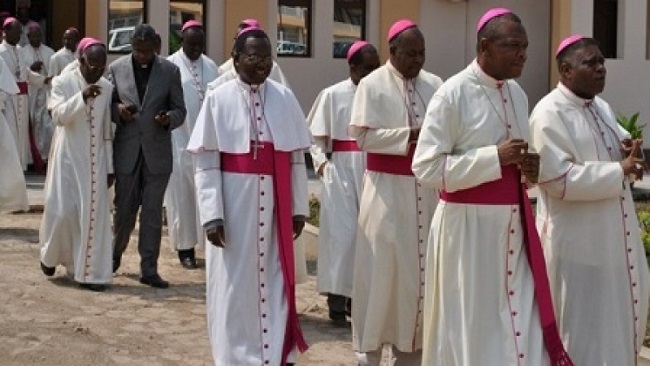
The situation has caught the attention of members of the Symposium of Episcopal Conferences of Africa and Madagascar.
Meeting in Accra, Ghana, July 25-Aug. 1, the bishops examined the causes of migration, the risks involved — particularly when it comes to irregular migration — and what the church needs to be doing to help.
“Migration is a normal social phenomenon that is linked to the history of humankind,” the bishops said in a statement signed by Cardinal-designate Richard Kuuia Baawobr of Wa, Ghana, president of SECAM.
“This is why migration cannot be considered illegal but could be irregular,” they added. They said while the suffering of migrants is not linked to migration as such, migration can involve suffering: “abuse of the social status … exploitation, ignorance” and fear of poverty.
“We wish to express our pain in seeing our youth leaving our countries, knowing that they are going to suffer and possibly lose their lives, and we lament our inability to stop them from leaving,” the bishops said.
They urged young people willing to exercise their right to migrate “to do so in a manner that is administratively acceptable and with full knowledge of the challenges that await them.”
“We encourage our youths not to lose hope and to hold on to God through a life of holiness.”
The church leaders also called on governments to put in place structures and conditions that discourage irregular migration, such as good governance, employment opportunities, multifaceted security, political and social inclusion, promotion of social justice.
“We urge transit and host countries to respect the rights and human dignity of migrants.”
They also challenged Christian communities to “develop an active pastoral care for migration” that should involve welcoming migrants, protecting them, promoting them and integrating them into society.
Jannet eventually returned to Cameroon, sick and frail, with nothing other than the clothes she was wearing. She said when she became sick, her slavers threw her onto the streets.
As she roamed the streets of Kuwait, not knowing exactly where she was going, Jannet eventually came across the Embassy of the Central African Republic. Embassy staff took her to a hospital, helped her replace her stolen passport, and paid for her flight back to Cameroon.
Still, young people in Cameroon say they will continue to risk leaving.
George Atanga, who has a master’s degree in chemistry, said he has been looking for a job for the past five years.
“Whether I get a visa or not, I have to leave this country,” he told Catholic News Service as he waited in line to take photos for his passport.
“If I don’t get a visa, I will travel through Algeria and see if I can get to Spain. My future lies out there,” he said.
It’s a trend across Africa, a continent where 51% of young women and 43% of young men are unemployed.
Source: Crux













21, August 2022
The Holy Father Pope Francis ‘concerned’ after Nicaraguan bishop detained 0
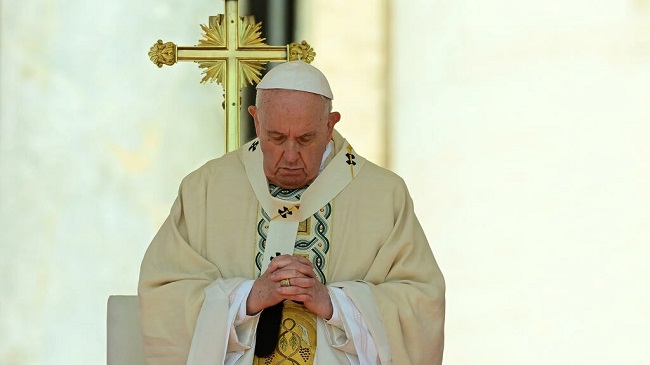
Pope Francis said Sunday he was “concerned” by rising tensions between the state and the Catholic Church in Nicaragua, two days after bishop and regime critic Rolando Alvarez was detained.
Francis said he was following “closely with concern and sorrow” the situation in Nicaragua, amid a worsening standoff between the Church and a government accused of increasing authoritarianism.
“I would like to express my conviction and hope that through open and sincere dialogue, the basis for respectful and peaceful coexistence can still be found,” the head of the world’s 1.2 billion Catholics said after the Angelus prayer.
A spokeswoman for the European Union’s foreign policy chief Josep Borrell said the EU was “following closely the situation with concern”.
She repeated Brussel’s position that “Nicaraguans have to find a peaceful and democratic solution to their political crisis through dialogue”.
The Catholic Church in Nicaragua has been under increasing government pressure since opposition protests in 2018 were met with a crackdown that left hundreds dead.
President Daniel Ortega maintains the protests were part of a Washington-backed opposition plot to unseat him, and accuses bishops of complicity.
The Vatican has said Nicaragua expelled its ambassador to the country in March.
Taken ‘with violence’
Alvarez was detained Friday for “destabilizing and provocative” activities aimed at destabilizing the Central American country.
His detention followed two weeks under police siege at his official residence in Matagalpa, central Nicaragua, after he criticized the closure of Church radio stations and news channels.
Supporters said Alvarez was taken “with violence” to an unknown location, prompting the United Nations and Organization of American States (OAS) to express concern.
Eight others, including five priests, who had been holed up with Alvarez were taken to Managua with him, according to the Latin American Bishops Conference (CELAM), and were all under investigation.
Later, the church said Alvarez was being held at his “family home” where Cardinal Lepoldo Brenes was allowed to visit him.
Brenes reported the bishop’s “physical condition has deteriorated” but his “spirit is strong”, the archdiocese of Managua said in a statement.
The other eight were being held at El Chipote prison, according to the Nicaraguan Center for Human Rights (Cenidh). El Chipote is a notorious lockup for government critics.
According to the European Union, Nicaragua has more than 180 “political prisoners”.
In the first half of 2022, the bloc says, Nicaraguan authorities closed down over 1,200 civil society organizations.
Earlier this month, Borrell’s office called for the liberation of Nicaragua’s political prisoners, denouncing the government crackdown on opposition activists.
Source: AFP