Featured
 Pope Leo XIV in Cameroon-The “Ambazonia crisis” in Southern Cameroons
 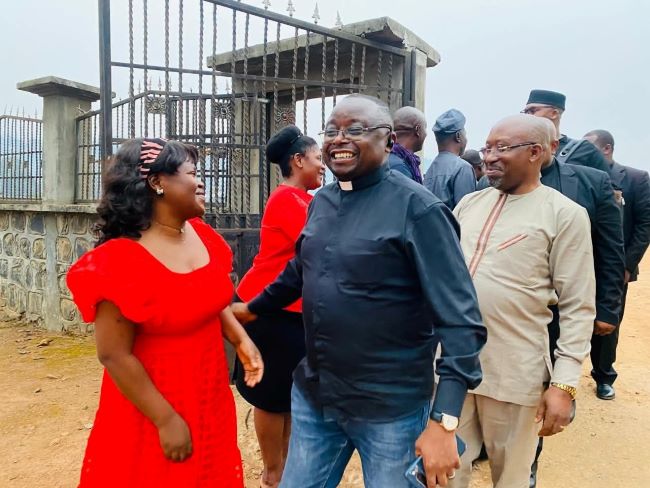 New Testament pastors in the Presbyterian Church in Cameroon
  World Bank Group statement on the conflict in the Middle East
  Anglophone Vice President: a deeply counterproductive idea
  Ambazonia Crisis: latest on Sisiku Ayuk Tabe’s arrest, trial and conviction
Most Commented Posts
 4 Anglophone detainees killed in Yaounde
18 comments Chantal Biya says she will return to Cameroon if General Ivo Yenwo, Martin Belinga Eboutou and Ferdinand Ngoh Ngoh are sacked
13 comments The Anglophone Problem – When Facts don’t Lie
12 comments Anglophone Nationalism: Barrister Eyambe says “hidden plans are at work”
12 comments Largest wave of arrest by BIR in Bamenda
10 comments
Featured
-
Russia conducts massive rolling aerial attacks on Ukraine
-
Cameroon, Switzerland sign MoU positioning Obala Institute as Central Africa Agri-Research Hub
-
Iran’s military vows to continue war until US, Israel ‘regret’ aggression
-
Cameroon Football: Ebwelle Bertin takes charge to revive Panthère du Ndé
-

Pope Leo XIV in Cameroon-The “Ambazonia crisis” in Southern Cameroons
-
New Testament pastors in the Presbyterian Church in Cameroon
-
Yaoundé: WTO Ministerial Conference ends without a breakthrough
15, July 2018
Cuba to recognize private ownership 0
Communist-run Cuba is to officially recognize the ownership of private property in an effort to boost its economy.
Private property has long been officially rejected in the Communist state as a sign of decadent capitalism.
Ruling Communist Party newspaper Granma reported on Saturday, however, that a new constitution, to be put to a referendum, recognizes free market policies and private property.
The new constitution also creates the position of prime minister alongside the president, according to Granma.
The document, by creating the position of prime minister, divides the roles of the head of state and the head of government.
The new constitution also imposes a term limit on the presidency of two consecutive five-year periods.
However, Granma said the constitution reaffirmed that central planning and state enterprise remained as the pillars of Cuban economy.
It said the government commission reforming the constitution will present its draft to the national assembly when it meets next week. It will then be put to a national referendum, expected later this year.
The commission is headed by former president Raul Castro, 87, who remains the head of the Communist Party.
Castro’s market reforms have prompted hundreds of thousands of Cubans to join the ranks of the island’s self-employed since 2010, in new privately-owned businesses ranging from restaurants to beauty salons.
Castro, who together with his older, the late revolutionary leader Fidel Castro, ruled over Cuba for nearly six decades, had proposed the reforms in 2011, as part of a bid to modernize the political system.
Fidel led the revolution that toppled Cuban dictator Fulgencio Batista in 1959. He died in November 2016.
Source: Presstv