Featured
 World Bank Group statement on the conflict in the Middle East
  Anglophone Vice President: a deeply counterproductive idea
  Ambazonia Crisis: latest on Sisiku Ayuk Tabe’s arrest, trial and conviction
  2025 Africa Cup of Nations: Patrice Motsepe should go and go now!
 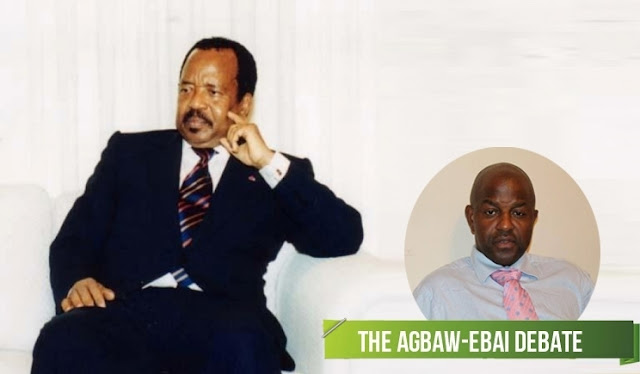 Changes in the Senate and National Assembly: who becomes next head of state?
Most Commented Posts
 4 Anglophone detainees killed in Yaounde
18 comments Chantal Biya says she will return to Cameroon if General Ivo Yenwo, Martin Belinga Eboutou and Ferdinand Ngoh Ngoh are sacked
13 comments The Anglophone Problem – When Facts don’t Lie
12 comments Anglophone Nationalism: Barrister Eyambe says “hidden plans are at work”
12 comments Largest wave of arrest by BIR in Bamenda
10 comments
Featured
-

Iran hits US-Israeli pilot hideouts, drone hangers
-

Yaoundé eyes wind energy partnership with Canada to diversify power mix
-
Biya regime advances talks with South Korea on Yaoundé emergency care project
-

Bamenda Airport passes test flight ahead of Papal Visit
-
Archbishop of Canterbury to visit Cameroon and Ghana
-
Arab states hosting US bases forfeit sovereignty, can’t challenge Iran’s self-defense
-

Iran weighing withdrawal from NPT after US-Israel attacks on nuclear sites
30, July 2024
Douala: Hairdresser arrested over anti President Biya social media post 0
by soter • Cameroon, Headline News, News
Calling for political change can land you in jail in Cameroon, a country ruled by the same president for 42 years.
On July 24, three men in plain clothes claiming to work for the intelligence services arrested Junior Ngombe, 23, a hairdresser and social media activist, outside his shop in Douala, a city in Cameroon’s Littoral region. According to his lawyers, Ngombe was taken to a gendarmerie post in Douala before being transferred the following day to the State Defense Secretariat (Secrétariat d’État à la défense), a gendarmerie-run detention facility in the capital, Yaoundé. Human Rights Watch has previously documented widespread use of torture at the facility.
Ngombe’s lawyers said their client has been charged with “incitement to rebellion” and “propagation of false information.” They believe his arrest is linked to several TikTok videos in which Ngombe encouraged people to register to vote for the 2025 presidential elections, advocated for democratic change, and questioned authorities’ intolerance of criticism.
For many years, the Cameroon government has carried out a pervasive crackdown on opposition and dissent, jailing dozens of political activists, human rights defenders, journalists, and other government critics. In recent months, as presidential elections approach, it has increasingly restricted freedoms of expression and association.
In March, the territorial administration minister, Paul Atanga Nji, banned two opposition coalitions, describing them as “clandestine movements.” In June, gendarmes in N’Gaoundéré, Adamawa region, arbitrarily arrested Aboubacar Siddiki, known as Babadjo, a prominent artist and member of the opposition political party, National Union for Democracy and Progress (Union nationale pour la démocratie et le progrès). His arrest came moments after his release from three-month imprisonment for “insulting” a governor. In July, Cameroon’s National Assembly passed a law to postpone the scheduled February 2025 parliamentary elections and extend the current parliamentarians’ term in office until March 2026. Opposition parties argue the postponement will make it harder for them to succeed in the 2025 presidential elections. Also in July, the head of the Mfoundi administrative division, Emmanuel Mariel Djikdent, issued a decree threatening to ban from the division “anyone who dangerously insults the [state] institutions or the person who embodies them.”
Cameroonian authorities should listen to peaceful demands for reform instead of stifling freedom of expression. They should immediately release Ngombe and drop the charges against him.
Source: Human Rights Watch