
6, October 2018
Southern Cameroons crisis hits economy 0
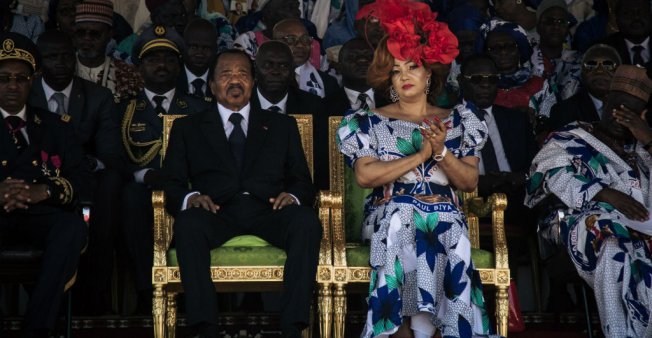
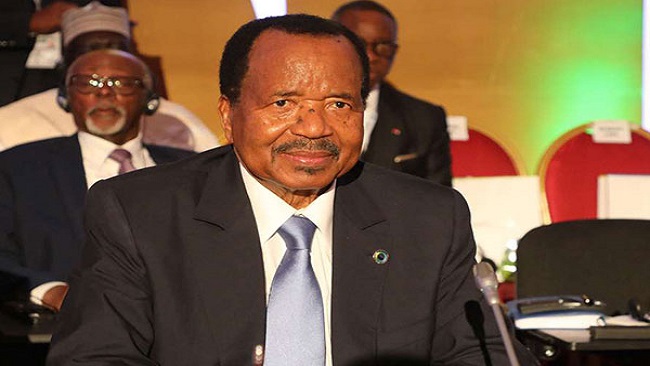
As Paul Biya seeks a seventh term in office in Sunday’s presidential election, the economic outlook for Cameroon is far from rosy. In reality businesses are shutting down as unemployment is increasing in the country’s restive Anglophone regions.
Coffee and cocoa are key economic mainstays of the country’s two English-speaking regions.
“Previously when you come to the market, you see a lot of people here. But now you don’t see anybody around. Now people are not coming to the market because they are afraid of the crisis”, said popcorn vendor Kenji Jude.
“All the customers have gone. Most of the time we come out but there is not customer to buy. So it is not making work because the customers are out, they have gone. The place is empty”, said butcher Wilfried Eron.
“Our President has been in power for 36 years and there has been no change. So everyone’s angry. I’m angry, we go to school and graduate without a job, nothing, nothing. Everyone is angry.”, said taxi driver John.
Last month the country’s employers’ group GICAM estimated that exports for both crops were down 20 percent, blaming the insecurity and the displacement of people escaping the unrest.
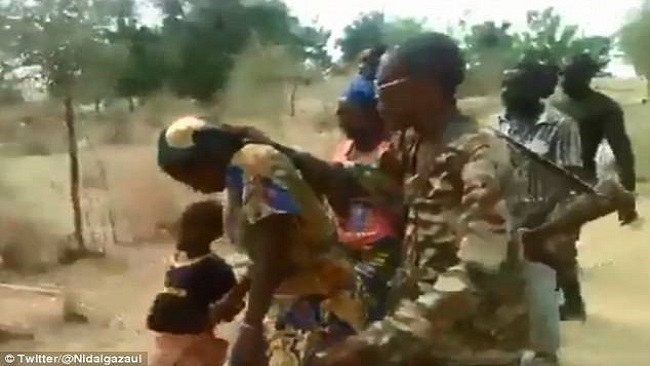
Fighting has become a daily occurrence in both Anglophone regions since late 2017 when separatists issued a symbolic declaration of “independence” from mainly francophone Cameroon.
AFP













6, October 2018
Nigeria: Opposition PDP holds critical primaries to choose Buhari opponent 0
Nigeria’s main opposition party will have its unity tested in the aftermath of this weekend’s primaries for the presidential flag-bearer, which is being contested by several political heavyweights in the party.
Both the People’s Democratic Party (PDP) and the ruling All Progressives Congress (APC) will hold primary elections this weekend to select their nominees for presidential polls scheduled for February 2019.
While President Muhammadu Buhari is likely to be unanimously endorsed to contest a second term at the APC convention in Abuja, the opposition PDP which was in office from 1999 until 2015 has a tighter race in the southern city of Port Harcourt.
PDP’s candidates
The leading contenders in the race to be PDP presidential flag-bearer are former allies of Buhari, who fell out with his administration, and defected to the opposition.
But since then, Buhari’s party has seen a wave of defections in protest at his leadership style and a surge in PDP contenders that could give it momentum as the vote approaches.
Perennial presidential candidate Atiku Abubakar, a 71-year-old former vice-president from the northeastern state of Adamawa, was the one of the first big names to throw his hat in the ring.
Then, after lawmakers crossed the floor in July, former Kano state governor Rabiu Kwankwaso emerged as a leading opposition candidate, promising he can secure the key northern state.
Sokoto state governor Aminu Tambuwal joined the PDP defectors and declared his candidacy to pry northern voters away from Buhari, who enjoys mass support across the north.
Finally, the ambitious Senate leader Bukola Saraki, a former Kwara state governor who is seen as the shepherd of the defectors, announced he would campaign for the top job.
The likely chosen candidate is expected to come from the Muslim-majotity North, following an unwritten rule in Nigeria that the presidency should alternate every two terms between a candidate from the north and south.
Unity beyond primaries?
Rising tensions and divisions have been reflected in hotly contested local party primaries, said Idayat Hassan, director of the Centre for Democracy and Development in Abuja.
“These primaries have been fractious,” she said. “It’s one of the most contentious in a long time.”
After the PDP officially chooses its presidential candidate, the party will select a running mate, who will likely come from the largely Christian south.
“What we’re waiting to see is if the (PDP) will be able to continue as one,” said Hassan. “Now they are putting up a united front — but will that continue?”
AFP