30, May 2018
Southern Cameroons: Human Rights Watch warns separatists to quit attacks on education facilities 0
International rights group, Human Rights Watch (HRW) have warned separatists in Cameroon’s Anglophone regions to quit attacks on education facilities and anything that obstructs education.
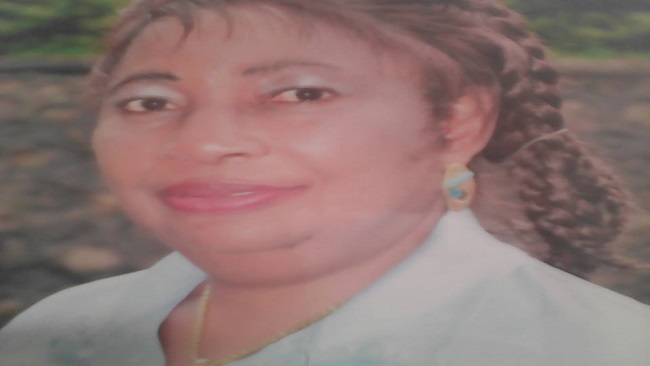
The group has subsequently called for the safe and immediate release of a female school head who was abducted by suspected separatists late last week.
Madam Georgiana Enanga Sanga of Government High School Bolifamba Mile 16 was abducted along with another head teacher on 25 May in capital of the restive Southwest region, Buea.
According to reports, the taxi they were travelling in was intercepted and they were specifically picked whiles other passengers were allowed to continue their journey.
Her colleague head teacher has since been released with machete wounds, but Ms Sanga has yet to be accounted for. The action of the abductors is believed to be connected with ongoing nationwide examinations – GCE Ordinary and Advance Level Examinations.
“Enanga’s kidnappers should release her immediately, and separatist groups should put a decisive end to all attacks meant to obstruct children’s education,” HRW’s deputy director of global advocacym Philippe Bolopio said .
“Attacks against students, teachers, and schools inflict long-term harm on children, and sully the reputation of those who carry them out.”
Separatists have long used attacks on schools as a measure to ground life in the affected regions. The move is seen as part of a wider plan to put pressure on government in the ongoing fight for secession.
The Catholic Church and the United States have recently expressed disquiet about the attacks on both sides and its effects on lives of people living in the two regions. Abductions are not uncommon as separatists have used it as a means to put pressure on government.
What has become known as the Anglophone crisis affects the North West and South West regions of the Central African country with a section of the English-speaking minority pushing to secede under the so-called Ambazonia Republic.
Source: Africa News













30, May 2018
Zimbabwe to elect new president, MPs on July 30 0
Zimbabwe announced on Wednesday it would choose a new president and parliament on July 30, in the country’s first electoral test since the removal of its autocratic former leader Robert Mugabe.
His successor, President Emmerson Mnangagwa, unveiled the date in the official Zimbabwe Government Gazette.
“Monday, the 30th day of July, 2018 (is) the day of the election to the office of President, the election of members of the National Assembly and election of councilors,” Mnangagwa said in a proclamation.
Once a right-hand man to the 94-year-old Mugabe, Mnangagwa dramatically succeeded the veteran leader in November after nearly four-decades in charge when troops swarmed the streets and briefly seized key sites.
Mnangagwa, 75, will square off against the main opposition Movement for Democratic Change (MDC) party, now led by 40-year-old Nelson Chamisa following the death of Morgan Tsvangirai in February.
If no candidate receives a simple majority in the first round of the presidential election, a run-off will be held on September 8.
Elections under Mugabe were marred by corruption, intimidation and violence, but Mnangagwa has vowed to hold a free and fair vote.
The election will be the first to be monitored by Western observers in many years.
On Monday Harare and the European Union announced that observers from the bloc would monitor polls in the southern African country for the first time in 16 years.
The head of the last EU observer mission, Pierre Schori, was thrown out of Zimbabwe in 2002 on the eve of presidential elections that were condemned as flawed.
Following the high-profile spat, Zimbabwe barred the EU and other Western observers from sending further missions to monitor polls in the country as Mugabe grew more and more defiant of foreign criticism up until his downfall.
And in a further sign of Zimbabwe’s growing efforts to mend fences with former foes following Mugabe’s resignation, the country has applied to re-join the Commonwealth, the bloc of former British colonies said Monday.
Harare’s membership was suspended in 2003 over the violent and graft-ridden elections the previous year.
Zimbabwe left the Commonwealth at the height of violent land seizures, when white farmers were evicted in favor of landless black people — a policy that wrecked agriculture and triggered economic collapse.
Commonwealth Secretary-General Patricia Scotland confirmed that the organization would also send observers to the elections.
Mugabe sent shockwaves through the ruling ZANU-PF, the party he dominated for decades, when he recently posed with a retired general who will take on the government in this year’s election.
Despite a slew of reformist pledges and announcements it is unclear whether Mnangagwa, who was a vital cog in the ZANU-PF party and helped Mugabe to hold onto power for 37 years, has won the support of ordinary Zimbabweans.
(Source: AFP)