28, May 2018
Southern Cameroons Crisis: Time is running out! 0
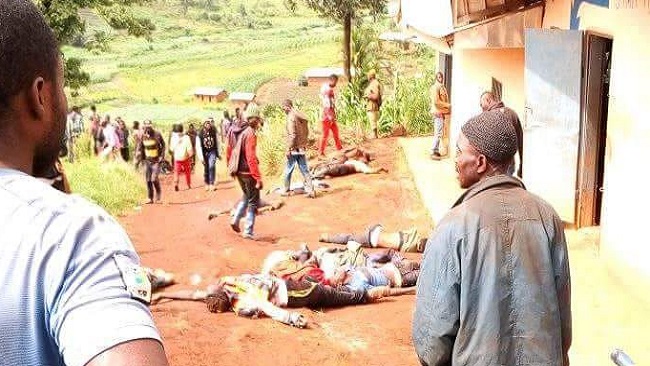
The situation in Cameroon’s two English-speaking regions has continued to deteriorate following the slaughtering of some 20 young men and women in Menka-Pinyin last Thursday following a violent attack by government forces that have been seeking to prove that they are actually rolling back the Southern Cameroonian fighters who have won hearts and minds in the entire Southern Cameroons.
Government action over the last 18 months has come under intense criticism both at home and abroad, as Yaounde authorities continue to behave like gangsters instead of disciplined officials who should, at any moment, seek to work out things through dialogue.
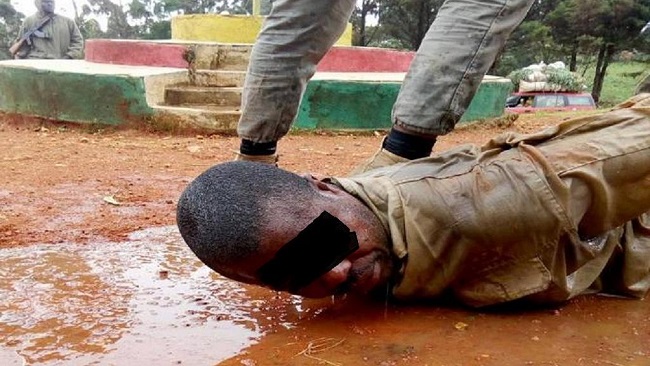
The Yaounde government, led by Paul Biya, has never taken time to investigate any killings. All it has always done is to resort to collective punishment wherein the houses of innocent civilians are razed, and innocent youths are gunned down point blank. The actions of the country’s armed forces have created more fighters over the last six months, as ordinary civilians – both boys and girls – now believe they have to defend themselves against a military that is using their tax money to murder the people they are supposed to protect.
Southern Cameroonians have been calling for international assistance. They now want the world to protect them against their supposed protectors. The government’s mass murdering tactics and collective punishment have drawn a lot of flak in recent times and even the Trump Administration has been disappointed by the methods the dictatorial government in Yaounde is using to restore order in the two restive English-speaking regions of the country.
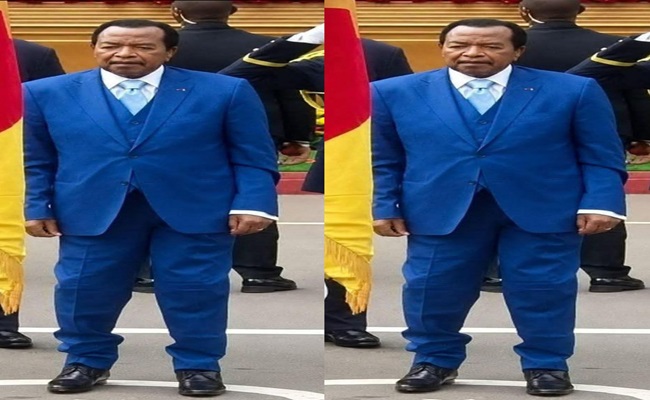
Thursday’s murders came on the heels of a scathing criticism of the reckless Yaounde regime by the U.S. Ambassador, Peter Barlerin, who used his audience with the country’s president, Paul Biya, to call for an end to the senseless and targeted killings in the two English-speaking regions.
Mr. Barlerin also used the occasion to call on Mr. Biya to think of his legacy, a coded way of telling the Yaounde dictator not to run in the upcoming presidential election. It should be recalled that the Americans have a way of advising their erstwhile friends to quit power. Mr. Barlerin is simply walking in the steps of other American ambassadors who hold that governments must be accountable to their people.
In the early 90s, the American Ambassador to Zaire, Bill Richardson, had advised Mubutu to quit power and that if he did not act accordingly, he would be humiliated and this actually came to pass. A few months after that friendly advice, Zaire unravelled and the “Leopard of Zaire”, another name for Mr. Mubutu, was chased out of power by a ragtag military that had the support and blessing of Western countries.
The American ambassador’s advice has not been taken lightly and kindly by supporters of the beleaguered government. Government surrogates have been all over the country and on TV channels to belittle the ambassador whose advice should be taken seriously. Americans are not only friends when they give Cameroon their money and arms for them to fight Boko Haram. Good friends should also call their friends to reason and that is what Ambassador Barlerin is doing.
The pressure on the government and its supporters is mounting and it is clear that the Biya regime is running out of time and patience, especially as the deadline given by the Southern Cameroons Interim Government will be expiring in four days. The tough guy appearance that government official had at the beginning of the Southern Cameroons crisis seems to be melting. Government officials who caused the crisis to escalate are today staying away from the spotlight. Fame Ndongo, Laurent Esso and Issa Tchiroma are all keeping a very low profile as they know they are to blame for the gory genocide that is playing out in Southern Cameroons.
Amnesty International and the International Crisis Group have also been very vocal against the Yaounde government’s irresponsible actions. For the past six months, the government of Cameroon has been working hard to wipe off villages from its own map through a scorch-earth policy that many in the international community have frowned upon. Amnesty International and the International Crisis Group have all called the government’s action against Southern Cameroonians into questions. The world has been taken aback by the government’s commitment of such human rights abuses.
Kwakwa, Mbonge, Etoko and Kembong in the South West region have been rolled back into the 10th Century by the government. Its plan was to intimidate the people into submission, but the strategy has so far been counter-productive. In Kwakwa, many old people were burnt alive by government forces as a move to punish the entire population for the killing of an army soldier by some unknown and unidentified gunmen.
Other villages have also experienced the government’s wrath and frustration with a rebellion it felt it could put out in one single military action. Mbonge, Bali and Batibo have all been victims of the Yaounde government’s malicious policy designed to stamp out any opposition.
Terrorism has become the buzzword in Cameroon and anybody who holds a view that is contrary to the government’s is considered a terrorist. This is a new tool it is using to stamp out opposition, but times have changed, and the people of Southern Cameroons are clearly resisting a government they believe is corrupt to the marrow and inefficient.
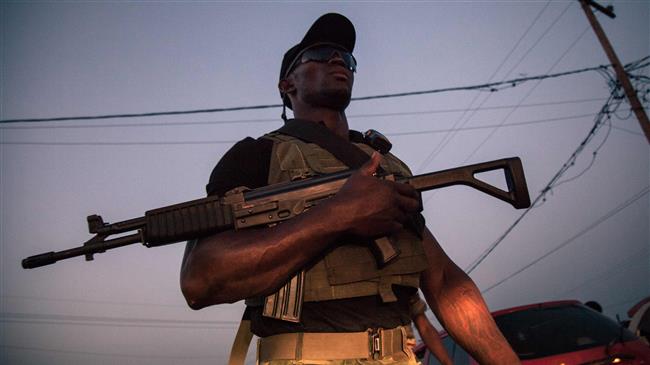
Last week, in trying to sway national and international opinion, the military on Friday rushed its spokesperson to deliver an unconvincing explanation for such acts of brutality by a military that has reduced itself to the level of a ragtag army. A flimsy explanation by the country’s military spokesperson, Colonel Didier Badjeck, has left many in the international community with the feeling that Mr. Biya and his government do not want a peaceful resolution of the conflict.
Colonel Didier Badjeck has, on many occasions, been caught lying and his explanation has been ripped apart by experts who have demonstrated that the government has run out of options to check the revolution. Many pointed to the lack of evidence and the inconsistencies in Colonel Didier Badjeck’s explanations. The government is yet to show any arms the suspects had used or any evidence that they were plotting anything sinister. Killing innocent young men has been its modus operandi and this is eroding its credibility in the eyes of some members of the international community who are already questioning why the UN is not intervening to end the bloodbath.
As the blood continues to flow, it is alleged that recent massacres are being masterminded by the country’s territorial administration minister, Paul Atanga Nji, himself a Southern Cameroonian, who wants to prove to his Yaounde masters that he is up to the task. This week has actually been a bloody one. It is like the hunting season has been opened and the blood has been flowing like a stream.
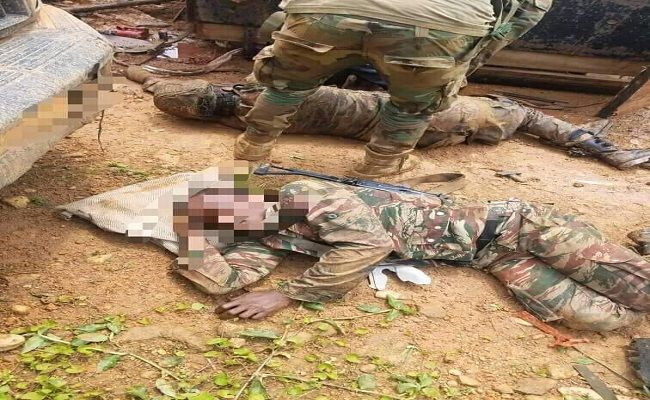
Both parties have been mourning. On Sunday, May 27, 2018, the government shipped 67 military corpses to many towns in the country. The 67 corpses are those of servicemen brought down by tough Southern Cameroonian fighters. The government has been reluctant to publicly acknowledge that its servicemen have been killed by the bullets of Southern Cameroonian fighters.
The government is gradually recognizing that keeping those deaths under wraps will not tell its story and pain in the most succinct manner. The intense global condemnation of the last week is gradually becoming a call for a change in strategy. In a bit to play the victim, the government is admitting that some servicemen had been killed in combat in the jungles and mountains of Southern Cameroons. But this new strategy could be counter-productive. The Francophone majority might start asking questions which could bring more trouble to the already beleaguered country.
Southern Cameroonian fighters seem to be making very bold statements that are making the government to be ill at ease. This may be why the government had to make a statement of intent on Thursday to tell the fighters that the government will match fire for fire. Many Southern Cameroonians hold that the Menka-Pinyin massacre is Mr. Atanga Nji’s handiwork. It is alleged that he planned and ordered government forces to use conventional explosives on innocent civilians. This has been decried by a senior Roman Catholic clergy who is concerned about the road the country has taken over the last two years. It should be mentioned that the Catholic church on Thursday, May 24, organized a protest march against the killing of innocent people in the country’s English-speaking regions.
Some members of the international community have also started talking albeit in private. According to a United Nations official who spoke to Cameroon Concord News Group on condition of anonymity, the Biya era is quietly coming to an end and actions by the government are simply making it hard for any reasonable person to have any respect for the 85-year-old Biya who erroneously thinks the country belongs to him.
“A country cannot belong to anybody. Mr. Biya is making the same mistakes Mr. Mubutu of Zaire made; mistakes that let to his destruction. Mr. Biya should be looking into the mirror of history in order to avoid such dumb mistakes. At 85, he should know that his days are numbered and it is in his interest to think about living Cameroon a better place than he met it,” he said.
“Mr. Biya should be listening to his conscience. He has lost credibility. Within international circles, many people have nothing but disrespect for him. He has failed and he is a disgrace to a country like Cameroon that has lots of intellectuals. He should understand that he has had more than his fair share of power even when he has never won any election. There is no way he is going to win this war. The actions of his military are simply fueling violence. Southern Cameroonians will surely resort to more kidnappings as a way of venting their anger. They will also be killing innocent soldiers and policemen who are even against the war. It is really unfortunate that many young soldiers are losing their lives for a man who is just a few meters away from his grave,” the international civil servant said.
But it is the order of the Southern Cameroons Interim Government that is keep many people awake, including the government which has no plan to protect French-speaking Cameroonians living in Southern Cameroons. The situation is critical and many people are living in fear. Some families have already moved leaving behind all their personal belongings and assets. So far, the government has not made any statement to reassure the population.
While Cameroon government officials are still trying to embezzle what ever little money is still in the government’s coffers, Southern Cameroonian fighters, for their part, are busy fine-tuning their strategies to root out all illegal aliens from the new republic. The fighters know that their actions will finally attract the attention of the international community that has been less enthusiastic about what is happening in the Central African country.
In a reaction to the Interim Government’s order, a young Red Dragon fighter who has been in the jungles of Lebialem for more than six months said that “Francophones have an interest to comply with what the Interim Government has said. We are running out of patience and will surely be staging a show that will shock the world once the deadline expires.”
He added that “Let nobody think this is an empty threat. We have seen our brothers and sisters being killed by government forces and we are ready to revenge. There will be a bloodbath after the expiry of the Interim Government’s order. We have faith in our Interim Government and we will do all what it takes to ensure that the laws of the land are respected. If the Yaounde government thinks this is a joke, then it has not yet understood that it has a huge crisis on its hands. We are prepared to die. We have been enslaved for decades and now is the time to liberate our land. We have never thought that independence will come easy. We know it is never delivered on a platter of gold. We are aware of what happened to Eritrea, South Sudan and even in faraway Timor Leste. We are well read. We are also university graduates, but the government’s decision to declare a war on us will turn out to be its greatest undoing. If the world is still on the sidelines, then it really wants to play spectator to a Rwanda-style genocide at the end of the month. We will be staging a massive show that will shock everybody. We never asked for this war. It was imposed on us and we will do all in our power to end the oppression that has been ours for decades.”
The situation is concerning. It is just a quarter of a century since the world witnessed a huge genocide in Rwanda and it had vowed not to let that happen again. But its indifference to what is playing out in Cameroon could lead to a repeat of what happened in Rwanda in the early 90s.
The government knows it has a huge crisis on its hands. It has seen many soldiers who have been killed by Southern Cameroonian fighters and it knows that even with the less sophisticated weapons used by Southern Cameroonians fighters, they are still capable of wreaking havoc.
While senior government officials are still trying to put on a brave face, many in the corridors of power are already very concerned. Southern Cameroonians have put up a good show beyond everybody’s wildest imagination and their determination is being admired by many French-speaking Cameroonians. But their recent move to chase French-speaking Cameroonians out of their land spells a huge disaster for the government.
For months, the government has been indifferent to calls for an inclusive dialogue. Ever since the crisis started, the country’s president, Paul Biya, also known as the owner of the country, has refused to listen to many respectable voices across the world. The Pope has had an opportunity to talk to Mr. Biya. Leaders of Western Countries have advised him to pursue dialogue as a sure means out of the impasse. The African Union has once offered to mediate.
But he has remained tone deaf to these calls and his refusal is costing many lives. He too is putting a brave face, but American pressure seems to be paying off. Behind the scenes, the pennies seem to be dropping. The government wants to talk, but it has not got an interlocutor. It had arrested and delegitimized federalists in 2017. In 2018, Southern Cameroonian leaders were kidnapped in Nigeria and brought to Yaounde where they are being held incommunicado. Those are the people the government should be talking to if it has developed the right mind that can bring peace to the country.
Time is running out. The situation is spiraling out of control. Mr. Biya is losing support even within his own party. The Southern Cameroons crisis is surely that explosive that will expose the fragile unity in the ruling party. The dissenting voices are increasing and the pressure on Mr. Biya is mounting. Some ruling party members hold that if Mr. Biya steps down, there could be a possibility for a negotiated settlement. Many ruling party members do not like the country to be split, but the manner in which Mr. Biya and his cohorts have handled the Southern Cameroons crisis leaves many of his supporters with no other option but to ask him to leave power.
There is still time for all the parties to head to the negotiating table. The government cannot continue to behave as if it is not affected by the crisis. Its economy has been hurt. Its credibility has been eroded. Many soldiers have been killed and many young and innocent Southern Cameroonians are losing their lives due to a crisis that could have been averted.
The government must play its role. It must work hard to foster dialogue and promote transparency in the management of state affairs. The current crisis is the outcome of many years of frustration on the part of Southern Cameroonians who have been marginalized for 56 years.
The issues may be challenging and thorny, but they could be addressed if the good will is there. Mr. Biya still has a little time to salvage whatever little credibility he has if he comes out boldly to announce an inclusive dialogue that will lead to a peaceful resolution of all the grievances that Southern Cameroonians have expressed. The ball is in the government’s court!
By Kingsley Betek



















28, May 2018
Julius Malema says eSwatini king should leave politics and focus on marrying 0
South African politician Julius Malema says the King Mswati of eSwatini (formerly Swaziland) should leave politicians in the country to thrive.
According to Malema, who leads the Economic Freedom Fighters (EFF), South Africa’s third-force party, Mswati could go ahead to marry as many women as possible but his inteferance in the freedoms of citizens was unacceptable.
Whiles speaking at an EFF event to mark the African Day 2018 in the city of Tshwane, Malema praised Mswati for opting to remove the colonial name Swaziland and to replace same with eSwatini.
“Here at home, eSwatini, King Mswati, please leave politics to politicians and continue marrying as you want to marry many women, it’s fine.
“It’s your own problem but release the political prisoners in Swaziland. We want total freedom in Swaziland. We don’t want the king to interfere with the freedoms of the people of Swaziland.
“So we are saying to the king, please allow the people of eSwatini – what a beautiful name. This monarch (dictator) of Swaziland, he thinks better than the ANC people, he has changed the colonial name Swaziland to eSwatini,” Malema said to applause.
The King who took over the reins over three decades ago has over a dozen wives. He usually picks a wive after the annual reed dance ceremony.
The change of name was made during the double celebration in the southern African country. The first landmark was his 50th birthday and the country’s 50 years of independence. eSwatini is known to be one of the world’s last remaining absolute monarchies.
Mswati III took over at the age 18, he rules by decree and has over the years been at the crossroad between ruling as a traditional monarch or modernising his kingdom through multi-party democracy.
Rights groups like Amnesty International, Freedom House, Human Rights Watch and Reporters Without Borders have accused him of policies that trample human rights and democracy.
Source: Africa News