29, May 2018
France grants citizenship to Malian refugee who saved boy in daring rescue 0
France’s President Emmanuel Macron has offered citizenship to an illegal Malian refugee who earlier risked his own life to rescue a child hanging from a fourth-floor balcony in Paris.
On Sunday, the 22-year-old Mamoudou Gassama, originally from Mali, scaled the facade of a Paris apartment block without any equipment to save a four-year-old boy clinging to railings and about to fall. Gassama’s successful rescue was filmed by horrified onlookers, and the video soon went viral.
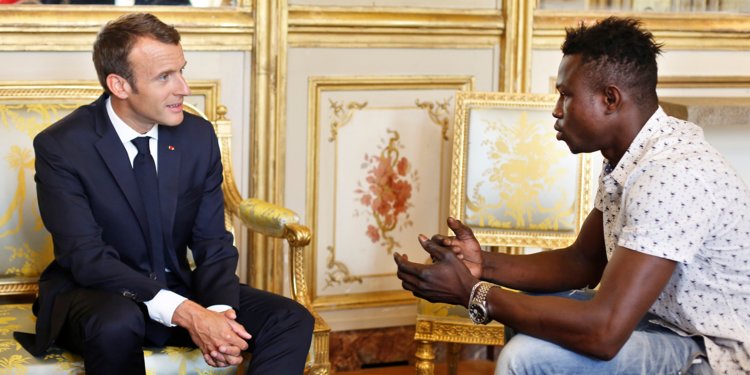
Recognizing the heroic act, President Macron met with Gassama in person at the Elysee presidential palace on Monday, congratulating him on the “exceptional” move to save the French boy’s life.
“We’ll obviously be setting all your papers straight and if you wish it, we will start the process of naturalization so that you can become French,” Macron told Gassama.
He also offered the young Malian a job.
“What you have done corresponds with what firefighters do; if this fits your wishes, you could join the firefighters’ corps so that you can do (such acts) on a daily basis,” he added.
Gassama arrived from Mali in France a few months ago. He has been nicknamed the “Spider-Man” following the viral spread of his rescue footage.
“I did it because it was a child,” Gassama told French newspaper Le Parisien. “I climbed… Thank God I saved him.”
Europe has faced an influx of refugees arriving from conflict zones since 2014. Many of the refugees have been fleeing wars and conflicts in their own countries.
There have been instances of crimes committed by a handful of the refugees in Europe, and extremist politicians in European countries have magnified those cases to actively call for a stop to the flow of the refugees and for the deportation of the ones who have arrived.
But while it is an individual case, Gassama’s heroic act is certain to help change public sentiments toward the refugees.

Adam Thiam, a Malian analyst and former presidential advisor, said Gassama’s act was praised in his home country.
“There is great pride here in Mali,” Thiam said, adding, “But while (Gassama) gets the honors, there are… Malian citizens under the threat of being expelled by the French government.”
Meanwhile, the boy’s father, who had reportedly left the boy alone at home, has been arrested and an investigation is underway to see if he committed a crime. The Paris prosecutor, François Molins, said, “His behavior constitutes an offense, failing to honor parental responsibilities, which carries a possible sentence of two years in jail.”
Source: Presstv














29, May 2018
Southern Cameroons crisis keeps escalating with killings, detentions mounting 0
Cameroon’s political crisis has witnessed what is possibly its most violent turning point. After months of clashes between security forces and regional separatist protesters, the bloodshed has worsened. But the international community has paid scant attention to the mounting crisis.
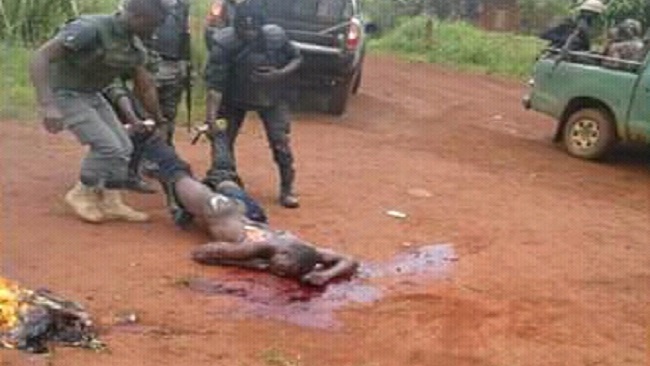
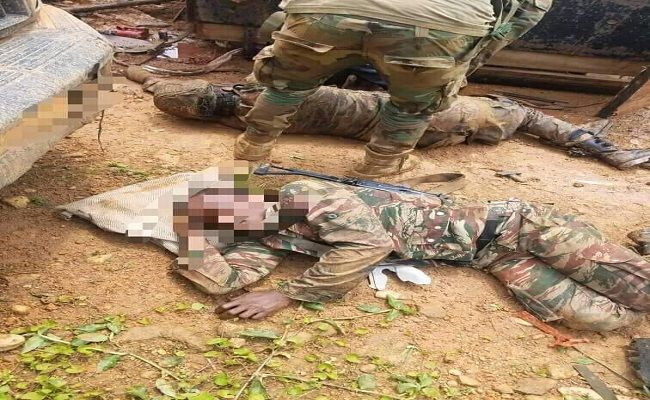
Over the past weekend, dozens were killed in the town of Menka in the country’s Northwest Region. One estimate put the death toll at 39.Security forces surrounded a hotel believed to be harboring leading secessionists which the government now labels as ‘terrorists’. “Several terrorists were neutralized”, according to an army spokesperson,
Independent journalists report of mass desertions of towns and villages that have already begun losing citizens to refugee camps in neighboring Nigeria. The recent violence comes shortly after leading secessionist voices were convicted on terrorism charges.
“The situation has got out of hand,” said a journalist who asked not to be named for fear of security reprisals. “People are being killed daily and no one is being held accountable.”
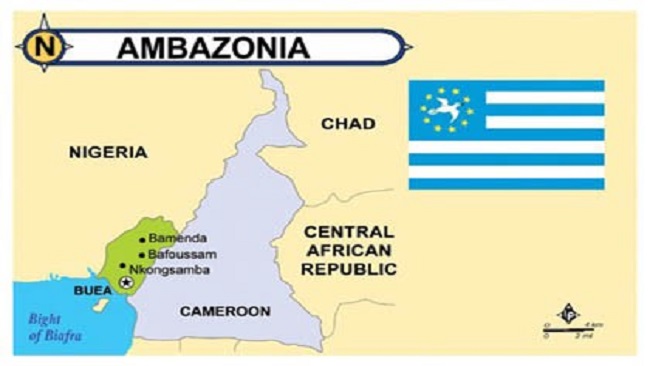
The crisis in Cameroon is yet another legacy of European balkanization and colonization of Africa—dating back to the end of World War I. German colonies, including what is present-day Cameroon, were split up and shared between the Britain and France. Southwest and Northwest Regions of present-day Cameroon form the English-speaking minority of a unified country whose central government is overwhelmingly dominated by those from the French-speaking regions. Years of passive fault lines and economic marginalization in what was touted as Africa’s version of Canada came to a head after sweeping new changes by the central government to implement the French civil law system and the use of French as the medium of instruction in schools and courts into the Anglophone regions.
In the last year, activists have called for a re-split to form an independent country, English-speaking country they call Ambazonia. Cameroon’s government has declared the move illegal.
Leading lawyers, teachers, journalists and other activists have been arrested or have simply disappeared. Early this month, the US ambassador in Cameroon, accused the government of “targeted killings, detentions without access to legal support, family, or the Red Cross, and burning and looting of villages.” Sections of the separatist movement have also resorted to horrific violence including bombings, killings of security personnel and arson.
In the aftermath of this latest killings, Ambazonia activists on social media have been sharing videos and posts comparing the attacks to the 1994 Rwandan genocide and have called for swift international assistance. The Secretary General of the Commonwealth, Patricia Scotland, has stepped in to mediate but the reports of rising violence haven’t stopped. Perhaps the most tangible effect of Baroness Scotland’s diplomatic overtures was the brief lifting of weeks of an internet blackout throughout the Anglophone regions when she visited in January.
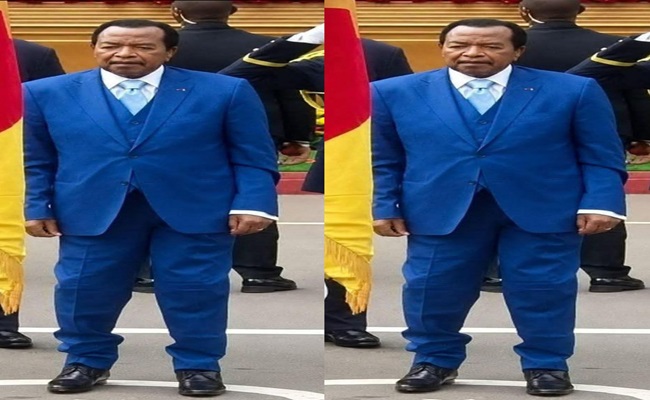
In his 35th year as head of state, Paul Biya is one of Africa’s oldest and longest running authoritarian figures—presiding over the capture of the judiciary and the muzzling of the independent press, rights group say. As elections near, the 85-year old is widely expected to contest and win.
Culled from Quartz Africa