
13, April 2018
Boko Haram has kidnapped at least 1,000 girls since 2013 0
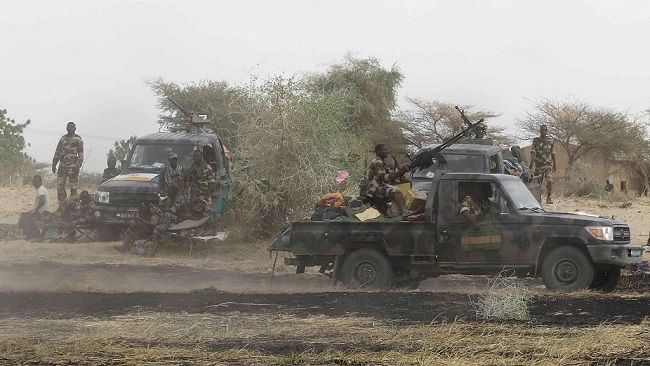
The United Nations (UN)’s children’s agency has slammed the repeated attacks by the Daesh-linked Boko Haram terrorist group against children in Nigeria, announcing that at least 1,000 children have been abducted in the African country since 2013.
More than 1,000 children, mostly under 15 years of age, have been abducted in northern Nigeria since January 2013, the UN’s Children’s Fund, UNICEF, estimated in a statement on Thursday.
“Children in northeastern Nigeria continue to come under attack at a shocking scale,” said Mohamed Malick Fall, UNICEF’s Nigeria head. “UNICEF is appealing for an end to attacks on schools and all grave violations of children’s rights.”
He also called for the release of those still held in captivity.
Boko Haram has been regularly kidnapping youngsters. In 2014, 276 schoolgirls were abducted from the town of Chibok, located in Nigeria’s northeast. The mass kidnapping triggered global condemnation and intense criticism of Nigerian officials in the country as well as an international “Bring Back Our Girls” campaign.
“Nigerian authorities have made a commitment to make schools safer and more resilient to attack, and UNICEF stands with them to implement the Safe Schools Declaration, by which Nigeria commits to protecting schools and universities from violence and military use during armed conflict,” Fall further said.
The agency also said that at least 2,295 teachers had been killed and more than 1,400 schools had been destroyed due to the militancy in Nigeria.
The Boko Haram terror campaign in Nigeria is in its tenth year and has so far killed more than 20,000 and forced the displacement of over two million others.
Most recently, more than 100 schoolgirls were kidnapped by the group in the town of Dapchi, which had previously been unaffected by the militancy. The girls were later released reportedly through quiet efforts by the government.

Four years since the Chibok abduction, however, some 100 of the schoolgirls are believed to remain in captivity. Nearly 60 of the abductees escaped soon after the incident and some others have since been released through mediation.
Nigerian President Muhammadu Buhari, a former general, came to power in 2015 on a platform of stamping out the Boko Haram militancy. Despite retaking swathes of territory from the group, though, the government has been unable to prevent attacks from continuing against both civilians and government targets.
Buhari plans to seek re-election in 2019.
Source: Presstv


















13, April 2018
Spain court rules proposed Catalan leader must stay in jail 0
Spain’s Supreme Court on Thursday rejected a request by Catalonia’s pro-independence presidential candidate Jordi Sanchez to be let out of jail and sworn in as regional head.
The Catalan parliament had been scheduled to hold a debate and vote on Sanchez’s candidacy on Friday, but after the court’s ruling Catalan parliament speaker Roger Torrent announced on Twitter he had suspended the session indefinitely.
Sanchez was remanded in custody in October pending charges over his role in last year’s failed Catalan independence bid.
An attempt to appoint him as president failed last month after Spain’s Supreme Court turned down a request for his release from jail.
But Torrent put Sanchez’s name forward as a candidate again earlier this month after the United Nations Human Rights Committee defended his political rights.
In letters sent last month to Spanish authorities and Sanchez’s lawyers, the UN committee requested the state take all steps to ensure he is allowed to exercise his political rights.
Supreme Court judge Pablo Llarena once again turned down Sanchez’s request, arguing there were signs that he could “move in the direction of a rupture of the constitutional order”.
The judge argues it was justified in limiting Sanchez’s political rights given the risk that his release would pose to the collective rights “of the rest of the community”.
Torrent had appealed earlier on Thursday for the judge to agree to let Sanchez, a former leader of influential grassroots independence group ANC who was elected to the Catalan parliament in snap polls in December, leave jail to be sworn in.
“The court has the opportunity to take note of international law and the protection of political rights or write another dark chapter in the history of the Supreme Court,” he said in an interview to news radio station Cadena Ser.
The court ruling comes as Barcelona is gearing up for a huge protest on Sunday to mark the six month anniversary of the jailing of Sanchez and Jordi Cuixart, the leader of another separatist organisation.
(Source: AFP)