16, March 2018
South Africa: Former President Zuma to be prosecuted 0
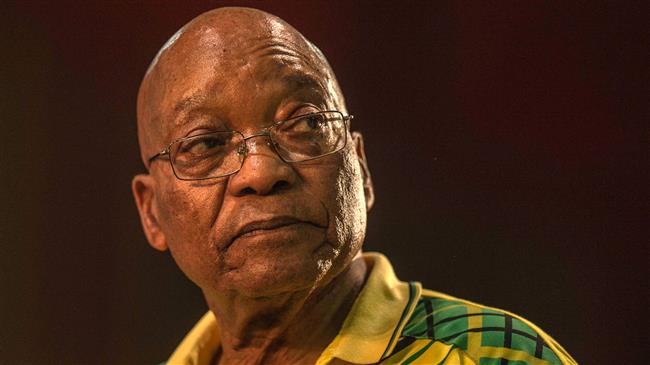
Jacob Zuma, South Africa’s former president, has been charged with fraud, racketeering, illegal arms dealing and much more.
Zuma, 75, resigned as president last month after he was ordered to do so by his party the ruling African National Congress (ANC).
Prosecutors said on Friday that there were 16 charges in total listed in Zuma’s indictment, including money laundering.
“I am of the view that there are reasonable prospects of a successful prosecution of Mr. Zuma on the charges listed in the indictment,” said Shaun Abrahams, head of the National Prosecuting Authority. He pointed to the “long history” of the reinstated charges against Zuma, which were thrown out by prosecutors nearly a decade ago in a contentious decision that opened the way for him to become president.
South Africa’s President Cyril Ramaphosa, who was Zuma’s former deputy, has promised to fight corruption.
ANC’s response
The ANC responded to the reinstated charges against Zuma, saying it had confidence in the South African criminal justice system and is committed to the idea of “equality of all before the law.” However, it emphasized and cautioned that Zuma should be “presumed innocent until and if proven guilty.”
Meantime, the ruling party urged South Africans to allow prosecutors to do their job.
In another case, South Africa’s top court ruled in 2016 that Zuma violated the constitution following an investigation of multi-million-dollar upgrades to his private home using state funds. He paid back some of the money.
In a separate case, South African authorities are seeking to arrest members of the Gupta business family, which allegedly used its connections to Zuma to influence cabinet appointments and win state contracts.

Additionally, a judicial panel is preparing to view allegations of corruption at high levels of the South African government during Zuma’s years in office.
Opposition’s delight
South Africa’s main opposition party the Democratic Alliance (DA), which spent years in court trying to get trials against Zuma started, called on prosecutors to continue legal procedures against Zuma without delay.
“Now there must be no further delay in starting the trial,” said Mmusi Maimane, leader of the DA party. “The witnesses are ready, the evidence is strong, and Jacob Zuma must finally have his day in court.”
Culled from Presstv













16, March 2018
57,000 people flee violence in Congo-Kinshasa to Uganda 0
The United Nations refugee agency says more than 57,000 people have fled violence in the eastern Democratic Republic of the Congo to Uganda this year.
The UNHCR said in a statement on Friday that most of the 57,000 displaced people were women and children.
UNHCR spokesman Babar Baloch told reporters in Geneva that the figure far exceeds the 44,000 refugees who entered Uganda through the entire 2017.
The UN agency said over 4,000 people from the provinces of Ituri and North Kivu entered Uganda between March 10 and 13.
According to the statement, the majority of the refugees are using the dangerous route of Lake Albert, traveling upon unsafe boats from Ituri, which has been wracked by conflict between the Hema and Lendu communities.
Tensions between Hema cattle herders and Lendu farmers have largely laid dormant since a 1998-2003 war, which claimed the lives of thousands, but have flared again in recent months because of disputes over land.
More than 100 people have been killed since the violence erupted in Ituri in mid-December. The unrest has also forced 200,000 people to flee their homes.
The UN agency further said on Friday that the struggles aid workers face in accessing violence-hit regions made it “difficult to offer a detailed picture of the situation.” It, however, said “UNHCR has received chilling accounts of violence”, including rape and murder.
The agency also said it had stepped up measures to support survivors.
The DR Congo is suffering from growing insecurity. New conflicts are erupting as President Joseph Kabila struggles to maintain his grip on power after his constitutional term in office expired in December 2016.
Armed groups are active in the eastern provinces of North Kivu and South Kivu, which border Uganda, Rwanda, Burundi and Tanzania.
Violence has also erupted in the central region of Kasai. There, a tribal chieftain known as the Kamwina Nsapu, who rebelled against Kabila’s regime, was murdered in September 2016.
Source: Presstv