5, February 2018
Southern Cameroons: Interim Government picks a tactful leader 0
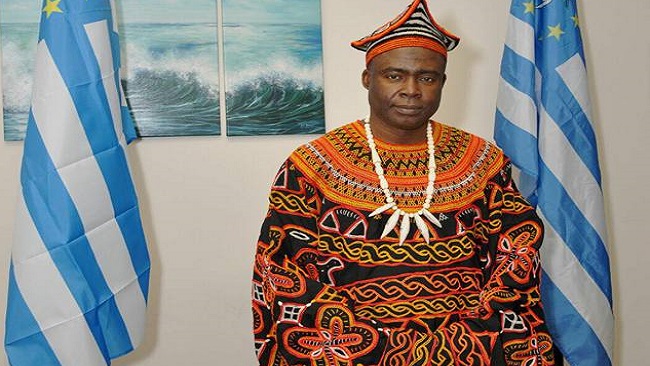
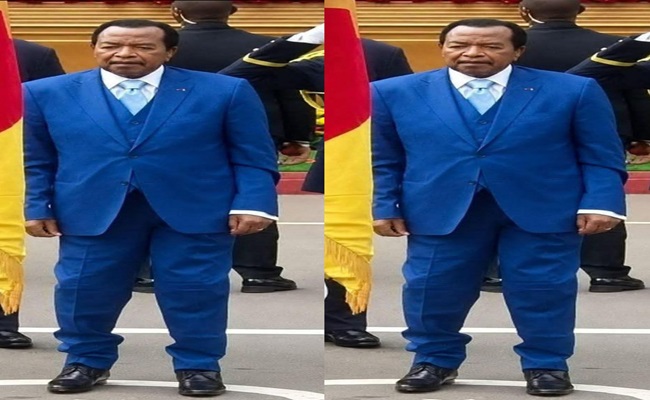
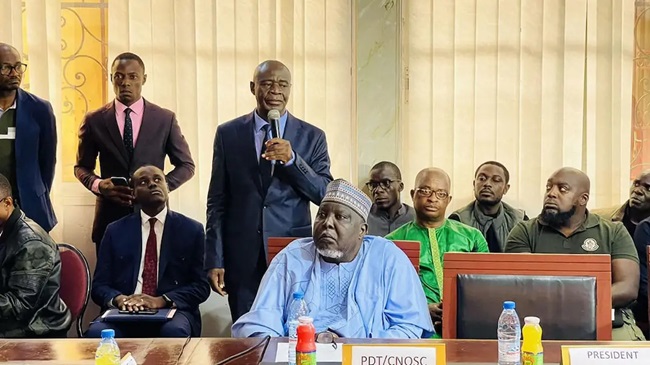
The Interim Government of the Federal Republic of Ambazonia has elected Dr. Sacko Ikome to replace Sisiku Ayuk Tabe. A spokesperson for the Southern Cameroons government said that Dr. Sacko “considers the journey to Buea as urgent.”
The Ambazonia’s newly-elected leader is also expected to get possible replacements for the top aides abducted alongside President Sisiku Ayuk Tabe in Abuja Nigeria. “Dr. Sacko is a political leader and that’s why he is going to continue with the march to Buea” noted the Ambazonia Secretary of the Economy, Hon. Tabenyang
Sisiku Ayuk Tabe, who was handed over to La Republique du Cameroun by the President Buhari administration had been due to be reelected as the president in a leadership vote in the conclave. However, after very intensive and productive discussions, the Ambazonia Interim Government voted in favour of a mechanism for continued presidency.
We understand the former leader and senior figures of the Southern Cameroons independence movement are currently being held at the Secretariat for Defense in Yaoundé on charges of rebellion and sedition. Some Southern Cameroons political barons had suggested Sisiku Ayuk Tabe could rule Ambazonia from his detention cell, something that many in the Diaspora fiercely opposed.
By Soter Tarh Agbaw-Ebai




















5, February 2018
Mali: 4 civilians killed in militant attack 0
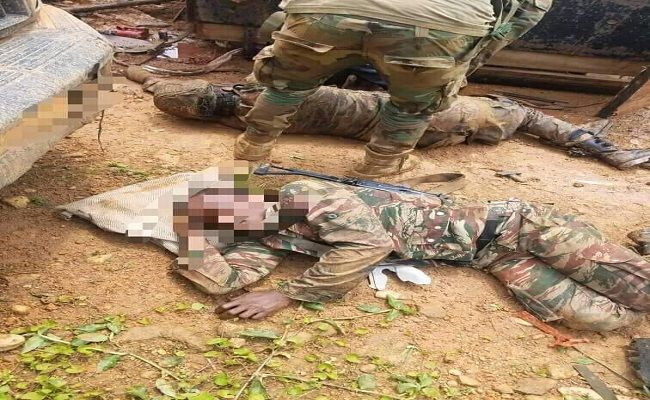
At least four civilians have been killed in a suspected militant attack in northern Mali over the weekend, local officials said Sunday.
An unknown number of the attackers were also killed in fighting as the “suspected militants killed at least four civilians around Talataye,” a northeastern town of around 14,000 people, regional officials told AFP.
Mali’s deteriorating security situation is of growing concern as al-Qaeda-linked groups mount increasingly deadly attacks on domestic and foreign forces.
In the Talataye area the militants often target an Azawad group, the traditionally nomadic Tuareg people of the desert, who they consider too close to a pro-governmental armed group, another elected local official said.
Civilians considered too close to the Azawad group are, in turn, considered legitimate targets, he added.
According to a Mali security source, the assailants took hostages during Friday’s attacks, and killed at least one of them on Saturday.
On Sunday tension remained high in and around Talataye, a foreign security source told AFP.
Friday’s attack came after Mali’s army decided to ban the use of scooters and pick-up trucks in some areas to boost their fight against armed militant groups.
Such vehicles are often used by extremist fighters, in the north and the center of the country.
The ban applies to a dozen “circles” in the central regions of Segou and Mopti and northwest Timbuktu region.
“Humanitarian convoys, and all other convoys, must receive authorization from the local military command in order to receive an escort,” the army said, adding that anyone failing to do so would be considered a “military target”.
In late January, 14 soldiers were killed and 18 more wounded in an attack on their camp in Mali’s restive north.
That attack in Soumpi, in the Timbuktu region, came two days after 26 civilians including mothers and babies were killed when their vehicle ran over a landmine in Boni, central Mali, according to a UN death toll.
Extremists linked to al-Qaeda took control of the desert north of Mali in early 2012, but were largely driven out in a French-led military operation launched in January 2013.
In June 2015, Mali’s government signed a peace agreement with coalitions of non-militant armed groups. But extremist insurgents remain active, and large tracts of the country are lawless.
“Humanitarian convoys, and all other convoys, must receive authorization from the local military command in order to receive an escort,” the army said, adding that anyone failing to do so would be considered a “military target”.
(Source: AFP)