8, February 2018
UN says over 300 child soldiers have been freed in South Sudan 0
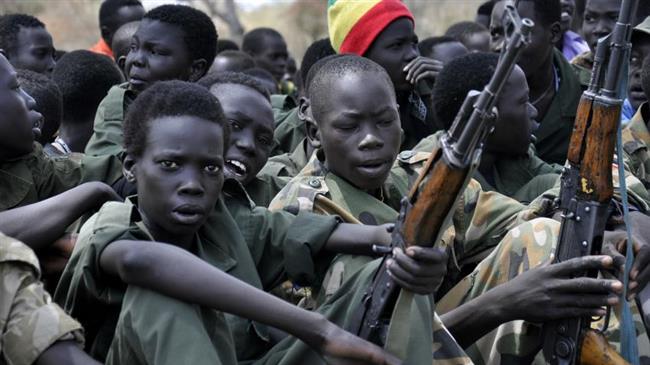
The United Nations says over 300 child soldiers have been released by armed groups in war-ravaged South Sudan under a scheme to help reintegrate them into society.
According to the United Nations Mission in South Sudan (UNMISS), at least 311 children, 87 of them girls, were released by armed groups on Wednesday in Yambio, which is located in the south of the country.
David Shearer, the UN secretary general’s special representative and head of UNMISS, said in a statement that the children would soon begin reintegrating into their communities and learning new skills to support themselves. “This is the first time so many young women have been involved in a release like this in South Sudan,” the statement read.
“They will have endured suffering, including sexual abuse. It is vital that they receive the support they need to rejoin their communities and that they are welcomed home by family and friends without any sense of stigma.”
“Children should not be carrying guns and killing each other. They should be playing, learning, having fun with friends, protected and cherished by the adults around them,” Shearer said.
The integration program in Yambio is aimed at helping 700 child soldiers return to normal life. Of these, 563 are part of President Salva Kiir’s force and 137 are with rebels.
The UN peacekeeping force, acting in unison with the UN children’s agency UNICEF, is negotiating the release of child soldiers in other regions of the country.
“This is a crucial step in achieving our ultimate goal of having all of the thousands of children still in the ranks of armed groups reunited with their families,” said Mahimbo Mdoe, UNICEF’s Representative in South Sudan. “It is the largest release of children in nearly three years and it is vital that negotiations continue so there are many more days like this.”

Civil war broke out in South Sudan in December 2013, just two years after the country became independent, when disagreements between President Kiir and then Vice President Riek Machar turned into an armed conflict between their loyalists. While fighting generally subsided early last year, clashes once again intensified in July 2016.
Tens of thousands of people have died and more than four million people have been driven from their homes, while millions of others are suffering from hunger in a humanitarian crisis expected to worsen as the lean season sets in.
The UN and international rights groups have on numerous occasions accused both Machar’s loyalists and government troops of committing atrocities during their military operations.
Source: Presstv














8, February 2018
Fake Biya signature is gradually confirming the population’s suspicion 0
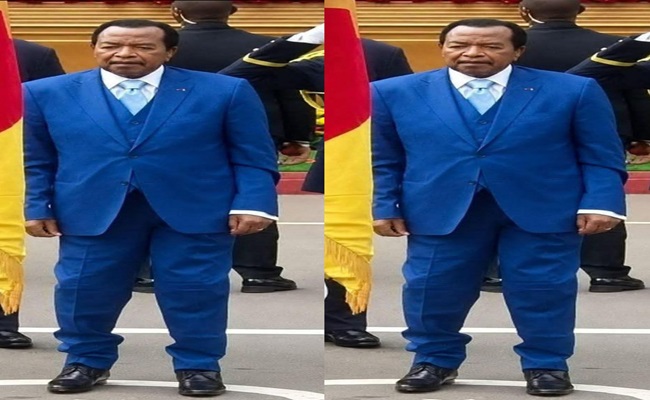
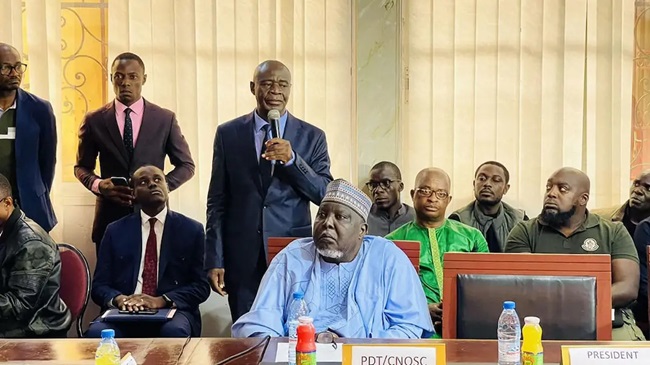
There have been speculations concerning the whereabouts of Cameroon’s president, Paul Biya, who has been missing in action for some time now. But yesterday’s establishment of the constitutional council and the appointment of its members is causing more controversy. Yesterday’s presidential decrees established a constitutional council provided for in the 1996 constitution and appointed members of the said council. 77-year-old Clement Atangana, a legal expert of Beti extraction, who has been on retirement for more than ten years, was appointed as head of the constitutional council, while other very old faces were appointed as members of the same council in the same decree. Members of the council are members of the ruling CPDM and people who are personally loyal to the country’s president and his collaborators.
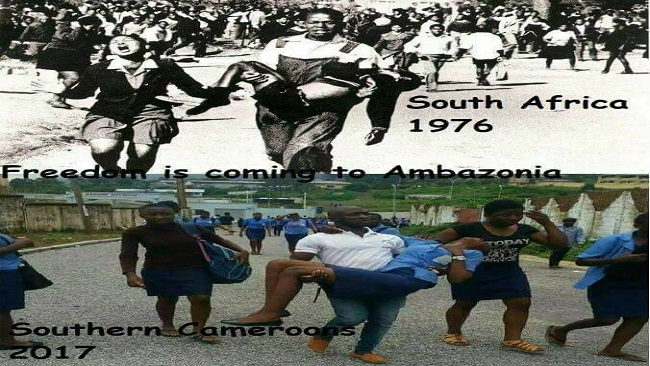
The appointment of these old and retired Cameroonians underscores the fact that Mr. Biya is not yet ready to give Cameroonian youths a place in today’s Cameroon. Besides marginalizing youths, Mr. Biya is still pursuing his policy of Anglophone marginalization by appointing only Francophones to head major government institutions. It should be underscored at this point that all heads of important structures in Cameroon are Francophones despite the ongoing Anglophone crisis which was triggered by the government’s marginalization of the country’s English-speaking minority.
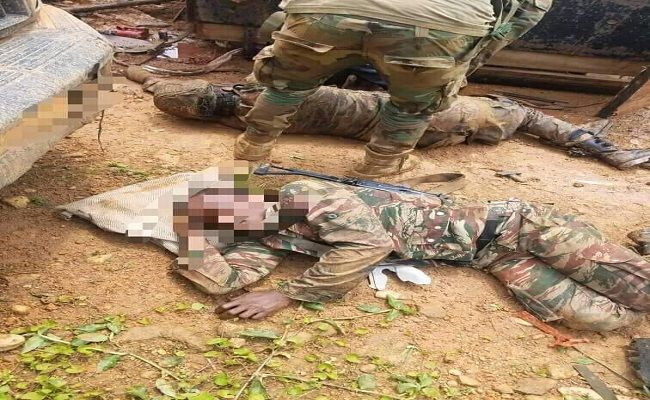
But this is not what is concerning Southern Cameroonians in particular. Southern Cameroonians are still fighting for their secession and they are hell-bent on quitting a marriage that has brought them more pain than gain. There has been serious fighting in many towns in the Southwest region of the country, with many young men being killed in cold blood by army soldiers. Our sources say some of the young men killed had nothing to do with the rebellion that is unfolding in the English-speaking regions of the country.
It should be recalled that some towns such as Kwakwa in the Southwest region have been erased from the country’s map as army soldiers have burnt all the houses and sent everybody into exile. Currently, Mbonge in the same region is being attacked by army soldiers who are killing and maiming any young men they find in the town.
It is worth pointing out that the greatest concern to many Cameroonians is the whereabouts of their president who has not been seen in public for many weeks. The signatures on the two presidential decrees released yesterday are different and this is causing many Cameroonians to argue that those signatures were forged to give the impression that Mr. Biya who is suspected of either being dead is alive.
Over the last week, there have been rumors that Mr. Biya who is suffering from cancer and a failing heart is gradually heading to his grave. Some sources had even indicated that he had died and that there was commotion among his supporters who are all scared of losing their positions and influence.
A Cameroon Intelligence Report’s source at the Unity Palace, which elected unanimity, had informed our cream of intelligence officers in Yaoundé that everything pointed to the demise of the 85-year-old dictator who has ruled the Central African country for 35 years with an iron fist.
The source added that given the way in which government officials had been visiting the Unity Palace over the last week, it was clear that Mr.Biya was no more. The atmosphere at the presidential palace was tense and government officials had been holding meetings to come up with a common response so as to keep the population in the dark.
Our source added that members of the Cameroon strong man’s entourage were working hard to keep the information from the public place in the pious belief that they could change things to suit their intention.
He stressed that the Secretary General at the presidency had been holding a series of meetings with some of his collaborators who were advising him to issue decrees that would usher in constitutional changes on Mr. Biya’s behalf and the appointment of Clement Atangana is one of the changes the Beti Mafia was advocating.
The calling of senatorial elections next month, our soured added, was one of the moves designed by the Beti Mafia to kick out the current senate president, Marcel Nyat Njifenji, so that it could retain power even after Mr. Biya was dead and gone.
Under the country’s current constitution, the constitutional successor is the president of the senate, Marcel Nyat Njifenji, himself 83 years old and a collapsing figure who has been involved in the corruption and mismanagement that have become the country’s hallmark. Many Cameroonians hold that if the country has to change significantly, figures like the senate president and national assembly speaker have to disappear from the political scene.
By Kingsley Betek with files from Rita Akana in Yaounde