
17, November 2025
Boxing: Joshua to fight YouTube star Paul in December 0
Former world heavyweight champion Anthony Joshua will fight YouTube star Jake Paul in a professional bout next month.
Britain’s Joshua, the 36-year-old former two-time unified heavyweight champion, will take on the YouTuber-turned-boxer at Kaseya Center in Miami.
The fight, which will be streamed live on Netflix, will take place on 19 December and consist of eight three-minute rounds.
Joshua, who weighed more than 250lbs during his previous three fights, must come in at under 245lbs and both fighters will wear regulation 10-ounce gloves.
The bout is a replacement fight for Paul, who was scheduled to take on Gervonta Davis in an exhibition earlier this month before it was cancelled because of a lawsuit filed against Davis by his ex-girlfriend.
“This isn’t an AI simulation. This is Judgment Day,” said 28-year-old Paul.
“When I beat Anthony Joshua, every doubt disappears, and no-one can deny me the opportunity to fight for a world title. To all my haters, this is what you wanted.”
Speculation that Joshua would fight Paul was initially denied, but he will return to the ring against the American for the first time since being knocked out by then IBF champion Daniel Dubois in September 2024.
“I took some time out and I’m coming back with a mega show. It’s a big opportunity for me,” said the 2012 Olympic gold medallist.
“Whether you like it or not, I’m here to do massive numbers, have big fights and break every record whilst keeping cool, calm and collected.
“Mark my words, you’ll see a lot more fighters take these opportunities in the future. I’m about to break the internet over Jake Paul’s face.”
Paul became famous via a YouTube account that now has close to 21m subscribers.
However in recent years he has switched his attention to boxing and has primarily fought as a cruiserweight at about 200lbs.
He weighed in at the heavyweight weight of 227.5lbs when he beat former world champion Mike Tyson in an exhibition fight in 2024 that attracted 108m viewers.
Paul then beat former world middleweight champion Julio Cesar Chavez Jr, 39, via a unanimous points decision, a victory that earned him the number 14 spot in the WBA cruiserweight rankings.
But Paul – who has a 12-1 win-loss record, with seven knockouts – has only boxed a total of 70 rounds since turning professional in 2020.
Joshua (28-4, 25 KOs) by contrast, has 12 years of experience as a professional and has boxed more than 160 rounds.
“It’s an incredible day,” Nakisa Bidarian, CEO of Most Valuable Promotions, told Sky Sports.
“Jake thought of this in March of this year and said, ‘I want to fight Anthony Joshua’.
“People laughed then. In July the question was asked, ‘do you see this happening?’ – and the plan was to do this in March or April of 2026. Plans changed and Jake stood up and said, ‘I want to face Joshua now’.”
Joshua’s decision to take the fight raises question marks about his future in top-level boxing, while Paul was accused of making a “mockery” of the sport in the past when he likened himself to Muhammad Ali.
“This is a huge step up for Jake Paul,” said promoter Frank Warren.
“It’s dangerous for Jake – this is someone with vast experience he’s fighting. Jake’s had some fights, but not to this level.
“But I’ll tell you who it’s more dangerous for – it’s AJ. If he gets caught – he’s done. I’m not saying that’s going to happen but if it does, he’s finished. AJ’s vulnerable, I’ve always thought he’s been vulnerable.
“People will pay to watch it; it’s a car crash and people will tune in to see a car crash.”
British heavyweight Moses Itauma, who trains with Joshua, said the bout was a “terrible” idea and Paul should “fire his advisers” as it was “100%” dangerous for the YouTuber to step into the ring.
“You don’t mess around with things like this,” Itauma told BBC Radio 5 Live.
“I like Jake Paul and I’m not saying he shouldn’t take the fight. I just feel like he needs to weigh up the outcomes. If I was Jake Paul’s brother, I’d be very worried.”
The 20-year-old also said he does not blame Joshua for taking the money to fight Paul rather than worrying about whether it will affect his boxing legacy.
Itauma added: “Your kids can’t eat legacy. If you’re talking about getting paid hundreds of millions of dollars to fight a YouTuber, why not?”
Source: BBC















17, November 2025
Biya regime road-control suspension sparks clash between transport ministry and gendarmerie 0
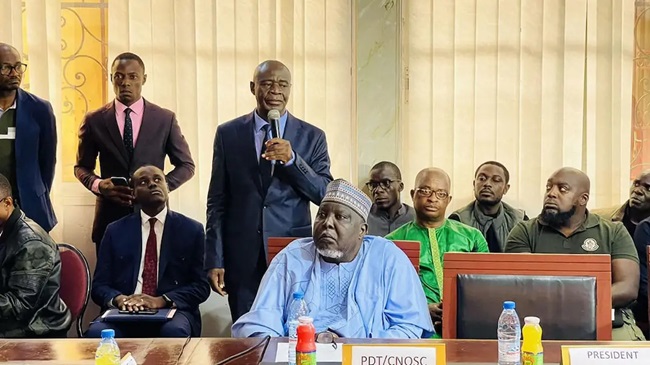
The Minister of Transport, Jean Ernest Masséna Ngalle Bibehe, met road transport associations in Yaoundé on 4 November 2025 to outline measures designed to revive an activity weakened by post-electoral tensions. The ministry announced a temporary suspension of roadside prevention and road-safety operations conducted jointly with the National Gendarmerie.
The minister issued a 12 November note ordering all decentralized services to halt these operations on national roads. The ministry maintained sensitisation activities and compliance monitoring in bus stations, travel agencies, driving schools and schools.
Gendarmerie Warns of Growing Confusion
The measure prompted an immediate reaction from the National Gendarmerie, which fears the risk of disorder on the roads. In a 10 November letter addressed to the Transport Minister — which subsequently leaked online — the Secretary of State to the Minister of Defence in charge of the Gendarmerie (SED), Galax Etoga, warned of “abuses observed” since the minister’s communication.
He reported rising tensions between transporters and road units. Some truck drivers now reject any form of control, claiming that “all controls have been lifted by the Ministry of Transport”. Mixed checkpoints placed at city entrances are also being challenged.
Given the situation, the SED urged the ministry to provide “clarification” to avoid escalation “during this sensitive period”. Etoga instructed road units to suspend, until further notice, all fines and all checks specifically suspended by the minister, including weight-listing controls. He stressed that the Gendarmerie has not dismantled its security checkpoints, insisting that units continue to secure the network “without harassment”.
A Long-Standing Institutional Dispute
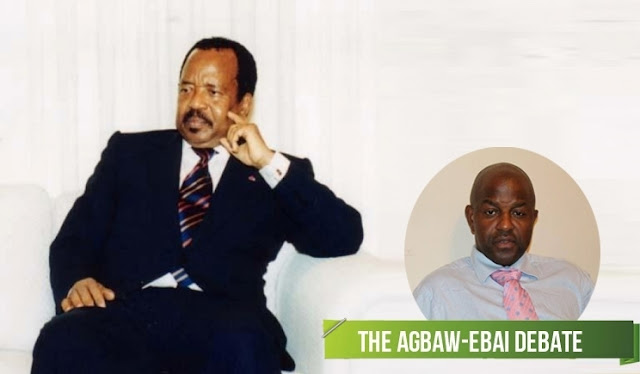
The incident revives an older conflict about authority over road-safety enforcement. In 2012, President Paul Biya settled overlapping responsibilities by assigning all repression of road infractions exclusively to the Gendarmerie and the Police, while directing the Transport Ministry toward prevention, sensitisation and road-safety education. The ministry’s control equipment was formally transferred to security forces.
The friction, however, persists on the ground. According to Galax Etoga, “agents of the Ministry of Transport encroach on the prerogatives of the security forces” by conducting “repressive” controls, which confuse road users. He requested that the equipment used by these agents be returned to the Gendarmerie to reinforce the national road-safety system.
The Gendarmerie said it has already adjusted its deployments to ease traffic, through more escorts, patrols and support operations. It called for a tripartite dialogue involving the Transport Ministry, the General Delegation for National Security and the Gendarmerie to establish clear, definitive divisions of responsibility.
Sector Awaits Ministerial Clarifications
The ministry is now expected to issue the clarifications requested by the SED. Transport operators face rising uncertainty in a sector already weakened by the post-electoral climate.
Analysis
The partial suspension of roadside controls, issued without a unified enforcement protocol, created a regulatory vacuum that encouraged misunderstandings and opportunistic behaviour. In a post-electoral environment, the issue extends beyond traffic fluidity and touches directly on the credibility of the state as regulator. Aligning mandates — prevention for the ministry, enforcement for security forces — and publishing joint, binding instructions appear necessary to restore legal clarity and operational stability.
Source: Sbbc