3, November 2025
Biya’s continued stay in power: Archbishop Kleda says unrest reflects deep frustration and poverty 0
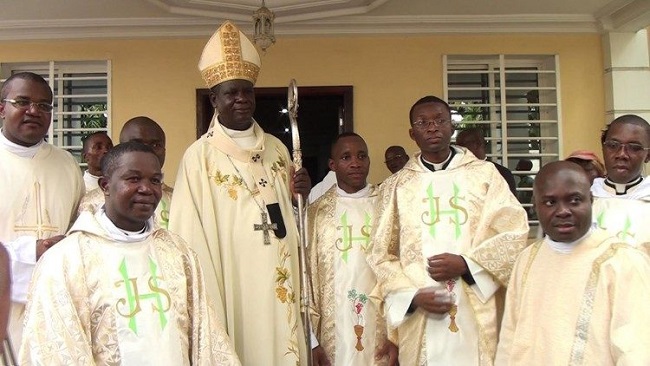
Archbishop Samuel Kleda of Cameroon’s Catholic Archdiocese of Douala has condemned the post-election violence that erupted across the country following the proclamation of results from the October 12 presidential poll.
In a statement issued on November 1, Archbishop Kleda noted that unrest reflects deep frustration, poverty, and widespread distrust of political institutions.
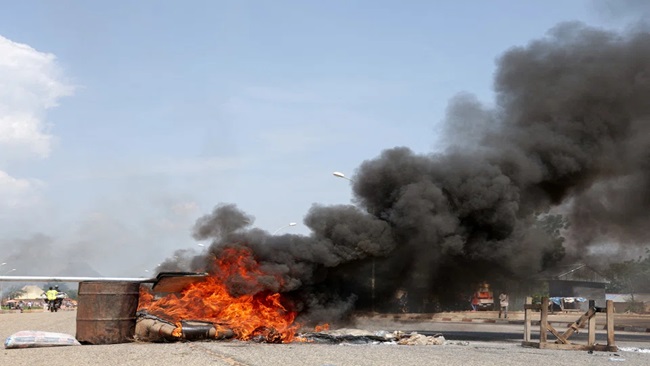
“The proclamation of the results of the October 12 poll, with the disappointment and outrage it rekindled in the minds and hearts of many of our compatriots, gave rise to peaceful protests and demonstrations,” the Cameroonian Catholic Archbishop said in his reflection on the Solemnity of All Saints, Archbishop.
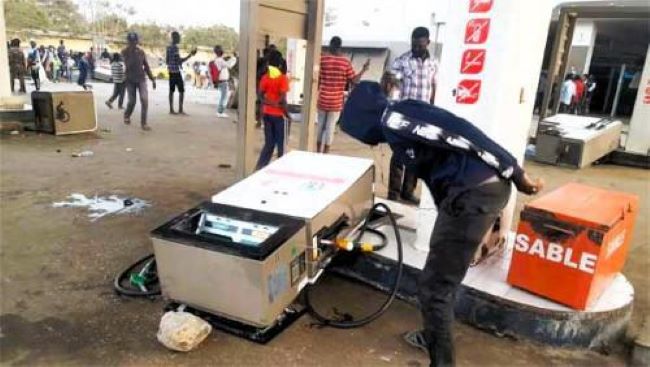
He lamented, “Unfortunately, these experienced serious excesses through acts of vandalism, looting, and theft, with grave consequences on the material and economic lives of many innocent people in cities such as Douala, Garoua, Maroua, Bertoua, Dschang… This is deplorable and condemnable.”
On October 27, Cameroon’s Constitutional Council confirmed the re-election of President Paul Biya, Africa’s second-longest-serving head of State, rivalled only by President Teodoro Obiang of Equatorial Guinea.
The official results showed Biya winning the October 12 election by 53.66 percent of the total votes, against 35.19 percent for opposition leader Issa Tchiroma Bakary, Reuters reported.
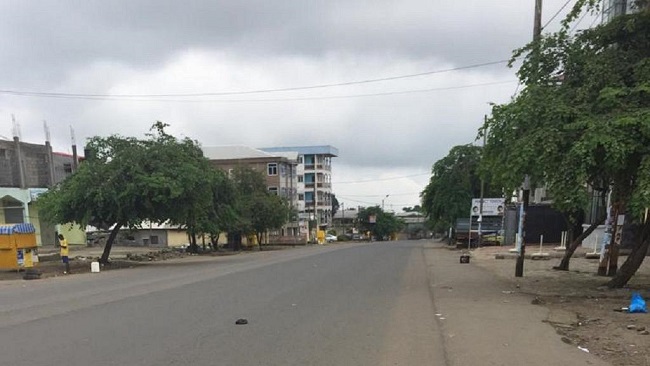
On October 31, Mr. Tchiroma called for three days of ghost town protests from November 3-5.
In his November 1 statement, Archbishop Kleda lamented that public buildings, commercial establishments, and shops were vandalized, looted, emptied, and others set on fire during the protests.
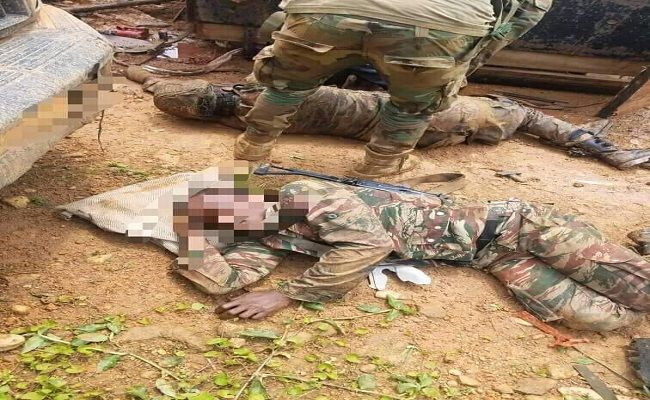
“These regrettable acts have plunged innocent people into distress and misery,” he said, further decrying verbal and physical violence, intimidation, arrests, and killings—particularly among the youth—that continue across the country.
He added, “While working on new ways to preserve the security of people and property, it is essential that this violence, intimidation, these arrests and killings come to an end. Cameroon should not be a land of permanent confrontation between the government and the people after each presidential election.”
Archbishop Kleda further said, “Democracy is incompatible with cannon fire, threats, arbitrary arrests, and intimidation of citizens who think differently. Elections are not organized to kill fellow citizens. One does not govern a people with weapons.”
“No government in the world can govern without the people; it governs for the people, and has the duty to love them and meet their legitimate and profound aspirations,” the Catholic Church leader says.
President Biya is the world’s oldest Head of State, having served since 1982 in the Central African nation, where Presidents have a seven-year mandate.
Constitutional amendments that the 92-year-old President’s party, the Cameroon People’s Democratic Movement (CPDM), spearheaded in 2008, abolishing the two-term presidential limit, brought about his “extraordinarily long tenure”.
After the presidential polls, the opposition contender, Tchiroma, reportedly announced himself the winner.
His declaration was dismissed by Minister of Territorial Administration Paul Atanga Nji, who denounced it as unlawful and “a matter of serious concern.”
The ruling CPDM also condemned Tchiroma’s claim as a “grotesque hoax,” maintaining that only the Constitutional Council is authorized to officially declare the winner.
However, there are reportedly widespread concerns about electoral transparency, fairness, and integrity. Opposition groups, civil society, and media have flagged possible irregularities.
In his November 1 statement, Archbishop Kleda said the October 12 presidential election had appeared to many Cameroonians as “a kairos”, and the favourable moment “to write a new page of our history.”
“By a very large majority, we expressed this desire, this will, this deep aspiration of our hearts and souls, by the massive choice of the candidate, the leader whom we deemed capable of satisfying this great hunger and quenching this immense thirst of the Cameroonian people,” he said.
“Through the reactions of many after the proclamation of the results of the presidential election of 12 October 2025, many citizens who hoped for a better future are firmly convinced that their choice was not respected. It was scorned and, worse still, ignored; today, their disappointment is immense,” the Catholic Archbishop said.
The Local Ordinary of Douala, who started his Episcopal Ministry in Cameroon’s Catholic Diocese of Batouri in February 2001, outlined the dire socio-economic conditions that fuel public anger, saying, “The suffering and poverty of the interior of Cameroon are being loudly cried out. People are hungry because they have no work. The current general unemployment rate is estimated at 74%, and the 2024 poverty rate at around 37.7%.”
The Local Ordinary of Douala Archdiocese expressed concern that “10.1 million Cameroonians live on less than 1,000 CFA francs (US$1.76) per day.”
He said, “Cameroon counts more than six million citizens on the roads of exile or in illegal immigration … Our country lacks a reliable economic system that creates jobs. The energy deficit (water and electricity) does not allow for the development of our economic fabric.”
He further said, “People are anxious about this situation, which continues with no sign of hope. Citizens or families prefer to leave the country. People who take to the streets to cry out their despair express a rupture and call on the conscience of their leaders.”
Archbishop Kleda added, “If billions are spent to organize elections, money can also be found for the well-being of the population. We cannot turn a deaf ear or remain indifferent and insensitive to the distress signals they send us.”
He says, “Appeasement, and the preservation of peace and stability in our country today, depend on a collective awareness of these different crises that undermine our nation and generate the suffering and misery of Cameroonians, and on a firm will to provide appropriate solutions.”
“May the Holy Spirit enlighten our leaders and the Cameroonian people, and may the Virgin Mary, Patroness of Cameroon, intercede for us,” Archbishop Kleda implores.
Source: aciAfrica










3, November 2025
Issa Tchiroma is now under Nigeria security protection in Yola 0
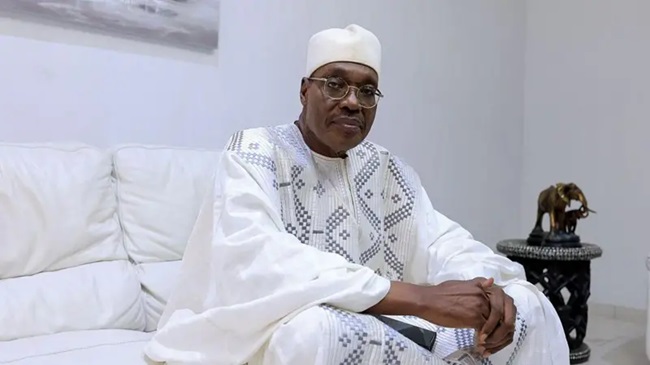
Issa Tchiroma Bakary was abducted in a raid on a residence in Yola, Adamawa State in Nigeria by Nigeria security forces between 10pm and 11pm on Sunday, 2 November, according to a deep background briefing.
The Nigeria force acted on a tip off from Cameroon security after locating Tchiroma through signals emitted from his mobile phone. Cameroon security described Tchiroma as a “dangerous criminal” to their Nigeria counterparts. Nigerian security acted swiftly.
A special squad from Cameroon was already in Nigeria to bring Tchiroma back home, “Nera 10” style, but when Nigeria authorities realized who he is, they halted the agreed extradition. He is now fully under Nigeria security protection, thus ending another close shave with arrest.
Before this incident in Nigeria, Cameroon defense and security forces had closed in on Tchiroma’s Marouare residence but he had already been removed and “escorted to a safe location”, before state defense and security forces surrounded his residence in a way that looked like an undeclared house arrest.
A commentator familiar with security and defence operations said the Cameroon forces obviously preferred a smooth operation, seeking to avoid a bloodbath that could have shocked public opinion and angered Tchiroma’s supporters ahead of the planned swearing in of Paul Biya.
Tchiroma was taken out of his Marouare residence in Garoua on the night of 28-29 October. A 31 October post on his “Tchiroma 2025” Facebook account reads, “I thank the loyalist army, which has shown its patriotism by escorting me to a safe location and is currently ensuring my protection.” Unsure how to keep him safe without the risk of raids that could cause an escalation, Tchiroma was escorted across the border into Nigeria hours later.
Some commentators on social media have described Tchiroma’s departure from his residence as an act of cowardice and abandonment of his followers. But a close aide to Tchiroma said in a background briefing in Garoua, “A leader does not offer himself to be arrested. He has to be at a safe and secure location to coordinate the movement for the restoration of the people’s victory, stolen in favour of Paul Biya.”
The aide went on: “Without the leader, protests can go out of hand. People are deeply angry. They are expressing themselves. They can go overboard. The leader has to be at a safe and secure place to coordinate and guide them. Imagine a scenario where President Tchiroma is captured. Can you imagine how that would incense the population and what could be the outcome?” the aide concluded.
There had been several incidents, suggesting subtle attempts to take Tchiroma into custody. Midmorning on 29 October, gendarmes stormed Tchiroma’s quarters. Concordant testimonies by his vanguards outside his compound and private security personnel guarding other compounds in the neighbourhood confirmed there were gunshots around Tchiroma’s compound that morning. No one was hurt.
That attack last week Wednesday, came the day after the Minister of Territorial Administration, Paul Atanga Nji, in a press briefing in Yaoundé, warned that Tchiroma would be dealt with for inciting “post-election violence”. Tchiroma had called on his supporters to go to the streets the day before the results were proclaimed.
Atanga Nji had said on previous occasions that Tchiroma had broken the law by declaring himself winner of the presidential election the day after the election, an act which, the minister said, is the preserve of the Constitutional Council.
On 30 October, soldiers in fours, fives and sixes in combat attire and carrying guns were seen jumping off military vehicles at different parts of the Marouare residential quarters where Tchiroma lives. It looked like a raid. From either side, their maneuvers pointed in the direction of Tchiroma’s neighbourhood. It is not certain what their mission was.
On Friday and Saturday, the soldiers set up makeshift sentry posts within 50 meters of Tchiroma’s residence on all sides. That was seen as a way of restricting his move, a kind of undeclared house arrest.
It was the first time soldiers, described as “third degree force” used mainly for serious combat operations beyond the competence of police (first degree) and the gendarmes (second degree), were seen in the neighbourhood since the election day and post-election tensions gripped Garoua.
Prior to that day, only police personnel were seen at various junctions. They generally did not restrict movement around Marouare. But from mid last week to the weekend, especially on 30 October, they prohibited access to motorbikes, vehicles and even pedestrians who did not prove they were resident in the neighbourhood.
On 27 October, the day results of the presidential election was proclaimed, snipers shot two of Tchiroma’s vanguards from the balcony of the nearby residence of Yerima Dewa, former member of Tchiroma’s FSNC who resigned from the party after Tchiroma declared his intention to run for president. One of those shot died on the spot.
That was not the first time Tchiroma was taken away from perceived danger. On 12 October, Election Day, his vehicle was intercepted by state security forces. His mob of supporters, believing the forces meant to arrest him, found a way of snatching him away. That day, a voice in a video circulating on social media said “the population had rescued Tchiroma from abduction by the forces of law and order and moved him to a secure place.”
After that incident, scores of youths volunteered to provide security around his compound. Some observers described them as a human shield that would have to be killed in numbers to gain access into Tchiroma’s compound in case of an attempt to arrest or abduct him.
In the days leading to the proclamation of results, there was an attempt to poison the food of the vanguards around Tchiroma’s compound, according to an account by a Tchiroma aide. The aide said an unknown woman brought about one thousand sandwiches and offered them to the vanguards. It was taken as an act of community support to their cause. Three vanguards that had eaten it before the officials were made aware of the gift, fell asleep within minutes and remained in profound sleep for over 24 hours.
The suspecting officials tested further by feeding the sandwich to cats. They witnessed about the same sleeping effect. “We concluded it was an attempt to cause the entire ‘battalion’ of vanguards to fall asleep so they could walk in easily and take our president away,” said the aide.
By Franklin Sone Bayen