20, January 2022
Political Africa Cup of Nations holding in the middle of ongoing Amba conflict—and is still fighting for the world’s respect 0
Two and a half years later than planned, Cameroon is hosting the Africa Cup of Nations (AFCON). The tournament was moved to Egypt in 2019 over concerns about Cameroon’s readiness in terms of infrastructure, and in 2021, it was delayed because of the COVID-19 pandemic. Cameroon’s hosting privilege has been controversial due to the country’s ongoing conflict, which began in 2016.
Anglophone Cameroonians constitute 20 percent of the population and feel marginalized by the Francophone majority. Cameroonian President Paul Biya speaks only French in public, and his government largely ignored the demands of lawyers and teachers who led peaceful protests against Francophone dominance in 2016. The conflict has since become increasingly violent, and many Anglophones now demand an independent state called Ambazonia.
Although rebels have launched attacks in the Cameroonian towns of Buea and Limbe, which are holding AFCON matches, Cameroon’s military says separatists have not been able to disrupt the games.
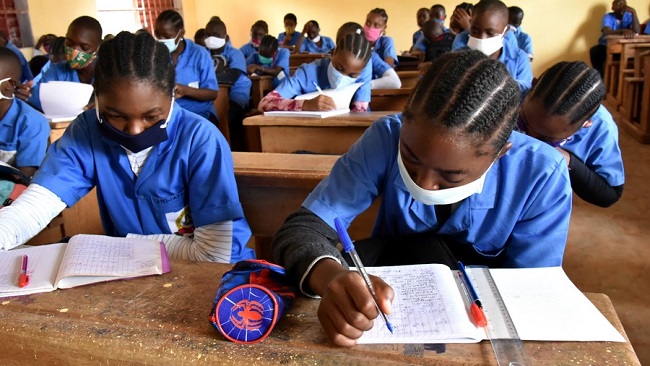
Authorities blamed separatists for the killing of a Cameroonian senator last week, and for a video shared on social media platforms in which armed men are seen ordering 15 children in school uniforms to strip naked. Separatist fighters vow to continue to carry out anti-AFCON operations. So far, fighting has deprived an estimated 700,000 students of their education, according to Human Rights Watch.
Some 6.2 million Cameroonians are in need of humanitarian aid, yet most media coverage has centered on the chaotic refereeing during the Tunisia-Mali game and AFCON’s potential disruption of the English Premier League.
On Dec. 10, 2021, the European Club Association wrote to the Confederation of African Football (CAF) threatening to withhold African players over the omicron variant, a decision that would have defied FIFA rules. Clubs also feared losing stars, such as Liverpool’s Mohamed Salah, who plays for Egypt, and Sadio Mané for Senegal as well as Manchester City’s Riyad Mahrez playing for Algeria.
Despite negotiations, Senegal and Nigeria have had to play without England-based stars Ismaïla Sarr and Emmanuel Dennis. It is rarely mentioned that the AFCON has a much longer lineage than the Premier League, which was founded in 1992. “Is there ever a tournament more disrespected than the Africa Cup of Nations?” former England and Arsenal striker Ian Wright said via social media.
As the world’s second-oldest continental tournament, AFCON has always been political. The first ever tournament took place in 1957, as countries began gaining independence from colonial rule under the rhetoric of a tournament for an independent Africa, which would showcase the continent’s ability to organize and maintain its own sporting institutions.
The founding nations were Egypt, Sudan, Ethiopia, and South Africa, though the latter was subsequently dropped for refusing to allow nonwhite players into the national team.
Soccer, argued Ghana’s first president, Kwame Nkrumah, could herald respect for Africa on a global platform. Ghana’s Black Stars went on to win AFCON in 1963—six years after independence. In 1996, host nation South Africa won its first championship with a multiracial post-apartheid team. CAF opposed FIFA World Cup’s allocation of one place shared between Africa and Asia well into the mid-1960s. It wasn’t until 1970, after Africans boycotted the 1966 games, that Africa and Asia were allocated separate places at the World Cup.
At least in some countries, competition seems to be bringing people together. When Nigeria scored a surprising win against Egypt early in this year’s tournament, “that one goal brought a nation of more than 250 ethnic groups … together,” British Nigerian journalist Aisha Rimi wrote in the Independent. At a time of growing insecurity in Nigeria, she argued, “AFCON serves as a reminder that there is something good that can come from the country.”
Culled from Foreign Policy


20, January 2022
Africa Cup of Nations: Aboubakar won’t stop scoring 0
Cameroon captain Vincent Aboubakar scored his fifth goal of the Africa Cup of Nations and his already-qualified side were joined by Burkina Faso on Monday in the second round.
The Saudi Arabia-based forward, who turns 30 on Saturday, put Cameroon ahead and substitute Garry Rodrigues equalised for Cape Verde after half-time in a 1-1 draw in Yaounde.
Cyrille Bayala put Burkina Faso in front and Getaneh Kebede levelled for Ethiopia from a penalty in Bafoussam in another 1-1 draw that was enough to take the west Africans through.
Cameroon topped the final group table with seven points. Burkina Faso edged Cape Verde on head-to-head records for second place after both accumulated four points. Ethiopia were eliminated with just one point.
While Cameroon and Burkina Faso are assured of last-16 places, Cape Verde must wait to see if they go through as one of the best four third-placed teams from the six groups.
Cameroon will remain in Yaounde to play a third-placed team on January 24, a day after Burkina Faso meet the Group C runners-up in Limbe.
Should Cape Verde survive, they will play the winners of Group B or Group C in Bafoussam or Yaounde on January 25.
“We won the group, which was our goal, although we wanted to win all our matches. We will continue to play here in Olembe,” said Cameroon coach Toni Conceicao.
“We had many chances. The Cameroonian team was not brilliant but still played a good game. We can do better, but if we take an overall reading, we were superior to our opponents in the group.”
Aboubakar is the first Cameroonian to score in all three group matches at a Cup of Nations since Samuel Eto’o achieved the feat with five goals at the 2008 finals in Ghana.
Ndaye Mulamba holds the record for the most goals by an individual in the flagship African tournament with nine for Zaire (now the Democratic Republic of Congo) in Egypt 48 years ago.
Aboubakar has a clear lead in the Golden Boot competition with his closest rivals, compatriot Karl Toko-Ekambi, Tunisian Wahbi Khazri, Malian Ibrahima Kone and Malawian Frank Mhango, scoring two each.
In Yaounde, Cameroon broke the deadlock on 39 minutes in a cagey opening half dominated by the two defences.
A free-kick from the Indomitable Lions was partially cleared and Aboubakar rifled a low, left-foot shot through a crowd of players and past goalkeeper Josimar ‘Vozinha’ Dias into the corner of the net.
Cape Verde reacted to falling behind by becoming more adventurous and troubled the Cameroon rearguard several times before half-time without managing an equaliser.
The island nation introduced Rodrigues for the second half and he equalised within eight minutes through an exquisite back-heel off a low cross that beat goalkeeper Andre Onana.
Aboubakar should have put Cameroon ahead again midway through the second half but blazed over when the ball ran loose inside the box.
Source: The Star.Co.ke