9, September 2025
Ivory Coast’s ex-first lady Simone Gbagbo cleared to contest presidency 0
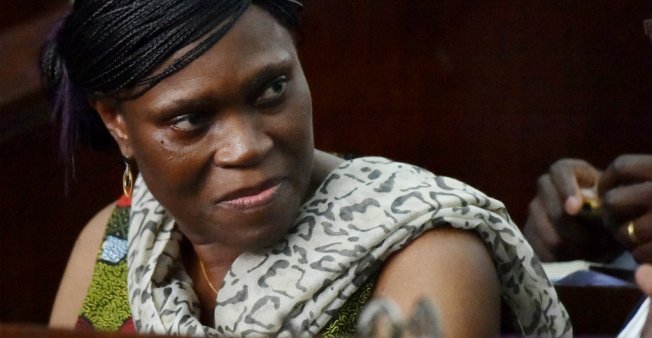
Ivory Coast’s former First Lady Simone Gbagbo, 76, is the surprise inclusion in a list of five candidates who have been officially cleared to contest next month’s presidential election.
She will run against President Alassane Ouattara, 83, who took power after she and her former husband, Laurent Gbagbo, were captured in a presidential bunker during the conflict that hit the country after the 2010 election.
But the ex-president has been barred from contesting the poll, along with ex-Prime Minister Pascal Affi N’Guessan and ex-Credit Suisse bank CEO Tidjane Thiam.
Their disqualification has raised concerns about the legitimacy of the 25 October vote and has sparked fears of instability.
Thiam, who was disqualified by the Constitutional Council due to his previous French citizenship, called the decision “an act of democratic vandalism” and accused the Ouattara administration of orchestrating a “sham election” to cling to power.
Ouattara assumed the presidency in 2011, following Laurent Gbagbo’s arrest after his refusal to accept defeat in the 2010 election.
Ouattara was originally restricted to serving two terms, but a 2016 constitutional overhaul allowed him to seek re-election in 2020, in a vote that was boycotted by the opposition.
He won that election in a landslide, with at least 85 people killed in ensuing unrest. He later declared that he would run for a fourth term.
Laurent Gbagbo has been barred by the Constitutional Council from running for president because of a 2018 criminal conviction.
He was sentenced in absentia for looting the central bank during the political crisis that hit Ivory Coast after the 2010 election.
Although he received a presidential pardon in 2020, it did not restore his right to vote or run for office.
He also faced separate charges of crimes against humanity at the International Criminal Court (ICC), but he was acquitted.
For Simone Gbagbo, her candidacy is not only politically significant but symbolically powerful in a country where women remain largely underrepresented in national leadership.
Only 30% of Ivorian parliamentarians are women, and few have held senior roles in government.
Once nicknamed “The Iron Lady”, Simone Gbagbo is now poised to become the strongest female contender for the presidency in Ivory Coast’s history.
She and ex-minister Henriette Lagou Adjoua, representing the Political Partners for Peace coalition, are the two women whose candidacy was approved by the Constitutional Council.
Simone Gbagbo has had a long and active career in Ivorian politics, including as an MP – which was later overshadowed by her role in the violence that followed the 2010 elections in which more than 3,000 people died.
It led to her being sentenced to 20 years in prison in 2015 by a court in Ivory Coast.
She was however granted amnesty three years later by President Ouattara to foster reconciliation. Unlike her former husband, the conviction did not lead to her removal from the voter register.
The ICC had also pursued charges against her in 2012, but they were dropped about nine years later.
Since then, she has been quietly and methodically rebuilding her political base, following her break from the Ivorian Popular Front (FPI) – the party she co-founded with her former husband, ex-President Gbagbo.
Her campaign slogan is a call to “build a new nation” within “a sovereign, dignified, and prosperous Africa.”
“Her approval legitimises the idea that Ivorian women can aspire to the highest office, regardless of their past, age, or gender. She’s not just a candidate – she’s a symbol,” said local political analyst Severin Yao Kouamés.
It is unclear if Laurent Gbagbo, now disqualified from the election, will support his ex-wife.
The two were married for more than 30 years, sharing a life of political militancy, imprisonment, and governance. They divorced in 2023.
The official election campaign begins on 10 October.
The country has 8.7 million registered voters and there are fears that the exclusion of some of the other candidates could erode public trust and trigger renewed unrest.
Still all eyes will be on whether Simone Gbagbo can reshape the leadership narrative, and become the president.
Source: BBC








11, September 2025
Buea: Bishop Bibi laments spiraling violence in Southern Cameroons 0
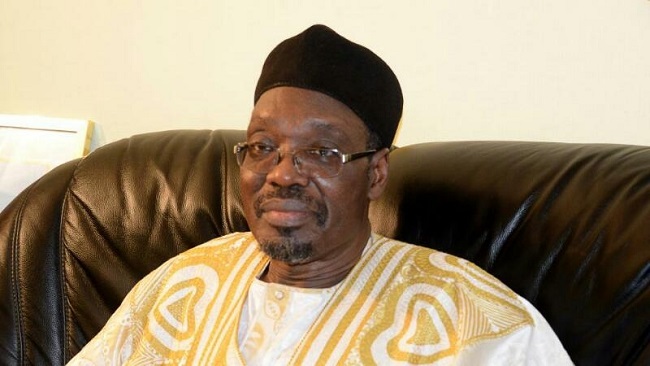
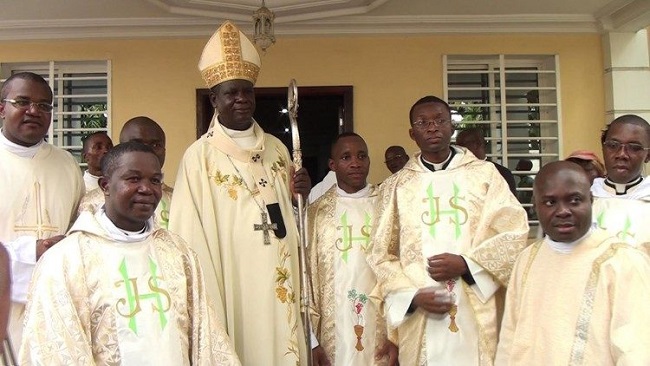
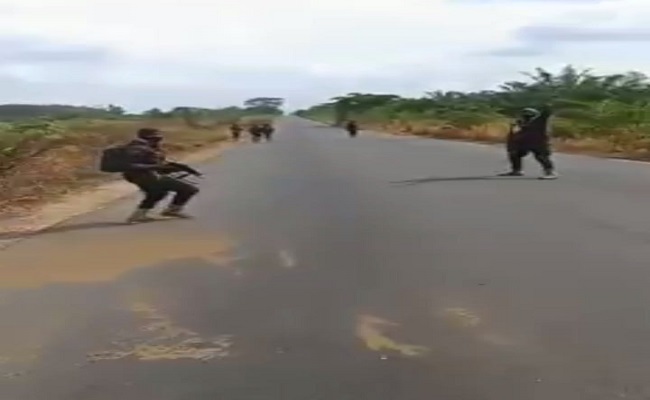
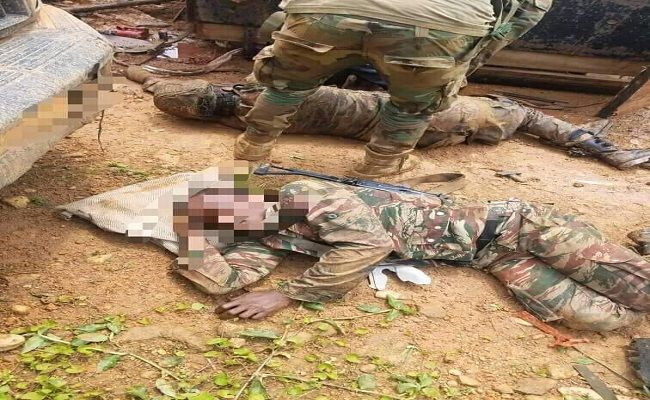
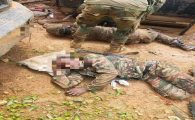
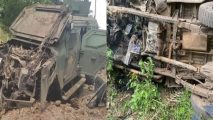
Days after suspected separatist fighters killed nine Cameroonian soldiers in the South West region, Bishop Michael Bibi of Buea condemned the relentless bloodshed plaguing Cameroon’s English-speaking regions.
On Friday, the separatist group Fako Unity Warriors claimed responsibility for an explosive device near Malende that killed the soldiers. This attack underscores the elusive nature of peace in the Anglophone regions — a reality deeply troubling to the bishop.
“War is not something to be encouraged,” the cleric told Christians during a Sunday teaching. “God did not create us to fight each other and to kill each other,” Bibi said.
“Human life is sacred because it has its source and origin in God. When it comes into existence, it continues to have a relationship with God,” Bibi said referencing the Catechism of the Catholic Church.
“Only God, who gives human life, has the right to take it away,” the bishop emphasized.
“Those who fight and take life must know this is wrong. That is why the Church calls us to be advocates of justice and peace, ensuring our communities are free from fighting and killing,” he said.
Cameroon’s English-speaking regions have been embroiled in conflict since 2016. What began as peaceful protests by teachers and lawyers against perceived marginalization by the Francophone-dominated government descended into a brutal separatist war following a harsh government crackdown.
This conflict, however, is deeply rooted in Cameroon’s colonial past. Once a German colony, the territory was divided between Britain and France after Germany’s defeat in World War I. The two powers administered their respective regions — first as League of Nations Mandates and later as United Nations Trust Territories — until independence. In 1961, a UN-supervised plebiscite led to the reunification of the two Cameroons under a federal system. This federation, however, was short-lived. In 1972, it was abolished in favor of a unitary state, concentrating power in the Francophone-dominated central government.
For Anglophone Cameroonians, this dissolution marked the beginning of systemic marginalization. The grievances that fueled the 2016 protests were not spontaneous; they were the culmination of decades of pent-up frustration over the erosion of their political autonomy, cultural identity, and economic opportunities.
The human cost of the war that has been going on now for nearly nine years is staggering. Beyond the recent soldier casualties, the conflict has claimed at least 6,500 lives according to the International Crisis Group. About a million others have been forced to flee their homes to escape indiscriminate violence, burning villages, and widespread human rights abuses committed by both sides.
There are legitimate fears that more violence lies ahead as the school year begins, given separatists have long made a school boycott a cornerstone of the separatist struggle, and as the country heads to a presidential election in October.
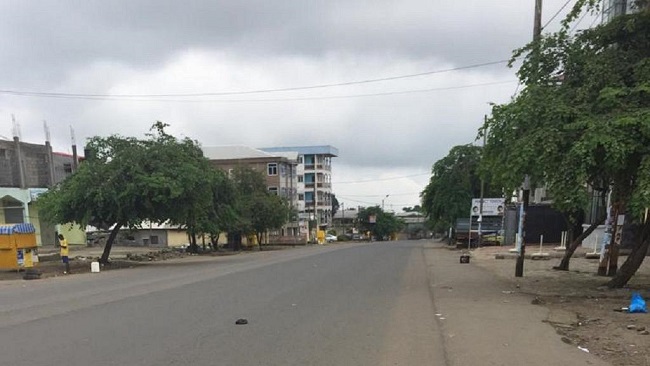
Already, separatists have imposed lockdowns, saying they want to disrupt the new school year as well as the October presidential poll.
“Apart from the Monday lockdowns [for long, separatists had imposed lockdowns in the two regions every Monday], the ‘boys’ have said that beginning Monday September 8 when schools reopened for the 2025/2026 academic year, the two regions will be on a complete lockdown until the election in October,” taxi man and Catholic Christian, Ernest Shu Tegha told Crux.
“How do I survive for over a month if I cannot work,” he said.
Catholic bishops in the two regions have continued to plead with the separatists to allow kids back in school.
Archbishop Andrew Nkea Fuanya told Crux that “it is unethical for Children to be used as a weapon of war.”
“We continue to plead that our children should be allowed to go back to school,” he said. Government officials have also been front and center in the effort to get kids back to school in the two regions.
“It is the right of every child to be educated; to have free, equitable and inclusive education,” said Dr. Asheri Kilo, the Secretary of State for Basic Education, in an interview of the Cameroon state broadcaster, CRTV.
“Why would anybody want to stop that,” she asked.
For some time, there had been an uneasy calm in both regions. In an exclusive interview on local Television channel, Equinox, Nkea said “a bit of social life has been returning to Bamenda.”
The archbishop said four years ago, the streets went quiet before 6 Pm every day. Today however, “you can see people drinking right up to ten PM. People are now free to organize funerals and weddings,” he said, but warned that such moments should not be confused with a return to peace.
“The situation is still very volatile,” Nkea said.
“I have made this distinction before. The fact that people are coming back, the fact that shops are opening more and more, the fact that people are beginning to celebrate funerals, more marriages openly and go right into the night does not explain the end of the crisis,” he explained.
“It is simply telling us that either people are getting used to the crisis or there is an uneasy detente. There’s an uneasy calm and we don’t know what can happen at any time. Let us not be deceived by social life returning to our communities and interpret that as the end of the crisis,” the archbishop added.
That warning is now materializing with the current lockdowns.
Source: Crux