16, September 2025
Struggling Camair-Co adds Boeing 737-800 in a $77m fleet renewal drive 0
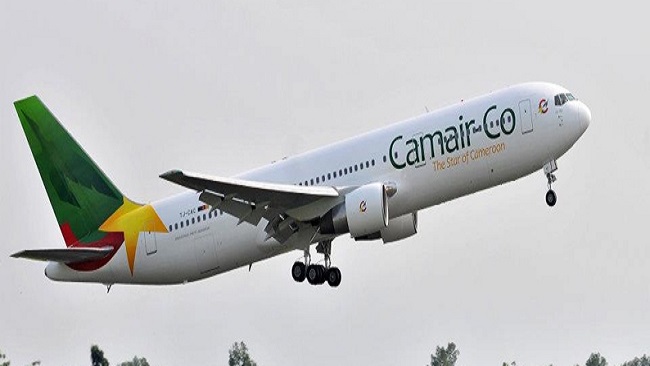
Cameroon Airlines Corporation (Camair-Co) has taken delivery of a Boeing 737-800, marking the launch of a five-year expansion plan aimed at transforming the national carrier into a competitive regional airline. The aircraft, leased from Czech operator Smartwings, is the first step in Camair-Co’s 2024–2028 strategy to rebuild and expand its fleet.
The project envisions an initial fleet of 14 aircraft—11 passenger and three cargo planes—before reaching 18 jets by the fifth year, comprising 16 passenger and two cargo planes. Financing is supported by a CFA47 billion ($76.8 million) direct loan from the Development Bank of Central African States (BDEAC).
Fleet Modernization Amid Challenges
Camair-Co currently operates six owned and two leased aircraft, with repeated breakdowns of aging planes causing operational disruptions. The wet lease of the Boeing 737-800 provides immediate reliability while management works to phase in additional aircraft.
“The new aircraft allows us to restore confidence in our existing routes while we prepare for broader expansion, this is about building the foundation for sustainable operations.” said General Manager Jean Christophe Ella Nguema.
The recovery strategy focuses on three key objectives: enhancing competitiveness, improving operational efficiency, and restoring profitability. Executives view short-term leasing as a necessary bridge to long-term modernization, although the higher costs of wet leasing weigh on already fragile finances.
Camair-Co’s network today serves six domestic destinations—Douala, Yaounde, Bafoussam, Garoua, Maroua, and Ngaoundéré—alongside three regional routes to Libreville, Bangui, and N’Djamena. The expansion plan includes resuming suspended regional services and opening new ones, with Douala and Yaounde targeted as transit hubs for Central Africa.
Management hopes to capture some of the regional traffic that currently transits through Addis Ababa, Nairobi, or Lomé. However, competition is intense, as Ethiopian Airlines, Kenya Airways, and ASKY already dominate the skies of Central and West Africa.
Financial Pressures
The expansion highlights both ambition and risk. Camair-Co carries a total debt of CFA 124 billion ($204 million), making it Cameroon’s second most indebted state-owned company. Since its creation in 2006 and operational launch in 2011, the airline has never posted a profit and has relied on repeated government bailouts.
Analysts note that successful African turnarounds—such as Ethiopian Airlines or Air Côte d’Ivoire—required heavy upfront investment. But they caution that Camair-Co must address fundamental operational weaknesses alongside fleet growth to avoid repeating past failures.
Government project documents indicate that the expansion could generate 3,000–4,500 indirect jobs over five years, with benefits extending across aviation services, logistics, and hospitality. New frequencies and additional domestic routes are also expected to improve integration between northern and southern Cameroon, strengthening national cohesion.
The initiative could create opportunities for local aviation professionals, though Camair-Co faces labor tensions. Reports of disputes between pilots and management over pay and working conditions underscore the importance of maintaining workforce stability as the fleet expands.
The wet-lease arrangement offers an immediate boost, but it also increases operating costs. With Camair-Co’s owned aircraft prone to breakdowns, sustainability hinges on the airline’s ability to modernize its core fleet while integrating leased capacity.
“The arrival of the new jet is encouraging, but execution will be decisive,” said one regional aviation consultant. “Expanding routes without fixing fundamentals risks repeating old mistakes.”
Looking Ahead
Management emphasizes that the 737-800’s arrival is only the first milestone in a staged program. Over the next five years, the fleet is expected to grow from 14 to 18 aircraft, encompassing both passenger and cargo segments. Long-haul ambitions remain on the horizon, with Paris identified as a potential route once regional expansion consolidates.
“This isn’t just about adding aircraft, it’s about building an airline Cameroon can be proud of. The real challenge lies in execution.” said Nguema.
As the aircraft begins commercial service, Camair-Co faces a dual test: delivering growth while addressing structural weaknesses. Success would strengthen Cameroon’s regional connectivity and help Douala and Yaounde emerge as aviation hubs. Failure could add to the financial burden of one of Central Africa’s most fragile carriers.
Source: Business in Cameroon

















16, September 2025
Manyu Cultural Festival: Heritage and Unity as Birmingham Hosts First-of-Its-Kind Jamboree in the UK 0
In March 2021, the Manyu community in Europe, together with friends of Manyu, came together with an ambitious vision: to create a forum where members could connect, support one another, and foster both personal and professional growth. The goal was to build a thriving, vibrant Manyu community in Europe. The initiative also aimed to provide a platform for Manyu children to interact and thrive while complementing and collaborating with existing Manyu associations across Europe. The name of this new association is Manyu Solidarity Group.
During the weekend of 29-31 August 2025, the streets of Birmingham came alive with rhythm, flavour, and tradition as the city hosted a three-day cultural festival unlike anything the Manyu community in the UK had ever seen. The festival was powered by Manyu Solidarity Group. From Friday’s welcoming meet-and-greet to Saturday’s vibrant showcase of traditional performances and Sunday’s barbecue finale, the event drew hundreds of attendees, some reconnecting with their roots, others discovering them for the first time. For a first-time event, the turnout was extraordinary: over 380 guests on the opening night, more than 550 on Saturday, and a lively crowd of over 340 for Sunday’s barbecue. This was more than a cultural celebration; it was a bridge across generations and a show of unity within the Manyu community Europe.
The Friday evening merriments set the tone for the festival and were emceed by Yvette Bissong and Dr. Nelson Agbor. Guests were welcomed with warm smiles, a delicious tanchut soup, and complimentary drinks. “I haven’t tasted tanchut soup like this in my over 50 years on earth,” said Lady Claire Obioma from London. The atmosphere was one of joy and reconnection, further lifted by the presence of esteemed Manyu traditionalists, including Sessekou Gaspari of Norway, Chief Eyong Paolo of MECA Germany and Sessekou Wilson Eyong of Ireland. The crowning moment of the night was the entrance of His Royal Highness Chief Prof. Negbo Abangma, who effortlessly blended history with his present. It was a truly glorious sight. As Mgbe UK performed their Manyu cultural formalities, the evening faded with love and anticipation for the next day.
If Friday was for tasting, Saturday was for witnessing. Under the leadership of Nfor Mgbe Dr. Agbortoko, the day featured live Monikim dances, Bekundi processions, and a show-stopping Obasinjom invocation. The energy was electric as attendees didn’t just watch, they participated. For some, it was their first experience of live Manyu cultural performances; for others, it was a long-awaited reconnection with their custom. “I am so proud of what the organising team and many volunteers achieved this weekend,” said Prince Julian Ebai, Chairman of Manyu Solidarity Group. Free food was available throughout the event, with snacks and drinks offered at below-market prices. A highlight for the children was some surprised pizzas from Domino’s. In the end, strangers became friends, and the sight of Nyene Mawn, Eyumema, MOHWA, and Manyu Simple Sisters celebrating together with laughter and joy was simply heart-warming. Manyu in Europe was truly alive.
By Sunday, the festival had already secured its place as a landmark event. The closing day featured a barbecue made possible by the thoughtfulness and hard work of Ms. Aggie Epaw, Mr. Valery Bissong, Mr Jerry Eko and Ms. Jacqui Bissong. The air was filled with the aroma of sizzling meats, fish, and burgers, accompanied once again by free drinks. Children played in the park, and many remarked that the weekend had shown them their culture and community is alive and thriving. Phone numbers were exchanged, future plans were made, and discussions of making the Manyu Cultural Festival an annual tradition were put in place.
What set the weekend apart was its authenticity and spirit. It was the first time this cultural tapestry had been woven so vibrantly and publicly in the UK. “We started with a dream and a few determined people,” said Chief Fidelis Takor of the organising committee. Prince Ebai added a note of reflection: “We must start looking after the vulnerable in our community and use every opportunity to celebrate ourselves. We can’t wait until someone dies to shower them with praises. Manyu Solidarity Group will continue to invest its energy in pastoral care to ensure our members feel loved and supported.”
The weekend marked the launch of Eyoungoh Manyu, a remarkable compilation of academic works by distinguished Manyu minds and scholars. Contributors came from as far as the United States, Cameroon, and Norway. The book is highly recommended for its educative, informative, and persuasive nature. Eyoungoh Manyu stands as both a documentary and an archive of our proud culture, traditions, and customs—reminding all Manyus that they are custodians of a unique heritage that must be preserved.
Thanks to the trust, energy, and commitment of its members, Manyu Solidarity group has grown to over 445 members, making it the largest gathering of Manyu people and their friends in Europe. Over the past two years, its members and leaders have regularly reached out to those in need of companionship by visiting, shopping, and even cooking for them. It is now standard practice for the leadership of Manyu Solidarity to call unwell members, send get-well-soon cards, and quietly help individuals with their CVs, enabling many to regain paid employment. Prince Julian Ebai closed the barbecue with these words: “Over the coming days, after a rigorous accounting process for transparency and visibility, the proceeds realized will be sent to Mamfe General Hospital to address a specific need. Your attendance and support this weekend is a clear declaration that we are all committed—working hand in hand—for an even better spectacle in 2026. See you all next year, by God’s grace.”
Chief Oru, President of MECA Birmingham also reminded attendees: “For just £35, many have enjoyed a memorable event, made possible by the sacrifices of the organizing committee and the generous contributions of groups and individuals who believe in Manyu. We must continue to move from strength to strength, as one indivisible Manyu, while respecting the diversity and autonomy of our unique communities in the UK and across Europe.”
MOHWA Global, Nyene Mawn Europe, Manyu Simple Sisters, EYUMEMA, and the Cameroon High Commission, Mr and Mrs Charles Mambo, were among the many generous donors who helped make the Manyu Cultural festival a success. As the grills cooled on Sunday evening and the last notes of music faded into the warm August night, one thing was clear: this was not the end, but the beginning of something greater. “This is history,” said Ms. Yvette Bissong of Kent. “And great actions always demand a sequel. 2026 here we come.”
By Sessekou Isong Asu
London Bureau Chief
Cameroon Concord News Group