28, July 2025
Manidem plans appeal for Kamto’s rejected candidacy 0
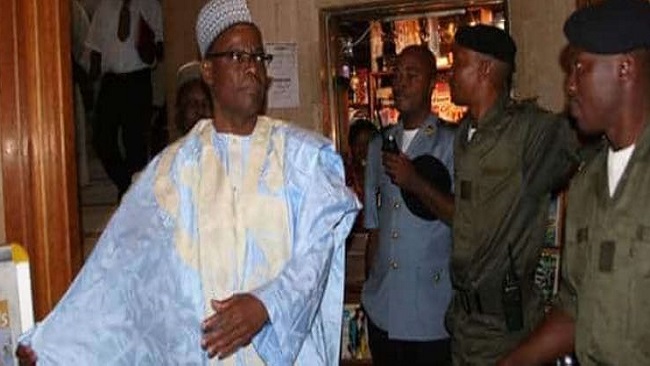
Erik Essousse, director of general elections, informed Maurice Kamto that his candidacy for the 2025 presidential election was rejected due to “multiple nominations by the Manidem” party. The Electoral Council also disqualified Dieudonné Yebga, who submitted his bid under the same party affiliation. According to Elecam, this dual endorsement caused legal confusion, rendering both Kamto’s and Yebga’s candidacies inadmissible.
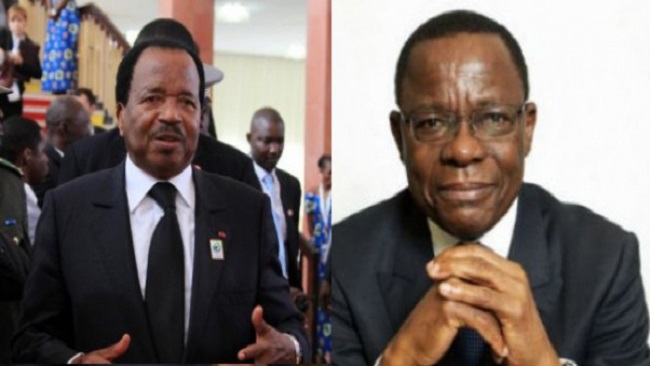
Anicet Ekane, founder of Manidem, strongly disputed the decision against Maurice Kamto. He stated that Elecam’s reason does not reflect the truth. “The CPDM and Paul Biya, feeling [already] defeated, want to avoid a face off with the Manidem candidate,” he said. Ekane claimed the decision resulted from a calculated political maneuver. He added, “Even before the announcement of this unprecedented candidacy carrying the hopes of the people, the regime in Yaoundé had already leaked Mr. Kamto’s personal documents prepared for the application.”
The Manidem founder further accused the government of a disinformation campaign about candidacy eligibility requirements. He also claimed the government crudely altered “the official registration of Manidem’s leadership on the website of the Ministry of Territorial Administration” while orchestrating the submission of a “so-called second candidacy,” referring to Dieudonné Yebga, within the party.
In response to the rejection, Anicet Ekane’s Manidem announced its intent to appeal to the Constitutional Council, as permitted by law. Regulations allow candidates rejected by Elecam 72 hours to file a petition with this body. Ekane stated, “What happens next depends on the response of the Constitutional Council,” emphasizing that the future of Kamto’s candidacy now rests on this decision.
The pre-election dispute warrants close attention as the situation remains unresolved for Manidem. The outlook appears even more challenging for Maurice Kamto, especially since Dieudonné Yebga, in a statement dated July 26, also expressed his intention to contest Elecam’s rejection of his candidacy. As a result, both Kamto’s and Yebga’s bids are at stake, potentially leading to tangled legal proceedings and escalating political tensions surrounding the electoral process.
Source: Business in Cameroon














29, July 2025
African liberation movements: West trying to divide and dominate continent again 0
Liberation movements from six African countries have gathered in Johannesburg, South Africa, to strengthen unity against Western interference, warning that external forces are attempting to divide African countries and recapture the continent economically.
Several heads of African states whose liberation movements now serve as governing parties in their respective countries gathered in Kempton Park, Johannesburg, over the weekend.
They reflected on their roles in the struggle for freedom and recommitted to unity while defending democratic gains against neo-colonialism.
The delegates also reflected on their role in improving and uplifting the standard of living on the continent.
Apart from internal political issues gripping the organizations, the leaders of the political parties also criticized the interference of Western countries in African affairs, blaming external forces from the West for fueling divisions on the continent.
In a united front, the parties, which were mostly represented by their presidents, vowed not to allow colonialists to recapture the continent through economic and other sanctions.
In response to the latest sanctions by US President Donald Trump, Zimbabwean President Emmerson Mnangagwa said the external forces have been unrelenting in their quest to obliterate liberation movements from the political radar in the region.
“However, we must remain emboldened by our rich liberation history, which is our greatest teacher. The millions of people who look to liberation movements with hope for a better tomorrow should be a source of inspiration,” he noted.
Mnangagwa added that the liberation movement needs the same vigor and energy that defeated the colonial powers to defeat them again.
“We defeated them in the past, and we shall defeat them again, and again and again. Through our unity and unbreakable solidarity, victory is always certain,” he said.
The president of Namibia and Swapo, Netumbo Nandi-Ndaitwah, said that there were concerted efforts by those who were opposed to independence, who masqueraded in economic, political and diplomatic conspiracies to undermine the gains of the movement.
“They are motivated, as we are all aware, by both domestic and foreign policy interests and actively seek to undermine the political dominance of our liberation parties, with the long-term objective of weakening and unseating us from power altogether,” she said.
Nandi-Ndaitwah underlined that those external forces wanted to divide and conquer while extracting the wealth of the continent to benefit their countries.
South African President Cyril Ramaphosa, for his part, said liberation movements should refuse to accept colonialism as fate.
“We also recall that the project to dismantle apartheid, racism, colonialism and hate was one which profited from international solidarity with the [Organization of African Unity] OAU Liberation Committee as well as the progressive diaspora and friends at the forefront,” he said.
Ramaphosa reminded the delegates that the struggles were not simply for political independence but for the total liberation of their people: economic, cultural, intellectual and social.
The African National Congress (ANC) closed the summit by handing over the leadership to the Chama Cha Mapinduzi (CCM) of Tanzania, which is scheduled to host the forthcoming summit.
Source: Presstv