1, August 2025
Battle for Etoudi: Travel ban on Issa Tchiroma sparks fierce storm 0
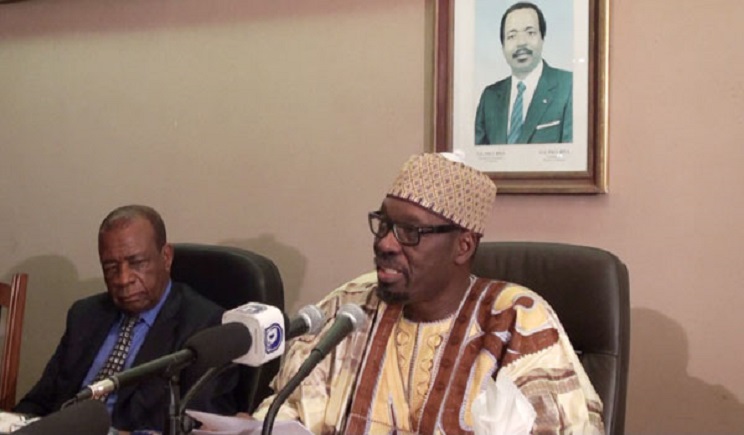
On 31 July 2025, Cameroonian presidential candidate Issa Tchiroma Bakary was barred from flying to Senegal at Yaoundé Nsimalen International Airport.
Tchiroma, who leads the Front for the National Salvation of Cameroon (FSNC) party, was accompanied by his daughter. The pair intended to visit the grave of former president Ahmadou Ahidjo in Dakar.
Eyewitnesses and local media report that airport officials told Tchiroma he could not travel, citing undisclosed “orders from above”.
Notably, officials provided no written documentation, warrant, or legal justification for the travel ban.
As of 1 August, the Cameroonian government has remained silent, intensifying speculation that the decision was politically motivated.
POLITICAL CONTEXT DEEPENS PUBLIC SUSPICION
Tchiroma’s sudden travel restriction comes amid his active campaign for Cameroon’s 12 October 2025 presidential election.
In June 2025, he resigned from his government post, publicly criticising President Paul Biya’s administration as “broken” and “paralysed”.
Since launching his presidential bid, Tchiroma has called for structural reforms, promising to dismantle the current regime and restore constitutional order.
His push for an opposition coalition has gained momentum in recent weeks.
The Issa Tchiroma travel ban’s timing, coinciding with the intensifying coalition-building efforts, has fuelled fears of electoral manipulation.
LEGAL UNCERTAINTY FUELS PUBLIC OUTRAGE
Legal experts and civil society organisations are raising serious constitutional concerns. Cameroon’s laws guarantee citizens the freedom of movement, yet Tchiroma’s ban was issued verbally, without a court order or legal precedent.
Legal scholars and human rights observers argue that the travel restriction on Issa Tchiroma may violate Article 13 of the Universal Declaration of Human Rights (UDHR), which guarantees individuals the right to leave any country, including their own, and to return.
Article 13(2) of the UDHR states, “Everyone has the right to leave any country, including his own, and to return to his country.”
Cameroon is a signatory to the UDHR and has incorporated many of its provisions into national legal frameworks.
Meanwhile, public reaction has been swift, with widespread condemnation from civil society and activists accusing the government of suppressing dissent.
OPPOSITION LEADERS CONDEMN THE MOVE
Opposition figures, including members of the Cameroon Renaissance Movement (MRC) and the Social Democratic Front (SDF), have strongly condemned the travel ban.
They describe it as a direct attack on democracy, warning it could undermine the legitimacy of the upcoming vote.
Sources close to Issa Tchiroma Bakary have acknowledged the challenges posed by the travel ban but stressed their commitment to continuing political activities and dialogue ahead of the election.
A TURNING POINT IN CAMEROON’S 2025 ELECTION
Society accuses President Paul Biya of political repression, aiming to limit fair competition. Human rights groups have consistently condemned the government’s actions, including arbitrary arrests and crackdowns on protests.
As of August 2025, the African Union (AU) has not made a formal statement, but legal experts and monitoring groups remain vigilant.
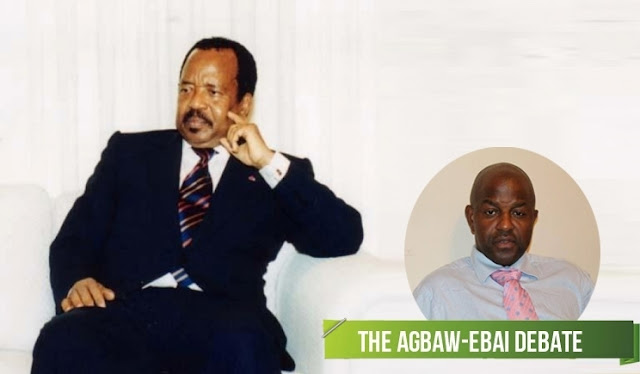
Barrister Agbor Balla, a leading Cameroonian human rights lawyer and constitutional expert, has urged the government to respect constitutional rights.
He warns that travel bans without due process violate both national laws and international human rights standards.
This incident adds to political tensions, especially after the electoral commission barred opposition leader Maurice Kamto, increasing concerns over the fairness of the upcoming election.
WILL CAMEROON PROTECT ELECTORAL INTEGRITY OR CONTINUE THE CRACKDOWN?
Culled from The South African















4, August 2025
Bishop Paul Lontsié-Keuné says weak politics affects national stability 0
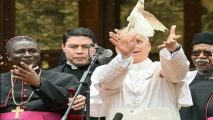
A Catholic bishop in Cameroon has warned against the absence of political alternation, saying that it can only breed conflict.
Bishop Paul Lontsié-Keuné of Bafoussam was addressing Christians on July 30 in what he called a “special message” ahead of presidential election in Cameroon scheduled to take place October 12.
“Injustice can never bring peace. Electoral fraud can never bring peace. Lawlessness can never bring peace. Fear can never bring peace. The absence of political alternation prepares the ground for future conflict, not peace,” the bishop said.
It was an apparent swipe at President Paul Biya who is seeking an 8th term of office. The Cameroonian leader is now 92 years old, but 43 of those years have been as president.
“Political alternation in a democracy is a great good for a nation, for it allows for a peaceful renewal of power, prevents power from being monopolized by a single group, strengthens the legitimacy of institutions, fosters accountability among leaders, and gives citizens the sense of being truly sovereign,” said Lontsié-Keuné.
Since the introduction of multi-party politics in Cameroon in 1990, Cameroon has had five presidential elections, all of which had ended with accusations of massive fraud. In all of them, Biya was always declared winner.
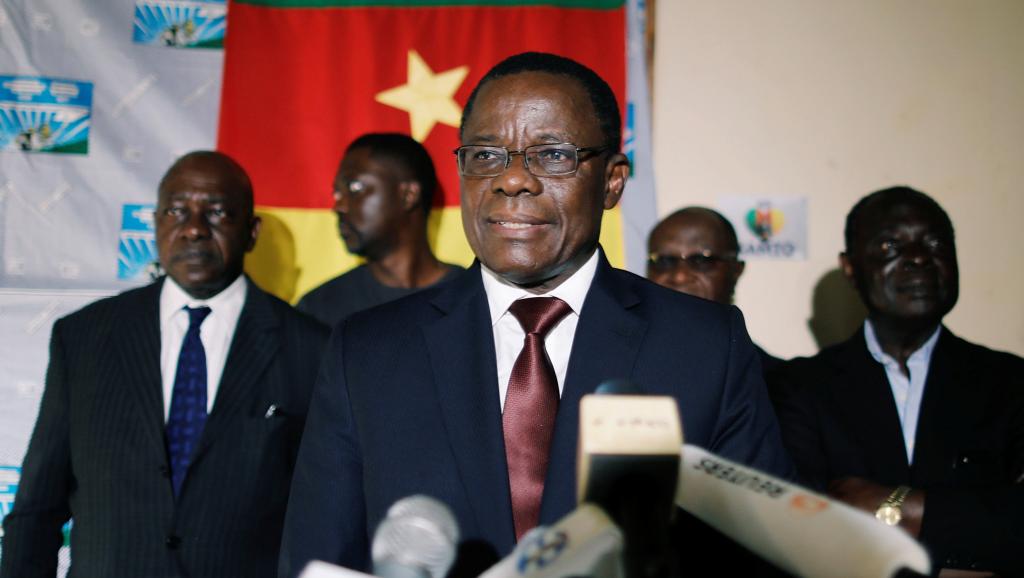
The bishop’s message comes amid rising tensions after Biya’s main political rival, Prof. Maurice Kamto was barred by the elections management body ELECAM from participating in the October polls.
ELECAM rejected Kamto’s application on grounds that the MANIDEM party under which he was running had submitted multiple candidacy files – a decision widely seen by critics as politically motivated.
Lontsié-Keuné questioned the transparency of the process, suggesting it may have been manipulated to bar the president’s most formidable political foe.
Kamto has however appealed his case to the Constitutional Council-the court that that hears matters concerning electoral disputes in Cameroon.
The Bafoussam bishop has urged members of the Constitutional Council to act in truth and with their conscience to “uphold the law, and only the law” and “to deliver justice, and only justice.”
He explained that upholding the law means being “free from all political, administrative, or partisan influence, and in faithfulness to the oath they have sworn so that the people may genuinely feel that justice has been done.”
The decision to bar Kamto in the first place has attracted criticism from Human Rights Watch. In a July 29 release, the human rights advocacy organization said the decision to bar Kamto from the October 12 polls “raises concerns about the credibility of the electoral process.”
“The election commission has raised doubt on an election before the votes are even cast,” said Ilaria Allegrozzi, senior Africa researcher at Human Rights Watch.
“Excluding the most popular opponent from the electoral process will leave a shadow over whatever results are eventually announced,” she said.
Lontsié-Keuné fears that the “toxic political climate” resulting from the process could only breed conflict.
In his July 30 message, the bishop denounced an environment marked by “lies, manipulation, intimidation, fear, denial of rights, injustice, corruption, vote buying, the instrumentalization of law, and its flexible interpretation for political ends.”
However, concerns about the electoral process itself are emerging. Lontsié-Keune questioned whether postponing local elections from February 2025 to 2026 was a mere administrative adjustment or a deliberate strategic maneuver.
The postponement followed opposition leader Prof. Maurice Kamto’s call for a boycott of the polls, originally scheduled for February 2025.
Subsequently, the government introduced a clause into the electoral code stipulating that any political party must hold at least one seat on a local council or have representation in parliament to field a presidential candidate.
The effect of this new clause was immediate and specific: It disqualified Kamto’s Cameroon Renaissance Movement (CRM) from presenting a candidate in the 2025 Presidential election. Consequently, Kamto was forced to seek the presidency under the banner of a different political party, MANIDEM
The bishop also cast doubt on the legitimacy of Elections Cameroon (Elecam) and the Constitutional Council, highlighting their nearly systematic rejection of appeals and complaints.
Lontsié-Keune demanded to know whether such dismissals truly aligned with the Electoral Code’s provisions.
Furthermore, he condemned repeated attacks on public freedoms.
“We have observed systematic restrictions on the freedoms granted to citizens and political parties, alongside a shrinking public space,” the bishop stated. “These actions — accompanied by threats, intimidation, and bans — do they signal democratic anxiety or a deliberate desire to silence the population?”
Warning of rising tribalism and hate speech, particularly on social media, Lontsié-Keune emphasized that this trend dangerously deepens social fractures and reinforces a “divide and rule” dynamic.
Biya appears poised to secure another term in Cameroon’s October polls, facing a fragmented opposition that has been weakened by the absence of his strongest rival.
However, such an outcome would likely displease Cameroon’s Catholic bishops, who outlined specific leadership qualities for the nation’s next president in a March Pastoral Letter.
The bishops emphasized that the new leader must embody “integrity, humility, modesty, and moral leadership,” serving as a compass for governance. Crucially, they insisted the president must shun personal enrichment and commit to visiting every region of the country at least once during their term.
By these standards, Biya falls significantly short. Under his 43 year rule, Cameroon earned the dubious distinction of being twice named the world’s most corrupt nation — directly contradicting the call for integrity.
Furthermore, despite his decades in power, he has yet to visit all regions of the country, failing to meet the bishops’ explicit travel requirement. His leadership has also been criticized for entrenching tribalism, further undermining the moral leadership qualities the bishops deem essential.
Source: Crux