15, February 2020
Amidst Boycott, Violence in Cameroon Election, AU, Catholic Church, others call for Political Breakthrough 0
Following the February 09 Municipal and Legislative elections, an avalanche of calls for political breakthrough in Cameroon have been downloaded from several national and international bodies including the African Union (AU), Human Rights Watch (HRW), the Roman Catholic Church as well as a host of other rights focused institutions.
According to the AU observer mission dispatched to monitor the Cameroon elections, there was massive boycott as many Cameroonians have lost faith in the entire process. Moreover, the boycott launched by the main opposition party, the Cameroon Renaissance Movement (CRM) also worked to the disfavor of the elections. This further compounded by the ongoing conflict in the Anglophone regions which thwarted the process. It was a similar message from the Catholic Church which said something more than just elections can bring stability in Cameroon. According to the President of the Cameroon National Episcopal Council, Mgr Abraham Kome, the turnout was very low. He cited a case in President Biya’s home town of Sangmelima wherein in a polling station of 310 voters, only 85 bothered to take part in the process.
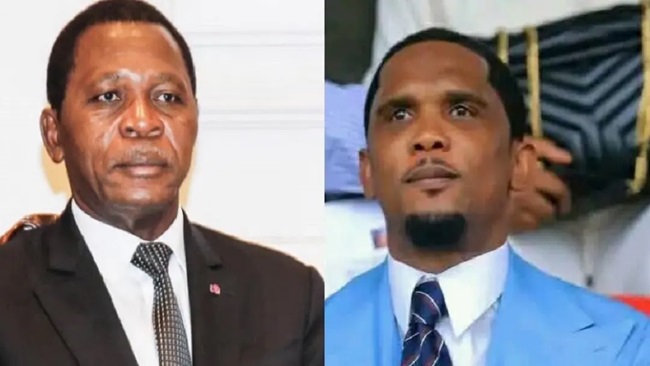
The armed conflict in Anglophone Cameroon also featured in the report of Transparency International (TI) as well as Human Rights Watch (HRW) and a general loss of confidence by citizens in the electoral process in Cameroon. This explains why even in urban metropolis void of any real armed conflict like Bertoua, capital of the East region, the abstention rate, according to the Catholic Church was 70% and in neighbouring Batouri, it was 89%. However, the government has challenged the reports arguing, through Cameroon’s Minister of Interior, Paul Atanga Nji that the reports do not reflect the reality on the ground. The Minister upheld that there was a huge turnout by Cameroonians. “The population in the North West and South West regions turned out massively to exercise their civic duty in all administrative units,” Atanga Nji said.
Amidst the situation
Amidst the current insecurity, violent conflict, voter apathy, elections boycott, disenfranchisement in Cameroon are three basic school of thoughts with each holding firm to an unshakable position characteristic of an extremist confluence. Proponents of the school of thoughts hold firm to their position and belief it is the best remedy for a country challenged at all fronts. In the opinion of the Director of the Central African Network of Human Rights Defenders known by its French acronym as REDHAC, Cameroon is challenged at all fronts and the ruling elites need to make some concessions. “The country is very sick at all levels,” Maximilienne Ngo Mbe said.
With each school of thought blaming the other for the current situation, it becomes a huge challenge finding a middle belt wherein all can come in. At the level of the government, the insecurity, violence especially in the Anglophone regions is caused by “enemies of peace.” They argue that before the uprising the country was enjoying “peace,” a “peace” which the retired Archbishop of Douala, Cameroon’s biggest town, Cardinal Christian Tumi described as “negative peace” because of the social inequality the ruling elites have subjected a greater part of the population and especially the minority Anglophones.
In the opinion of politicians including President Biya’s runner-up at the October 2018 election, Professor Maurice Kamto of the CRM party, they orchestrated a boycott because one part of the country (Anglophone regions) is in war and elections cannot be free and fair. They also argue that the electoral code which has been a subject of controversy in previous elections must be revised to provide equal opportunity to all, not just ruling party candidates.
On the part of the separatists, the elections are “foreign” to their land as there is no treaty in international law or at the level of the United Nations binding the Former British Territory (Anglophone Cameroon) and the Republic of Cameroun (French). According to them, the marriage between the two Cameroons in 1961 was an annexation scheme which they want to break. They hold firm to their position and argue that only a negotiated settlement would stop their arms struggle. In a recent outing on his Facebook page, Dr Ayaba Cho Lucas, one of the main leaders of the armed Anglophone nationalism advocating for a separate state called Ambazonia has urged his counterparts to arm what he called ground zero until the central government negotiates. Rather, the government has been slow to negotiate or address the underlying causes but has also upheld the extremist vision of peace by non-peaceful means. In his traditional end of year speech on December 31, 2019, President Paul Biya called on separatists to lay down arms or be crushed by the Cameroon defense forces. All these positions have ensured that there is violence, bloodshed and voter apathy not just in the Anglophone regions but the entire country before, during and possible after if sustainable peace is not attained.
Before, During, After Elections
Cameroonians went to the polls in the context of growing insecurity and conflict which has affected at least six out of its ten regions. The East is heavily militarized because of the incursions of rebels of the Central Africa Republic (CAR), while the North is embedded in the Boko Haram conflict, which after experiencing a lull, has, in recent times, taking a more ferocious mood with regular attacks and killings. The Adamawa region only enjoyed a respite of peace in recent times thanks to the dispatching of hundreds of elite Gendarmes to counteract the activities of kidnappers.
However, the greatest challenge has come from the two Anglophone regions in the West where separatists have been fighting against state security forces for three years. The state’s authority in those areas has been reduced to some rare urban metropolis with the few administrators still present under heavy military companion. In the October 2018 presidential election, the turnout in some of these areas was as low as 5% and in other cases entire population had fled because of the violence.
In its analysis of the situation, HRW said there was violence before, during the elections and possible after the election as it fears for the safety of those elected. This violence was orchestrated by both separatist fighters and government soldiers. The rights organization estimated that separatists kidnapped about 100 persons, mostly aspiring MPs and Municipal Councils, mainly from the opposition Social Democratic Front (SDF). At least three offices of Elections Cameroon (ELECAM), the elections management body were burnt down in Misaje on January 07, and Babessi on January 16 in the North West region. In the same region, a local Post Office in Bafut which was housing electoral materials was also burned down. In the South West region, ELECAM’s offices in Tombel were set ablaze on February 02. Homes belonging to government officials and some opposition party candidates were also destroyed.
Rather than protecting the population, HRW argued that government forces also worsened the situation by committing acts of human rights violation. Between January 17 and 20, security forces entered Bali, a locality in the North West region destroying over 50 homes and killing several individuals. All these according to the group accounted for the massive boycott in the elections especially as separatists who controlled most of these areas had called for massive boycott coupled with similar boycotts from some opposition parties including the Kamto’s CRM and the Cameroon Peoples’ Party (CPP) of Kah Walla among others.
The war has crippled the country’s economy as the two Anglophone regions are harbingers of much of the country’s wealth including crude oil, cocoa, coffee, banana, tea, and other cash crops. The largest agro-industrial complex, the Cameroon Development Corporation (CDC) which is the second largest employer after the state is at the brink of collapsing because of the war. This has pushed the government into a borrowing spree to finance most projects while some are merely abandoned because of lack of funds.
Even though regime faithful paint a favourable socio-political climate, the recent elections have proving that Cameroon needs a total overhaul of its electoral law, constitution and strong laws that would give more powers to the local tax payers. However, such a revision would still leave one part of the population, the English speakers disenfranchised as the conditions on the ground for them goes beyond the electoral code, but the transformation of the conflict into gains. Moving forward with elections in the present context has further strengthened the argument of separatists and instead put the lives of civilians.
Force has not solved the equation after three years and not even the country’s elite forces have been able to outsmart civilians sometimes holding just rifles. While addressing the American Parliament in November 2019 on the situation in Cameroon, the Deputy Secretary of State in charge of African Affairs said President Paul Biya has been “ill-advised” to use military options which cannot produce any substantial results. “You can’t wipe out a thought militarily,” Tibor Nagy said. He went further to state that the inability of the Cameroon government to enter into genuine negotiations with separatists further radicalizes many more to consider that only an armed struggle would answer the equation. In the inability to confab with separatists for the past three years, only unbearable pressure by the international community can cause the government to make this bold step and save what is still left. The growing dissatisfaction among the majority Francophones as expressed in the low turnout in the election is an indication that Cameroon in general is at the brink of a total collapse and possible repercussions going far beyond its border. Such a breakdown would for example fasten the position of Boko Haram extremists in the North and other armed movements.
Source: The Organisation for World Peace


15, February 2020
Will Sudan’s Bashir Finally Go on Trial for Genocide at the ICC? 0
Sudan’s transitional government appears prepared to hand former President Omar al-Bashir over to the International Criminal Court to be tried for war crimes and genocide allegedly committed during his regime’s long, scorched-earth campaign in the country’s Darfur region. The decision is reportedly part of a potential peace agreement with rebel groups still operating in Darfur. It could be an unexpected boon for the beleaguered ICC, but only if the military members of the transitional government in Khartoum don’t renege on the deal.
The conflict in Darfur began in 2003 when rebels there launched an insurgency against Bashir’s oppressive regime. Bashir relied heavily on pro-government, Arab militias known as the Janjaweed to quash the rebels. The Janjaweed were accused of mass killings of civilians and other atrocities, including rape and torture. In 2009, the ICC indicted Bashir for his alleged role; he faces five counts of crimes against humanity, two counts of war crimes and three counts of genocide.
The transitional government that took power last year, after Bashir was deposed by the military amid Sudan’s popular uprising, has prioritized ending the internal conflicts that had flared up under his regime. During negotiations this week with Darfuri rebels in Juba, South Sudan, Mohammed Hassan al-Taishi, a member of the transitional authority that is made up of military and civilian leaders, announced that it is prepared to hand over everyone indicted by the ICC for committing atrocities in Darfur. In addition to Bashir, who is currently serving two years in a reform facility after being convicted on corruption charges in December, that includes former Defense Minister Abdel-Rahim Muhammad Hussein and a former senior security chief, Ahmed Haroun, who are both currently under arrest in Khartoum.
“We can only achieve justice if we heal the wounds with justice itself,” al-Taishi said. “We cannot escape from confronting that.” He said the government and rebels will also establish a special domestic court for crimes committed in Darfur.
The transitional government’s decision is also significant for the ICC. Bashir flouted his ICC indictment for years, including an infamous 2015 trip to an African Union meeting in Johannesburg. As an ICC signatory, South Africa was compelled to hand him over to the court, but instead, officials there allowed him to leave the country. Bashir’s defiance, along with a series of other setbacks for the ICC that WPR documented last year, contributed to a sense of irrelevancy in The Hague. A long overdue trial of Bashir offers ICC prosecutors an opportunity to deliver international justice and restore the court’s reputation.
If Bashir makes it to The Hague, that is. There is little consensus on anything within the transitional government, fueling concern that its military members could go against their civilian counterparts and quash the arrangement. “Not only do both camps have radically different visions for the future of Sudan, they are sharply divided among themselves,” Richard Downie explained in a briefing in November. Sudan’s top military general, Abdel Fattah al-Burhan, tried to allay those concerns when he assured a human rights group this week he would “cooperate fully” with the ICC as it attempts to bring Bashir to trial.
Source: World Politics Review