
13, February 2020
Pope decides against ordaining married priests in the Amazon 0
Pope Francis declined Wednesday to approve the ordination of married men to address a shortage of priests in the Amazon, sidestepping a fraught issue that has dominated debate in the Catholic Church and even involved retired Pope Benedict XVI.
Francis, in an eagerly awaited document, did not refer to the recommendations by Amazonian bishops to consider the ordination of married men or women deacons. Rather, the pope urged bishops to pray for more priestly vocations and to send missionaries to a region where faithful Catholics in remote areas can go months or even years without Mass.
The papal dodge disappointed progressives, who had hoped he would at the very least put both questions to further study. It outraged liberal Catholic women’s groups. And it relieved conservatives who have used the debate over priestly celibacy to heighten opposition to the pope, whose strongest conservative critics have accused of heresy.
Francis’ document, “Beloved Amazon,” is instead a love letter to the Amazonian rain forest and its indigenous peoples, penned by history’s first Latin American pope. Francis has long been concerned about the violent exploitation of the Amazon’s land, its crucial importance to the global ecosystem and the injustices committed against its peoples.

I dream of Christian communities capable of generous commitment, incarnate in the Amazon region, and giving the Church new faces with Amazonian features.
Quoting poetry as frequently as past papal teachings, Francis addressed the document to all peoples of the world “to help awaken their affection and concern for that land which is also ours and to invite them to value it and acknowledge it as a sacred mystery.”
“Beloved Amazon” is in many ways a synthesized and focused version of Francis’ 2015 landmark environmental encyclical, “Praised Be,” in which he blasted wealthy countries and multinational corporations for destroying the world’s natural resources and impoverishing the poor for their own profit.
Francis said he has four dreams for the Amazon: that the rights of the poor are respected, that their cultural riches are celebrated, that the Amazon’s natural beauty and life are preserved, and that its Christian communities show Amazonian features.
Francis had convened bishops from the Amazon’s nine countries for a three-week meeting in October to debate the ways the church can help preserve the delicate ecosystem from global warming and better minister to the region’s people, many of whom live in isolated communities or in poverty in cities.
The Argentine Jesuit has long been sensitive to the plight of the Amazon, where Protestant and Pentecostal churches are wooing away Catholic souls in the absence of vibrant Catholic communities where the Eucharist can be regularly celebrated.
In their final document at the end of the October synod, the majority of bishops called for the establishment of criteria so that “respected” married men in their communities who have already served as permanent deacons be ordained as priests.
In addition, the bishops called for the Vatican to reopen a study commission on ordaining women as deacons, a type of ministry in the church that allows for preaching, celebrating weddings and baptisms, but not consecrating the Eucharist. Francis had created such a commission in 2016 at the insistence of religious sisters who want more say and roles in church governance and ministry, but the group ended its work without reaching consensus.
Francis didn’t mention either proposal in “Beloved Amazon” and didn’t cite the synod’s final document in his text or in a single footnote. But he did say in his introduction that he wanted to “officially present” the synod’s work and urged the faithful to read it in full, suggesting that he at least valued the input.
Francis did echo many of the synod’s recommendations, calling for greater lay participation in the life of the church and saying the training of priests in the Amazon must be overhauled so they are more able to minister to indigenous peoples. He said “every effort should be made” to give the faithful access to the Eucharist.
“This urgent need leads me to urge all bishops, especially those in Latin America, not only to promote prayer for priestly vocations, but also to be more generous in encouraging those who display a missionary vocation to opt for the Amazon region,” he wrote.
Francis dismissed suggestions that ordaining women to any ministry would serve them or the church. While agreeing that women should have greater decision-making and governance roles, Francis argued that they must find “other forms of service and charisms that are proper to women.”
Groups that advocate for women’s ordination and giving women greater roles in the Catholic Church blasted the document. Francis justified his refusal to consider ordained ministry for women as sparing them the risk of being “clericalized,” or placed on a pedestal.
“This is a dereliction of his duty as a leader with the power to make positive change and challenge discrimination,” said Miriam Duignan of the Wijngaards Institute for Catholic Research, a British-based progressive Catholic think tank.
Kate McElwee, executive director of Women’s Ordination Conference, said the document betrayed women in the Amazon and elsewhere who perform the lion’s share of the church’s work, pass the faith from generation to generation, and yet enjoy no official recognition or authority.
“Recognizing women’s work with diaconal ordination would be the first, most basic step towards righting the wrong of institutional sexism that hobbles our church as it attempts to respond to the moral crises of our time,” McElwee said in a statement.
The Catholic Church retains the priesthood for men, arguing that Christ and his apostles were male. While Eastern rite branches have married priests, and Anglican and Protestant priest converts can be married, the Roman rite church has had a tradition of priestly celibacy since the 11th century, imposed in part for financial reasons to ensure that priests’ assets pass to the church, not to heirs.
In the weeks leading up to the document’s release, the question of a celibate priesthood made headlines after the publication of a book penned by the retired pope, Benedict, and a conservative Vatican official, Cardinal Robert Sarah, reaffirmed the “necessity” of a celibate priesthood.
Benedict’s participation in the book sparked controversy, since it appeared the retired pope was trying to influence the thinking of the current one, despite his promises to remain “hidden from the world” when he resigned seven years ago.
Vatican spokesman Matteo Bruni noted that Francis finished the document in December, before the book came out, making clear the pope wasn’t swayed by Benedict’s intervention.
Francis avoided the issue altogether, dedicating instead the entire first half of the document to the “injustice and crime” committed against the Amazonian peoples and their environment by local governments, foreign corporate interests, and illegal mining and extraction industries.
“We cannot allow globalization to become a new version of colonialism,” he wrote.
He said the church in the Amazon must have social justice at the forefront of its spirituality, saying ministry that focuses excessively on discipline and rules will turn people away when in fact they need “understanding, comfort and acceptance.”
The traditionalist blog Rorate Caeli, which has been highly critical of Francis, said that by closing the door to a married priesthood and female deacons, the document was “the best possible document we could have hoped for in the current pontificate and in the current age.”
Clare Dixon, Latin America chief for the British Catholic aid agency CAFOD, focused on the environmental good it might do in the global debate about how to fight climate change.
“But Francis is also imploring us to listen to the wisdom of the people of the Amazon, insisting that we learn from the way they live with the environment rather than in competition with it,” she said.
Francis called for the church to incorporate indigenous traditions and cultures into its ministry, including song and dance, myth and festivals, and urged patience when confronted with apparently pagan practices and symbols.
It was a reference to the controversy that punctuated the synod over the appearance in the Vatican of wooden statues of a pregnant woman that critics said were pagan idols. At one point, a conservative activist stole the statues from a Vatican-area church and threw them in the Tiber River in a videotaped stunt that galvanized traditionalist opposition to Francis and the synod itself.
(AP)



















13, February 2020
How the Biya Francophone Beti Ewondo regime is dividing and ruling Southern Cameroons 0
Ever since the Biya Francophone regime stepped up its military campaign in Southern Cameroons as the Ambazonia diaspora withdrew support for the Interim Government headed then by Dr Ikome Sako, the Southern Cameroons territory fell into the hands of three authorities: Cameroon government security apparatus, pro-French Cameroun militias aka Atanga Nji Boys and the Ambazonia Restoration Forces. Two among the three have been working to stifle the Southern Cameroons struggle for freedom and quest for statehood.
The situation has become so complex with the Biya regime’s security agencies imposing their grip on both the Southern and Northern zones and is giving a free hand to French Cameroun loyalist militias that are now threatening and blackmailing Southern Cameroons residents. The Cameroon government military has also given militants of the ruling CPDM party and their own armed militias’ wide-ranging powers.
Elements of the Rapid Intervention Battalion (BIR), the elite force that was created with the support of the Israeli regime are now exploiting Southern Cameroonians in Ground Zero for military and economic reasons. In Manyu, Bui and Menchum Counties, residents returning to their homes from the bushes have been subjected to security raids and the regime has arrested many for failing to present valid identification papers.
Since late 2019, many returning young Southern Cameroonians have also been killed and hundreds detained in military barracks in French Cameroun. In Muyuka and in Mamfe in the Southern zone, Ambazonian citizens have become a source of income for Cameroon government security agencies. Cameroon government’s gendarmerie, its Francophone dominated police force, the army and elements of the Rapid Intervention Battalion have used forced arrest and detention campaigns to extort poor Southern Cameroons families, who pay them money to leave their sons and daughters alone, or to facilitate getting them out to safe places in French Cameroun.
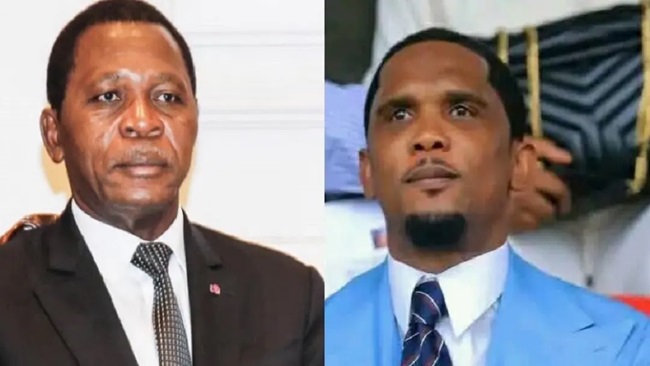
All the top militias in Southern Cameroons including members of the Cho Ayaba’s ADF gang are backed by the Cameroon government army. There are also CPDM militias such as the Minister Atanga Nji Boys that have been using Cameroon government military bases in Buea and Bamenda to carry out pro Yaounde regime operations in Southern Cameroons.
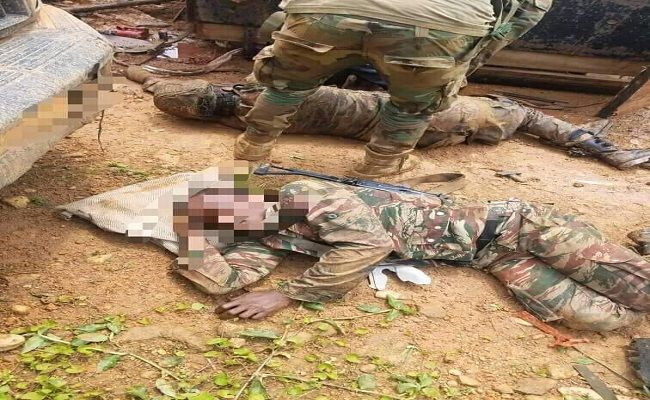
Members of these Cameroon government militias have killed hundreds of Southern Cameroonians and spread fear among the population in Ground Zero, which is currently seeing repeated murders and hit and run killings in places like Bamenda, Kumba, Kumbo, Wum, Batibo and Tombel. One of the most tragic was the killing of a child in Muyuka last year.
Cameroon government militias and Southern Cameroons gangs that recently emerged following the collapse of the Sako Ikome-Chris Anu administration have also been responsible for a rising wave of kidnappings of civilians in order to extort ransoms to cover their own financial needs. To be sure, senior Cameroon government army officers are strengthening themselves financially by setting up groups headed by well trained soldiers specialized in theft and hired killings. There is increasing harassment of business owners and traders by both Cameroon government army soldiers and Ambazonia criminal gangs and taxes on transportation are imposed by Cameroon government militias that control military checkpoints on various roads in Southern Cameroons. Many attempts by the business communities to go about their activities have been met with a stone wall by the three forces that control Southern Cameroons namely: Cameroon government security apparatus, pro-French Cameroun militias aka Atanga Nji Boys and the Ambazonia Restoration Forces. This has forced several business men and women to pay monetary royalties and bribes to get their businesses running again.
The consortium of the ruling CPDM crime syndicates is the third arm of the triumvirate running Southern Cameroons. The government party was the only political entity that campaigned in Southern Cameroons in the February twin poll with armored vehicles and military helicopters. The ruling CPDM party has knowingly or unknowingly created a new constituency in Cameroon politics—the army.
The Cameroon government army is working hard reviving CPDM party branches in both French and Southern Cameroons and instituting a spying and monitoring network made up of CPDM party staffers, sending them into various parts of Southern Cameroons in heavily guarded military convoy. The military is now present in every ruling CPDM party celebrations and activities in Southern Cameroons and they are overseeing several conferences and party events aimed at increasing Biya and French Cameroun’s dominance and the influence in the Federal Republic of Ambazonia.
Biya Francophone Beti Ewondo authorities have over the last four years imposed a policy of discrimination in Southern Cameroons and above all, fanning the flames of the North West/South West Divide. The Southern Cameroons territory, where the French Cameroun regime has been in charge for 58 years, still has no iota of development despite pleas by its poor citizens.
For 58 years, Southern Cameroonians have suffered from almost continuous power and mains water cuts. For 58 years, Southern Cameroonians have lived under the constant shadow of accusations that they had previously embraced the option of joining the Federal Republic of Nigeria, and threats that they will pay the price for this. Many who joined the Francophone dominated public service never had a rise in the system and were deprived of their rights.
The level of barbarism being perpetuated by Mr Biya’s military and his government militias as they pursue their genocidal war and scorch earth policy to completely annihilate the Southern Cameroons (Ambazonia) is alarming. So far, as a result of the on-going genocide in the Southern Cameroons (Ambazonia), an estimated 20,000 people have been killed, over 280 towns and villages have been burnt down, over 120,000 people are seeking refuge in Nigeria and further afield, over 1million people are internally displaced or living in bushes and over 3,000 persons incarcerated in prisons and detention facilities. It is also reported that over 4.5. Million people are at risk of famine. One thing we know for sure is that Mr Biya and his military and private militia will be held accountable for these crimes. While not exonerating Ambazonian self-defense forces, we also know that Mr Biya’s government is doing everything through its private militia (popularly known as Atanga Nji Boys) to commit atrocities and link them to self-defense forces, so as to evoke international sympathy. Only an independent fact-finding mission can establish the facts and thus far, Mr. Biya’s government has resisted all requests by independent humanitarian organizations to visit Southern Cameroons and establish the facts.
By Asu Isong in London