10, February 2020
Biya Francophone regime steps up propaganda war amid bloody crackdown on Southern Cameroonians 0
Brute force has been the main weapon of the regime in Yaoundé as it has sought to crush growing Southern Cameroons uprising and quest for an independent state, killing thousands of people including women and children and torturing hundreds more. But the entire Cameroon nation has also been besieged by relentless propaganda.
In a political campaign period that has seen at least 98 die and escalating violence in all of Southern Cameroons, state radio and television including private media organizations owned by regime cronies have been blaring out songs exalting the 86 year old President Biya as the father of the nation with some anointing him president for all eternity.
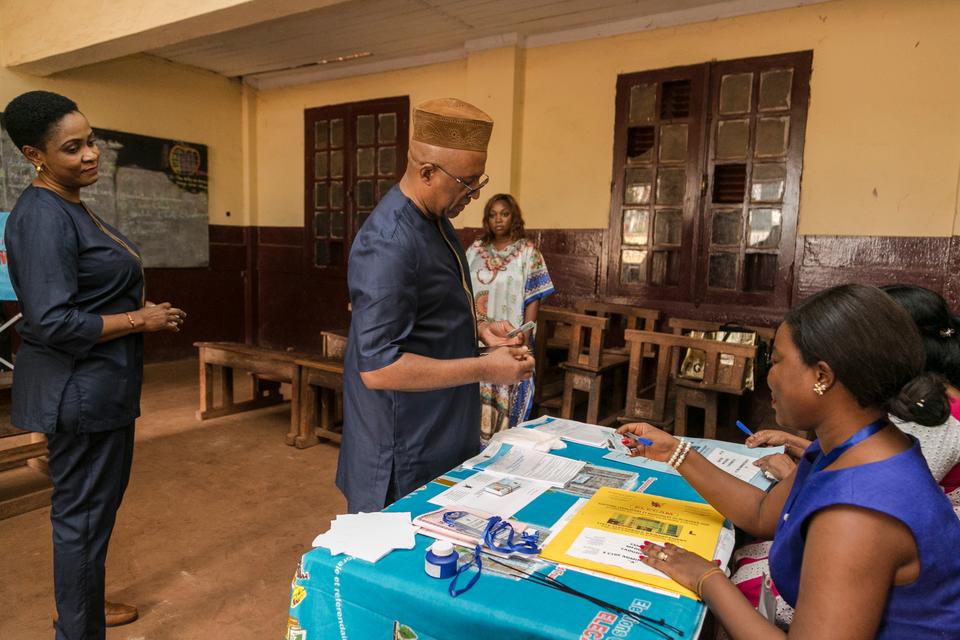
The ruling CPDM crime syndicate supports President Paul Biya, one of the world’s oldest and longest-serving leaders, who has ruled with a steely fist for 37 of his 86 years. Sunday’s parliamentary and local council elections took place for the first time in seven years, after two postponements.
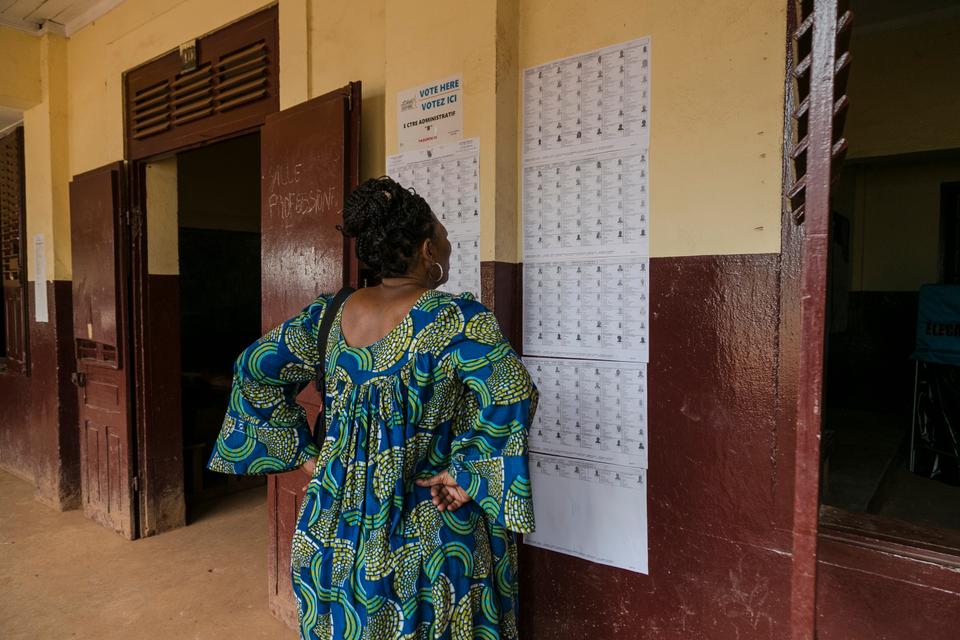
Despite the delays, campaigning was low key and the few banners put up in the nation’s capital, Yaoundé by the consortium of CPDM crime syndicates were barely more numerous than posters calling on people to pick up their litter.
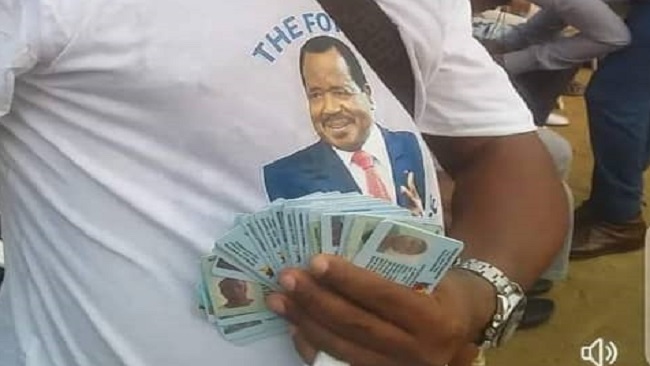
The numerous baseball caps, T-shirts and flags adorned with President Biya’s face were difficult to find this time around as the “river of money” in Southern Cameroons has gone dry. CDC, PAMOL and SONARA are all facing problems and these are corporations that have stood the government in good stead over the last fifty years.
A state television interview showed Biya making a mockery of major opposition parties that boycotted the poll while a handful of regime supporters chanted that they would shed blood for their president.
But as President Biya’s use of force has failed to crush the Southern Cameroons revolution, now in its fourth year, propaganda has become a key element of the regime’s efforts to rally support.
The Biya regime propaganda is relentless and has successfully hijacked the idea of national identity and is pushing divisions. Yaounde’s official rhetoric is now tribal and a cream of French Cameroun political elites are blaming the Southern Cameroons diaspora and Ambazonia Self Defense groups for the violence.
The Biya Francophone Beti Ewondo crude misinformation has so far been surprisingly effective because there is no independent media in both French and Southern Cameroons. Correspondingly, reporting is difficult and news comes mainly from witnesses and amateur film footage.
The Biya regime and its French Cameroun opponents have become increasingly polarised, raising the spectre of clashes soonest in French Cameroun where tribal tensions are rising amid claims that Bamilekes are being targeted by the country’s secret service.
The voting in Southern Cameroons appeared to have been done by members of the Rapid Intervention Battalion (BIR) deployed to the territory now known as the Federal Republic of Ambazonia. The whole process was teleguided to guarantee a crushing victory for the ruling Cameroon People’s Democratic Movement which in the outgoing parliament had 148 out of 180 seats.
There is one small thing, small but great and it is that even in Yaoundé, enthusiasm for Biya and his ruling CPDM crime syndicate has now been subdued, with no crowds running behind Biya anymore.
By Soter Tarh Agbaw-Ebai














10, February 2020
Cameroon’s Twin Elections: How were they won? 0
Cameroon’s so-called advanced democracy has continued its onward march towards a man-made catastrophe despite all the warning signs. While decency, responsibility and transparency are the hallmarks of genuine democracies around the world, Cameroon’s democracy has continued to be mired in corruption, controversy and irresponsibility for more than a quarter of a century.
While the natural tendency for a genuine democracy is to innovate and streamline processes and procedures, Cameroon’s democracy manufactured by its president, Paul Biya, has put the country in the spotlight for all the wrong reasons.
All elections held in the country from 1990 have been marred by fraud and lack of transparency. In 1992, the American election watchdog, the National Democratic Institute (NDI), documented evidence of fraud in the presidential elections and the Biya government declared the famous institute persona non grata in Cameroon.
The acts of fraud during these elections were so crude to the point that even the blind could see them. Elections were organized by the ministry of territorial administration. The minister was a member of government of the incumbent whose cardinal objective in life at the time was to stay in power in order to protect acts of corruption and fraud committed under his one-party state.
Voters’ registration was the responsibility of local chiefs and other government officials who were paid by a government that was still struggling to shake off the one-party hangover. The main opposition party leader was John Fru Ndi, a man who struck fear in the minds of one-party state believers. His supporters were not allowed to register for the elections freely. The presidential election was more of a war than a normal democratic process, with the ruling party preaching tribalism and promoting hate speech.
Anglophones living in many parts of East Cameroon were cut out of the electoral process because their loyalty was obvious. It was the best way to guarantee the incumbent a victory. Many of those who ever got registered never had their voters’ cards and even the receipts issued to them after registration were rejected on polling day.
On voting day, polling stations were changed at short notice. Voters were completely confused. Opposition election officers were refused entry into polling stations. Ballot boxes were stuffed with fake ballots and intimidation by the ruling party was clearly on the menu.
The results were compiled by the ministry of territorial administration and released by the Supreme Court whose judges were appointed by the incumbent. The signs of corruption and fraud were obvious except to members of the ruling party who thought more about their personal interest than about the country’s paramount interest.
Almost 30 years after, the ruling party, the CPDM (Cameroon Peoples Democratic Movement), a party that is only democratic in name, has continued to use the same tactics to perpetuate itself in power. Yesterday’s elections were not different from what Cameroonians have witnessed for close to 30 years.
The context might have been slightly different due to the insurgency playing out in the two English-speaking regions of the country and the general voter apathy because of the past, but the ruling party has still employed the same tactics to sustain itself in power. The results of yesterday’s elections were known long before the voting took place.
The ruling party had eliminated many opposition parties in many constituencies around the country. All opposition parties fielded only 45 candidates in the parliamentary elections out of 180 seats. This implied that the CPDM had already won 135 seats even without any real voting.
In Cameroon, there is no strict campaign financing laws. The CPDM government grants very little financial assistance to struggling opposition parties for them to be able to participate in the elections. It grants itself the state treasury and uses military and state vehicles for its campaigns. In the two English-speaking regions, government officials used military trucks and armoured cars to go to the regions just to rig the elections.
The objective is not to convince the population, but to demonstrate that elections actually took place across the country. Fuel for the trucks, drivers of the vehicles and maintenance costs are all being borne by the poor taxpayer whose interest is never considered as a priority.
While ruling party officials enjoy all of this, opposition party candidates simply avoid the war zone and only ruling party election officers really go to the polling stations. The outcome of the election is therefore not in doubt.
In many polling stations, only government soldiers voted. Prisoners from other regions were hauled like cattle to the two English-speaking regions for them to vote for the ruling CPDM. In Buea, Bamenda, Kumba, Mamfe and other cities in the two English-speaking regions, many young men were arrested and kept in jail until after Election Day. They were released after having voted for the ruling party. Cameroon’s advanced democracy is making giant strides; unfortunately it is making giant strides towards dictatorship and monolithic thinking.
The ruling party, known for its Machiavellian mindset, had orchestrated the real fraud, not necessarily in the polling stations, but during the registration process. Three hours after the close of elections, some of its members could be seen celebrating the party’s victory in front of Ayaba Hotel in Bamenda like a group of monkeys that has run into a bunch of bananas.
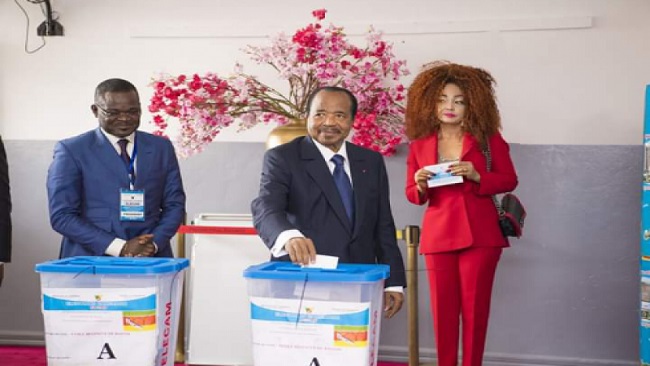
According to the country’s electoral law, only the government manufactured elections body, ELECAM, is supposed to declare election results and anybody found declaring results without the approval of ELECAM shall be found guilty of transgressing the country’s electoral law.
But ruling party officials in the Northwest region were releasing their own results yesterday and nobody has been arrested or summoned to appear before any constituted government body for them to answer for their reckless behavior. Cameroon’s laws are simply selective, and they never find ruling party officials guilty of any crime.
The ruling party has won by a wide margin in the two English-speaking regions of the country, at least according to the party’s estimates. The population of those regions simply did not participate in the elections. They have been displaced, with more than a million of them living across the country as internally displaced persons, while a similar number is hiding in the bushes or is in Nigeria because of the government’s violent military response to the insurgency.
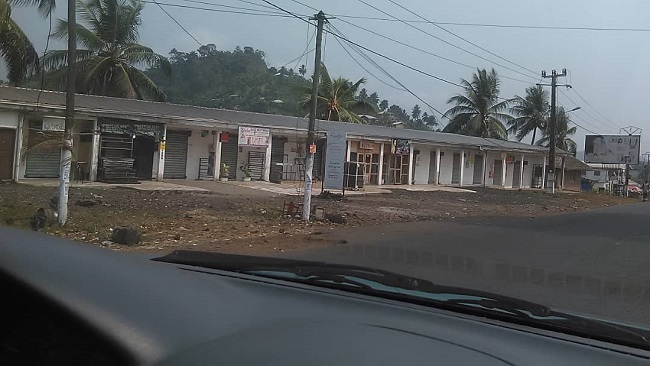
The population of the two regions also respected the lockdown decreed by the Southern Cameroons Interim Government that is living abroad and this has actually ruffled officials of the ruling party as the internet is awash with videos and pictures of towns abandoned by civilians who totally disagree with the way the regime has ruled the country for more than three decades. But the CPDM will surely score a 100% in both regions.
It is a party populated with people who have many skeletons in their cupboards. This is a party that started off with a slogan that captured the imagination and attention of Cameroonians. Rigour and Moralisation made the party look like a product made in Heaven. But over the last 35 years, Cameroonians have seen more corruption and demoralization spreading across the country like wildfire.
The CPDM might have won the election, but its battle to win hearts and minds, especially in the two English-speaking regions of the country, will be the one that will be the most challenging. The people of these two regions have made up their minds not to listen to the political heresy the ruling party preaches. Despite the victory it has arrogated to itself, the CPDM government, also known as a crime syndicate, will not govern Cameroon in peace.
Cameroonians have become more intelligent and the dignity, for which Anglophones are known, is gradually spreading to other regions of the country. Cameroon is in for a chaotic ride into the future. The road ahead is long and bumpy, and the drivers of the vehicle are old and inefficient. The chances of the vehicle ending up in a ravine are huge. Only the international community can pull this country back from the brink.
By Soter Tarh Agbaw-Ebai in the United Kingdom and Rita Akana in Yaounde