
1, March 2019
Southern Cameroons Crisis: There’s hope on the horizon 0
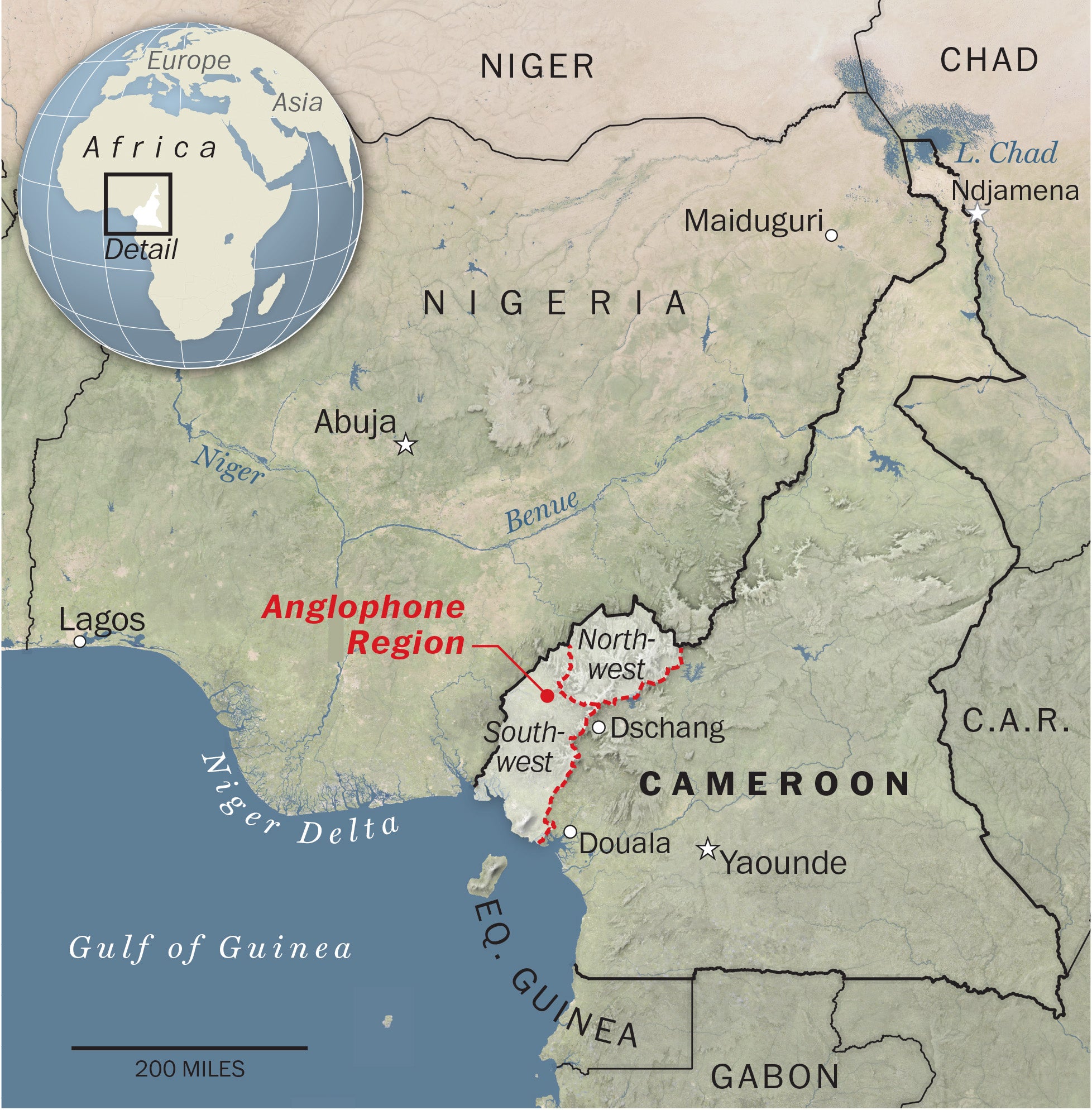
After more than two years of violent confrontations in Cameroon, the world is gradually taking note of the ferocious brutality that is playing out in the country. The Southern Cameroons crisis that has been unfolding for two years spiraled out of control in 2018 as many armed groups in the two English-speaking regions of the country threw their hats into the ring.
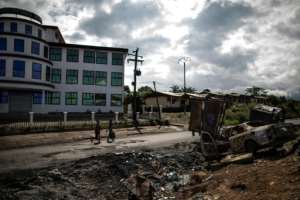
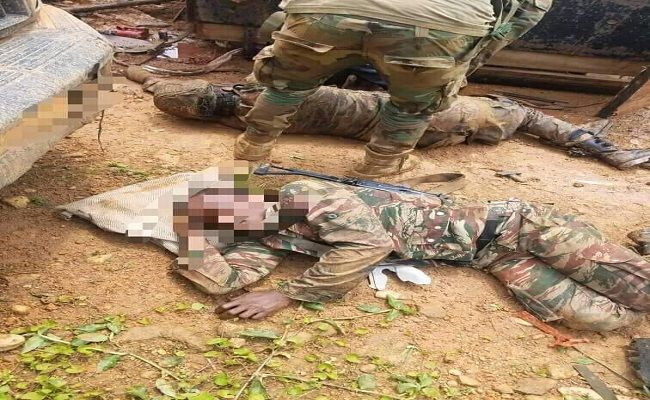
During this period, some 5,000 Cameroonians – both civilians and soldiers – have met their death as the government pursues its policy of collective punishment. Many civilians have seen their homes burnt down by government forces which have opted for a “scorch-earth” policy that is hurting many vulnerable people who have nothing to do with the conflict.
For some time now, there has been some silent diplomacy behind the scenes and Americans have been working hard to ensure the Biya regime caves in. The US embassy in Cameroon needs to be credited for all the diplomatic efforts it has made to ensure that government forces do not kill innocent civilians with impunity. The US administration has been urging the government to comply with the Geneva Convention. It even reduced its military aid to Cameroon as a first and serious step toward demonstrating that it will not tolerate impunity and human rights violations.
With the Biya regime still insisting that state authority must be respected and that Southern Cameroonians must be made to regret their decision to kill some 2,000 troops, the country’s military has continued to unleash the full spectrum of its anger on a population it accuses of supporting the separatists.
This ferocious violence has caught the attention of many and this time around, the Swiss have also decided to play a key role in efforts aimed at restoring peace in Cameroon. The Southern Cameroons crisis which started in October 2016 has finally caught the attention of the world and some steps are being taken to alleviate the pain and suffering of the people of Southern Cameroons. Many around the world are hoping that his visit will lead to a ceasefire that will enable the United Nations (UN) to deploy its staff in the troubled regions.
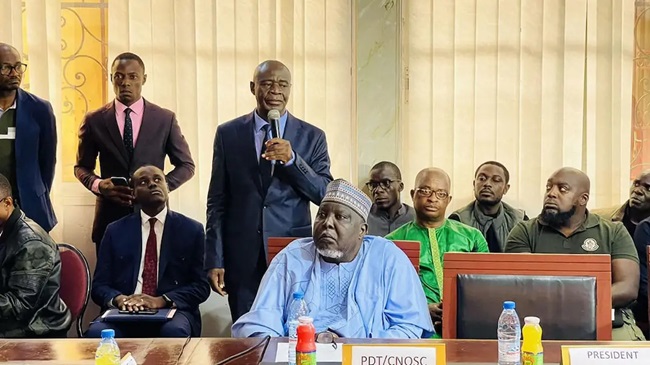
It should also be underscored that in January 2018, a Swiss delegation, led by Nicoletta Mariolini, was in Cameroon where it had a long discussion with members of the Musonge bilingualism commission on the possibilities of cooperation with a view to enhancing national unity and peaceful co-existence between the various linguistic groups of the country.
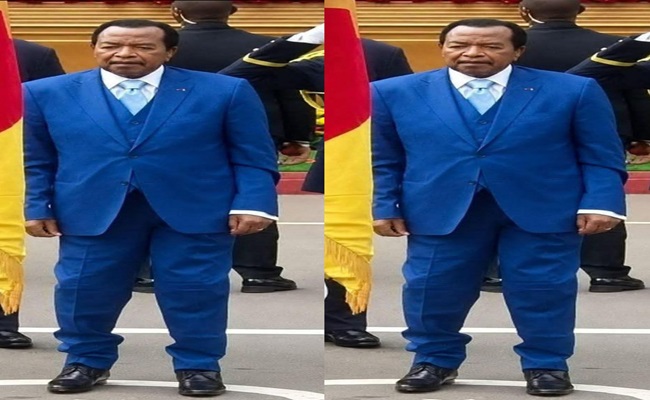
The President of Switzerland, Ueli Maurer, has joined the ongoing efforts to end the brutality. He is expected to be in Cameroon in the coming days where he will be meeting Cameroon’s President, Paul Biya, where their discussions will focus on ways and means of putting an end to the brutality.
For two years, Southern Cameroonians have been longing for the UN to come in and save lives, but the global body which does not have a standing army was caught up in a cobweb of negotiations with the Yaounde government that is wary of the global body.
Despite pressure from powerful nations like the United States and Canada, the Yaounde government has continued to play ball with the UN and this has resulted in many people losing their lives. Things have been complicated by the fact that the UN lacks the resources to carry out a peacekeeping mission in many parts of the world.
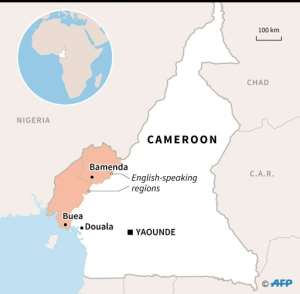
Currently, the UN needs USD 15.2 million but has only succeeded to mobilize USD 5.1 which has enabled it to send some international staff to Buea and Bamenda and there is a huge recruitment campaign going on in those two cities. The various UN humanitarian bodies need local staff to help them deliver humanitarian assistance to those who need it the most.
In a report published in January 2019 on the situation in Cameroon, the UN highlighted the need for a prompt and urgent response to ensure things do not further deteriorate.
“Insecurity in the affected regions remains high, with continuing armed attacks and confrontations between the military and armed groups. The crisis further worsened from mid-2018 onward due to increased hostilities ahead of the presidential election. Movements continue to be restricted in the two regions due to a curfew in the North-West, a “No Movement” declaration by non-state actors and the increase of both official and informal checkpoints,” the report says
“In the South West, on 3 January CDC workers of the Rubber Plantation in Tiko, Fako Division while at work were attacked by Non-state armed men (NSAG). They were tortured, and their toes and fingers cut off for working in the Plantation against the policy of armed groups. In January, troops clashed with armed groups across the two regions with ensuing fatalities and destroyed properties and vehicles. Military operations increased in both regions to counter armed group plans for February ‘lockdown’. Preventive displacement and stockpiling was ongoing at the time of writing of this report. Declining security situation during the month is expected,” the report says.
“Hostilities have continued to claim civilian lives, from indirect fire and from disturbing reports of targeted killings. Urban attacks have resulted in deaths from cross-fire and civilian casualties have been reported as a result of raids on villages. In late January, large scale military operations were launched in the Bafut area resulting in numerous casualties for both combatants and civilians. On 25 January, the military killed 11 people they suspected of being armed separatists in Mpundu-Balong in the Southwest region. Incidents were also reported taking place in Marumba and Tiko amongst others. Abductions continue to be an ongoing concern,” the report reveals.
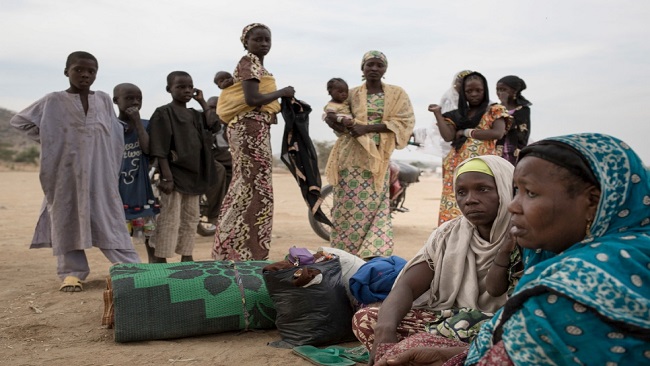
“The violence has uprooted 437,500 people from their homes and forced over 32,000 to seek refuge in neighbouring Nigeria. Humanitarian organizations are striving to scale-up their presence in the conflict-hit regions. Shelters, NFI and Education have been identified in the North-West and South-West regions as the most urgent needs. Almost 50 per cent of the displaced have settled in rural areas and have an increased need for shelter and non-food items. More than 80% of girls and boys no longer have access to schooling on a continuous basis because of the crisis,” the report says.
“The outlook for 2019 is one of emergency response as displacement continues due to the ongoing conflict. Vulnerability is compounded as services deteriorate and resilience is eroded. Access remains challenging as poor levels of understanding of humanitarian action persist and infrastructure is damaged in armed conflict related operations to deny mobility to opposing forces. Armed fighting and insecurity continue to be the principal impediment to the provision of assistance as well as a barrier to those in need in terms of reaching areas where they can receive aid,” the report points out.
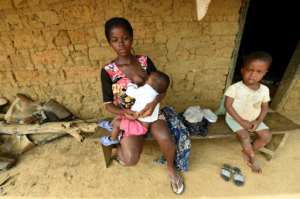
The majority of those displaced are women and children. Protection is the principal humanitarian concern as the ongoing conflict is the main cause of human suffering. Food and shelter are also of concern as displacement continues. Needs across all sectors are high and are being further compounded as the conflict deepens.
Of particular concern is access to water for areas requiring water transportation during days when movement is limited. Many of the conflict-affected populations are growing more vulnerable as the violence persists and humanitarian assistance remains inadequate, the report stresses.
“The deployment of humanitarian actors to the field continues. A further allocation of CERF to Cameroon will in part support humanitarian activities in the North-West and South-West regions. As of 7 January, donors had provided 35 per cent of the US$15.2 million required as per the emergency response plan, according to the Financial Tracking Service (FTS). This amount constitutes the US$5.1 million CERF allocation under the rapid response window. Additional contributions were received by other donors but not yet reported on FTS,” the report says.
For almost three years after the conflict started, the international community has been calling for inclusive dialogue, but its passivity and lack of interest in the whole situation have led many Southern Cameroonians to accuse it of connivance with the Biya region to decimate the indigenous people of Southern Cameroons. The international community is now coming out of the “Omerta” it imposed on itself. This will surely enable Southern Cameroonians to stop seeing it as an accomplice in the genocide that is currently playing out in their country.
Now that the government is listening, it is time for the international community to get tough on a government that is considered by its own citizens as a crime syndicate. Its corruption has robbed its own people of happiness and prosperity. Today, it is fiercely promoting the principle of political tribalism as a means of sustaining itself in power. The market-dominant minority that has enriched itself through unorthodox means has brought untold hardship to Cameroonians. It has to go and Cameroonians in general hold that the intervention of the international community will be a welcome relief. Turning a blind eye to the problem will not make it go away. The international community must step in to restore peace in a country that is anything, but democratic.
By Kingsley Betek in Yaounde and Irene Nanyongo in North America















1, March 2019
Cameroon soldiers ‘invade’ Catholic hospital in search for separatists 0
Cameroonian soldiers ‘invaded’ a medical facility as they hunted Anglophone separatists in the country’s troubled northwest region.
The attack took place on Feb. 17, in the Diocese of Kumbo, which has been plagued by the fighting between the army and rebels.
The Shisong Cardiac Center at St. Elizabeth Catholic General hospital is the only facility where heart diseases are treated in Central Africa. The soldiers stormed the building searching for separatist fighters.
“It is giving us a very bad name,” said Bishop George Nkuo.
“The army can come in to the hospital where there are cardiac patients and move around in search of whomever. It is not done; but that was done. And they shoot around even with people who are cardiac patients. That is the most irresponsible act to do. Most unprofessional I would say at the least,” he told Crux.
A local Catholic radio station in the area, Radio Evangelum gave details on how the military assault was conducted.
“About 11 a.m. that Sunday, defense forces of Cameroon got into the premises of Saint Elizabeth Catholic General Hospital and Cardiac Centre, Shisong. It is alleged that they were in search of wounded separatist fighters who might have been admitted in the hospital,” the station reported.
“Five military men, carrying arms, entered the hospital through the gate leading into the Farewell Home. They moved into the Cardiac Centre section of the hospital next to the Farewell Home. The soldiers, reports say, went into the wards in that section, and took out a boy who was taking care of his grandmother admitted in the hospital. They proceeded to the inner sections of the hospital, went to the Surgical Unit, and moved into one of the wards. The soldiers are said to have fired some gunshots inside the hospital premises,” the report continued.
The station said the Tertiary Sisters of Saint Francis who run the hospital were on a day of recollection that Sunday, but some of the sisters immediately came to the hospital where they met the soldiers.
The nuns told the soldiers to stop their disruptive actions and to leave. The soldiers complied, and released one young man they had detained.
“The likelihood of trauma on patients and health workers is high. The effect of the incident on patients in the Cardiac Center section could be disastrous and long lasting. The administration of the hospital was uncomfortable with the incident,” said Sister Mary Aldrine Kinyuy, the director of the hospital.
The incident happened just a day after separatists kidnapped over 100 students from a Catholic school in the diocese. They were released the next day.
Nkuo said Kumbo has recently become a theater for conflict, with people being killed, homes burnt and property destroyed.
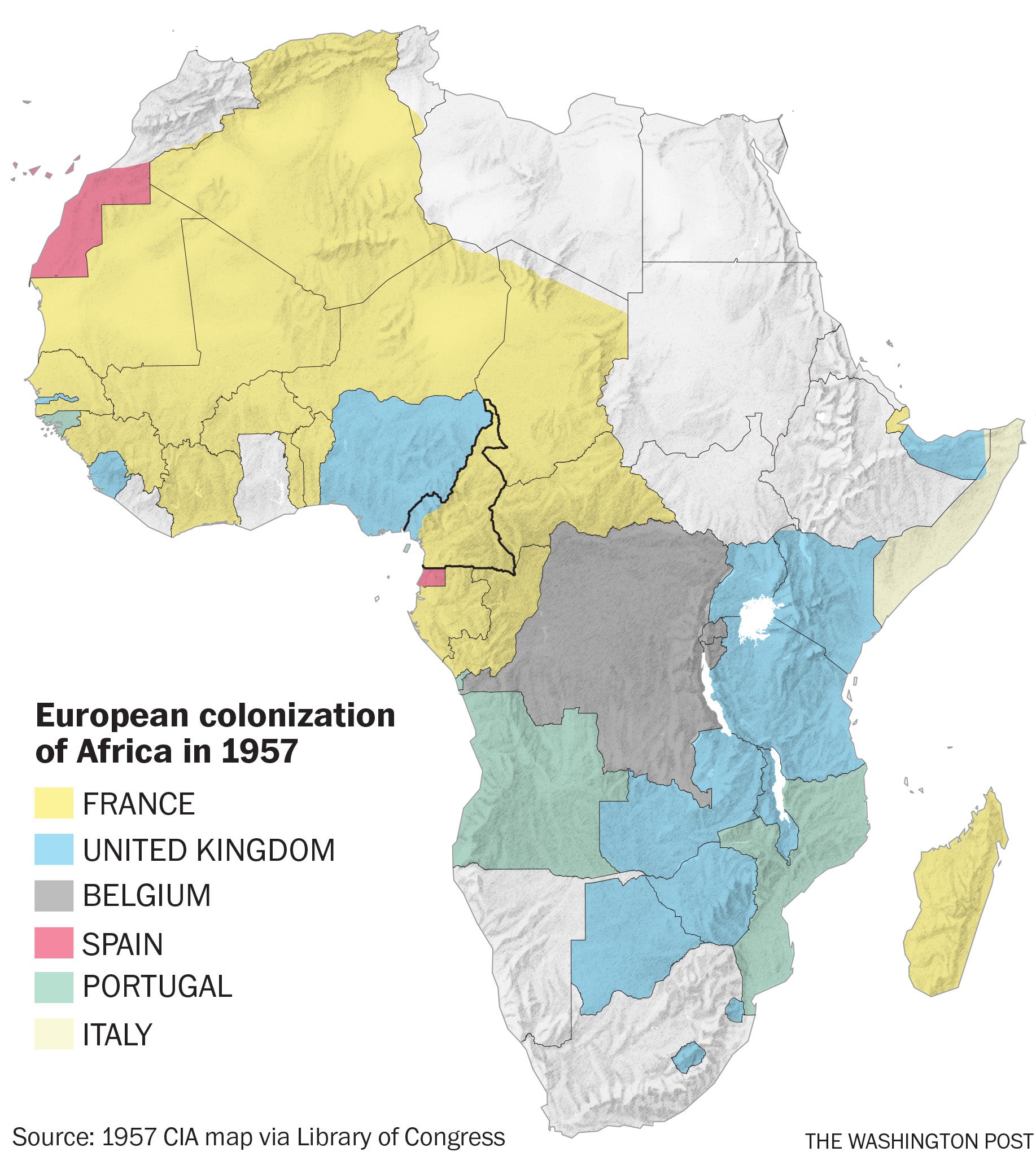
About 80 percent of Cameroon is French-speaking. However, the Northwest and Southwest regions of Cameroon are majority English-speaking, a legacy of the colonial history of the country: Cameroon was originally German, but after World War I the defeated country transferred it to the Allies, and it was divided between France and Britain.
At independence, the two parts were reunited, and currently about 20 percent of the country’s nearly 25 million people is anglophone. The Catholic Church is the largest religious group in the country, representing about 40 percent of all Cameroonians.
In October 2016, strikes by lawyers and teachers over perceived attempts by the Francophone administration to assimilate the legal and educational systems practiced in the two English-speaking regions turned violent, and morphed into rising demands by Anglophone Cameroonians for independence.
The government has been accused of razing entire villages and extrajudicial killings in their hunt for separatists, who are calling on the English-speaking areas to form a new country, called ‘Ambazonia.’
Separatists have also been accused of atrocities, and have attacked Cameroonian security forces, and kidnapped opponents for ransom.
“There is shooting and random killing,” the bishop said. He said much of the killing is carried out by government soldiers, whom he accuses of acting unprofessionally.
“I have seen houses burnt and I am even told that there are a number of people being killed… And the people who have been killed are innocent people, innocent civilians. I am very sad indeed,” Nkuo said.
“I can tell you that people are living in great fear. I have had the chance to go round the diocese, to go on pastoral visits, in fact today (Feb. 17), I was in one of the parishes and three-quarters of the people have left. They are not there. They have left. I can even say that some of them have threatened they would never come back,“ the bishop added.
The bishop admitted that he himself wasn’t safe, but he can’t abandon those “who have no way else to go.”
“The bishop cannot leave them. I am there with them because somebody must be there to reassure them that there is hope, that there is a future and that God is in control. That is why I am still in Kumbo,” he said.
Recently, a picture of the bishop went viral after it showed him carrying a box on his head while visiting a remote village in November.
R
“I don’t know why it went viral. I am sorry about that,” he said, before noting that he was just doing what he ought to do as a pastor in the circumstance.
“If I have to go and meet the people and the road is blocked, what should I do? Should I stay back? No! This is what the missionary does and this is what we should do. We must go to meet the people even when we meet obstacles, we must be humble enough, we must show a sense of mission that we can overcome the obstacles and go to where the people are,” Nkuo said.
He acknowledged the fact that he has not been able to reach all his parishes, but insisted that wherever possible, he would go.
“God, the Church expects us to do that and we do it joyfully and happily because we know that the people of God need us and we must go there and attend to them,“ the bishop explained.
Source: Crux