5, February 2019
Biya regime’s Anti-Semitism Crisis: Yaounde abandons Minister Momo 0
When Barrister Jean de Dieu Momo went from being an unknown lawyer to a cabinet minister in the Biya Francophone Beti Ewondo regime, there was no natural urge to know more about him. He was simply a pro Biya comedian. Now he has provided not only local but the international media plenty to go through. Ever since he was installed as a Cameroon government minister by Prime Minister Dion Ngute, Jean de Dieu Momo has been the kind of French Cameroun politician from the West region who shows up everywhere seeking for notice and stays late in television stations to protect the already battered image of the Biya regime.
Questioned recently on the Cameroon Radio and Television (CRTV) on why he thought his kinsman and opposition leader Prof Maurice Kamto had blatantly refused to accept defeat following the October 7th presidential election, the so-called Francophone cabinet minister used long established anti-Semitic stereotypes.
He noted authoritatively that “In Germany, there was a race of very rich people. They had enormous economic power. And they were so arrogant that the German people felt a little nervous. Then one day, a certain Hitler came to power and put these populations in gas chambers.” These are the kind of evil men that the 85 year old Biya relies on for his political survival and relevance in a country that is crumbling at catastrophic rapidity.
Correspondingly, the Israeli Embassy in Cameroon has said it is outraged at comments made by Cameroon’s Deputy Justice Minister Jean de Dieu Momo in which he justified the Holocaust that some six million Jewish people were killed in Nazi Germany.
It is vital to understand that Prof Maurice Kamto, the leader of the MRC party, comes from the Bamelike ethnic group who have a reputation for being successful businessmen and women. Minister Momo, who is also an ethnic Bamelike, further opined that it would be wrong for the group to seek political power alongside their economic influence, and suggested that trying to do so could be dangerous for the entire community.
The Israeli Embassy in Cameroon noted in a statement that “the government official has justified the Holocaust perpetrated by Nazi Germany”. It went on to suggest the comments would have an impact on the two countries’ relationship. The embassy called for “an immediate apology,” from Cameroon’s government and they have gotten one.

But nobody in Yaoundé even from within the ruling CPDM crime syndicate had really paid attention to Minister Momo after his anti Semitic comments, because why would you? He simply sounded a note of caution to his Bamileke community not to dare challenge Biya like the people of Southern Cameroons.
It is now evidently clear that the Biya regime is run by a gang of Holocaust deniers who only need the Jewish state for interest-free loans and weapons including political protection. The Biya regime’s war in Southern Cameroons-Ambazonia is being waged using Hamas and Hezbollah tactics-groups that continue to pose serious danger to the state of Israel. President Biya’s most trusted pilot for more than three decades has been a Palestinian national.
In the apology statement issued by the Cameroon government, Yaoundé was quick to say that the Deputy Minister for Justice was speaking on a strictly personal basis. The Biya regime further pointed out that “The Government of Cameroon strongly deplores the irrelevant comments of the said personality and completely disassociates itself.”
With the Biya Francophone Beti Ewondo regime perilously weakened by Boko Haram and the war in Southern Cameroons, Holocaust deniers like Ministers Momo, Paul Atanga Nji and Ferdinand Ngoh Ngoh are closer than ever to becoming Cameroon’s Chief executive. There is a fear, a real fear of this disturbing development in the Cameroon political story.
This is not a low attack on the Yaounde government. Tribalism and nepotism have been the organizing principles of the Biya regime and the 85 year old leader has allowed prejudice to go unchecked ever since he took office in 1982. Yaoundé’s attempt to respond to the Minister Momo issue has somehow managed to make things worse.
By Soter Tarh Agbaw-Ebai


5, February 2019
Why China just quietly wrote off a chunk of Cameroon’s debt in secrecy 0
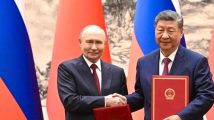
When top Chinese diplomat Yang Jiechi met Cameroon President Paul Biya in the capital Yaounde last month and wrote off a chunk of the African country’s debt, the deal very nearly went unnoticed. China issued no press release, and the Cameroon government did not mention the debt cancellation in its write-up of Yang’s visit.
It was only when a Chinese news report later alleged that Beijing had written off 3 trillion Central African CFA francs ($5.2 billion) of Cameroon’s debt during Yang’s trip that the existence of a deal emerged. The figure was incorrect. Five billion dollars is close to the amount Cameroon has borrowed from Beijing since 2000, according to the China Africa Research Initiative (CARI), and exceeds the amount the country is believed to still owe.
But while the news report was wrong, its release did force the Chinese government to speak publicly about what type of deal had been reached. Last week, Chinese Foreign Ministry spokesperson Hua Chunying told CNN: “China agreed to waive the interest-free inter-governmental debt that Cameroon had not paid back by the end of 2018.” That debt was worth $78.4 million. Cameroon’s total debt is 5.8 trillion Central African CFA francs ($10 billion), about a third of which is owed to China, according to the International Monetary Fund. In short, this was a tiny slice of Cameroon’s liability to China. So why the initial secrecy?
African debt backlash
Debt write-offs for developing nations are usually greeted with great fanfare, such as the IMF and World Bank’s Heavily Indebted Poor Countries (HIPC) Initiative, or the Paris Club’s landmark debt wipe-out in the early 2000s. In China, it’s more complicated: African debt has become increasingly controversial at home. When President Xi Jinping pledged a $60 billion package of aid, investment and loans to Africa last September at the triennial Forum on China-Africa Cooperation, angry posts emerged on the Chinese internet.
Critics questioned why China — where at least 30 million people still live in poverty, defined as an annual income of less than 2,300 yuan (about $340) — was giving money to Africa. Censors quickly deleted the complaints. There is also this to consider: African nations have borrowed $143 billion from China since 2000, according to CARI figures. Beijing’s leniency toward Cameroon could prompt other heavily leveraged nations, such as Ethiopia, Djibouti and Zambia, to expect similar treatment.
China may have also sought an under-the-radar arrangement because of Cameroon’s political turmoil. Last week, police arrested Maurice Kamto, the Cameroonian opposition leader who claims to have won last year’s election, along with several staff supporters, amid protests that are fueling political instability. The West African nation is battling a Boko Haram insurgency in the north, while a secessionist movement is destabilizing the two Anglophone regions of the largely French-speaking nation which was born from the unification of a former British and a former French colony. Due to the unrest, Cameroon has been stripped of the right to host the 2019 African Cup of Nations, the continent’s biennial soccer championship, which will now take place in Egypt.
An election posters for Cameroonian President Paul Biya in Yaounde in November 2018 reiterates he has “the force of experience” on his side.
From a human rights perspective, the bar for Chinese political partners in Africa is low. Beijing backed Zimbabwe during some of the darkest years of dictator Robert Mugabe’s rule, and poured money into Angola under former president José Eduardo dos Santos, an authoritarian figure associated with large-scale corruption.
But 85-year-old Biya, who has ruled Cameroon for 36 years, is increasingly looking like an “inappropriate partner” from a business standpoint as China faces growing scrutiny on the continent, says Chris Roberts, a political scientist at the University of Calgary. “Cameroon in every way, shape or form is getting worse by the day in every metric,” says Roberts. “This regime has dismantled whatever foundations it had for a stable economy.”
Deep pockets, deep port
China established diplomatic relations with Cameroon in 1971. Their economic partnership grew after Nicolas Sarkozy became president of France in 2007 and oversaw his country’s decreased engagement with its former colonial territory, leaving a vacuum for Beijing to fill. Since the turn of the century, China has been granting Cameroon debt relief: In 2001, it canceled $34 million of debt, then in 2007 it forgave another $32 million and $30 million was wiped out in 2010. Those figures in fact paled in comparison with the $227 million Canada forgave in 2006, for example, notes Roberts.
But it was in 2011 that China really committed to Cameroon by agreeing to build and finance a new port in the fishing town of Kribi. It seemed a stable place to invest: Cameroon was considered a relatively peaceful nation in a war-torn region. Cameroon’s existing port of Douala was overworked, run down and restricted by its location on a sediment-filled estuary. When completed in 2035, Kribi will be the biggest deep-water port in the region. It will handle exports of Cameroon’s bauxite, iron ore and other minerals and could also serve the Chad-Cameroon Petroleum Development and Pipeline Project, which pumps oil from landlocked Chad.
The first two stages of the project, constructed by China Harbor Engineering Company, were worth $1.2 billion.CHEC is also building a $436 million highway to connect the new port with Douala and has agreed to construct a railway to an iron ore deposit. Other Chinese companies have been throwing up concrete towers around Kribi, in anticipation of its transformation into a thriving regional commercial hub. The Kribi port will also extend the reach in West Africa of China’s Maritime Silk Road, an initiative that Senegal signed on to last year. It is an important part of President Xi’s massive multinational One Belt One Road economic development plan.
The old port compared with the new Chinese-built facility.
“The Gulf of Guinea is strategic for China,” says Xavier Auregan, a specialist on China-Africa relations in Francophone nations, explaining that a foothold there strengthens its interests in West Africa from the Ivory Coast to Gabon. “Cameroon is one of the countries that can bring together the energy infrastructure of … West Africa.”
China’s activity in Cameroon is not restricted to the new port: It was responsible for 90% of road construction and restoration in the country as of 2014, and Chinese companies have built dams and hydroelectric power facilities there. China has also undoubtedly benefited from these developments, with many of the contracts going to its firms. But the Cameroonian government has taken out considerable loans to fund them and debt repayments look increasingly problematic in a now faltering economy. “If you’re saying we lent this money for this project or development effort, and we’re just writing it off because we know we’re never going to get it back,” says Roberts, “that has a domestic effect, but it also has international implications.”
One of the big concerns around Chinese loans in Africa is debt-trap diplomacy — the idea that Beijing will pressure countries that can’t repay loans into handing over key assets. Last December, Kenyan President Uhuru Kenyatta denied that Mombasa’s massive Kilindini Harbor, the largest port in East Africa, had been listed as collateral for a multibillion-dollar Chinese loan to fund a railway. China also denied the report. In Djibouti, similar concerns have been raised over China’s recent acquisition of a stake in a port there.
Gold mine tensions
China’s decision to provide Cameroon with debt relief also comes at a fraught moment between the country’s traditional gold-mining community and Chinese mining companies. East Cameroon is rich in gold. Justin Kamga, coordinator of the Forests and Rural Development Association (FODER) in Yaounde, says Chinese companies are operating illegal mines across the region and have scant respect for the land.
A Chinese mine site in Cameroon. Industrial machines are used to dig up the site.
The Chinese Ministry of Foreign Affairs did not reply to CNN’s request for comment. Local Cameroonian miners typically use artisanal mining methods which do not damage the environment, says Kamga. Chinese companies use heavy machinery that often pockmarks villages with multiple holes 30 meters deep, destroying farmland.
Between 2012 and 2015, Kamga said that more than 250 excavations were abandoned, mostly by Chinese companies. From 2015 to 2018, he said, more than 100 people died in such holes, which trigger landslides and spark local outrage at Chinese companies. In December, nine people died in such an incident, according to FODER.
Artisanal gold miners in East Cameroon.
Regulations stipulate that operators should safely cover holes, but Kamga says the Cameroon army protects Chinese mining companies, meaning they often face little legal retribution. Cameroon ranked 152 out of 180 countries on the 2018 Corruption Perceptions Index. The Cameroon government did not respond to CNN’s emails asking for comment. Auregan says that while reckless mining has tarnished China’s image, it is unlikely to be the reason for the write-off of the 2018 debt. “China sees the geostrategic and long-term vision of the importance of Cameroon in that region,” says Roberts. In short, as long as China needs a maritime foothold in West Africa, Cameroon’s debt burden may be lightened for a while longer.
Culled from the CNN