Featured
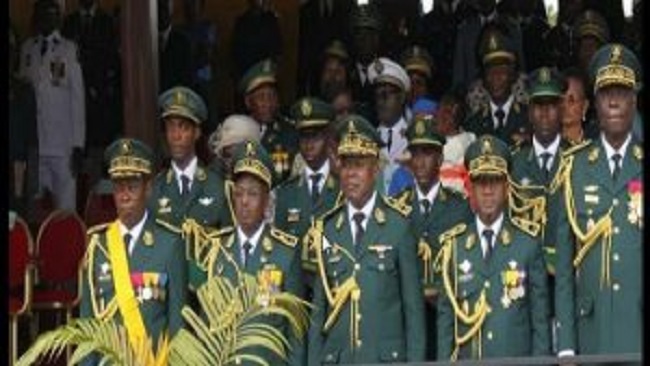 The Cameroonian army must put its conscience to the test
  Who really pushed for the return of the Vice President of the Republic?
  When politics fails a nation, football and the Church become the battleground
  Biya has had his era; Cameroon must now be allowed to enter its next one
  Biya’s hand: a source of glory and shame
Most Commented Posts
 4 Anglophone detainees killed in Yaounde
18 comments Chantal Biya says she will return to Cameroon if General Ivo Yenwo, Martin Belinga Eboutou and Ferdinand Ngoh Ngoh are sacked
13 comments The Anglophone Problem – When Facts don’t Lie
12 comments Anglophone Nationalism: Barrister Eyambe says “hidden plans are at work”
12 comments Largest wave of arrest by BIR in Bamenda
10 comments
Featured
-

Martinez Zogo Trial: questions over missing phone linked to Amougou Belinga
-

Revealed: Colonel Danwe admits ordering Martinez Zogo operation
-
Archbishop Nkea to battle decade of war with new peace Catechism
-

Southern Cameroons Crisis: 7 kidnapped by suspected Amba fighters in Bangourain
-
Southern Cameroons Crisis: 3 killed, 2 injured in bar shooting in Bamenda
-
US military nearing ‘breakdown’ amid sustained Iranian attacks
-
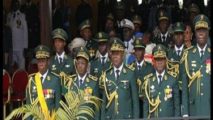
The Cameroonian army must put its conscience to the test
16, April 2026
US-Israel bombed 6 bridges – Iranian engineers rebuilt them in 96 hours 0
Iran not only survived the heaviest bombardment of its civilian infrastructure in modern history during the 40-day war of aggression imposed by the US-Israeli alliance but also achieved the rare engineering feat of restoring six major railway bridges and dozens of critical transport links in under 96 hours.
One key span near Qom reopened in less than 40 minutes, effectively neutralizing the enemy’s key strategy of paralyzing the nation through economic strangulation.
The ceasefire that took effect on April 8, 2026, after more than five weeks of sustained aggression, did not come a moment too soon for civilians.
But for Iran’s engineering corps, it came just in time to showcase a level of infrastructure resilience and readiness unmatched in modern military history.
While enemy war planners had explicitly targeted the country’s railway bridges, freeway overpasses, power substations, and even civilian airports to break supply chains and demoralize the population, the response from Tehran’s domestic engineering team fundamentally rewrote the rules of modern warfare.
Rather than crippling Iran, the aggression has demonstrated that the Islamic Republic can rebuild its most vital arteries faster than foreign adversaries can destroy them.