Featured
 Biya has had his era; Cameroon must now be allowed to enter its next one
  Biya’s hand: a source of glory and shame
  So, Cameroonians, what exactly do you want from President Biya?
  Benedictus Lysinge: Homily, Mass of the Bamenda Provincial Association of Diocesan Priests
  Samuel Eto’o, a champion’s answer to his critics
Most Commented Posts
 4 Anglophone detainees killed in Yaounde
18 comments Chantal Biya says she will return to Cameroon if General Ivo Yenwo, Martin Belinga Eboutou and Ferdinand Ngoh Ngoh are sacked
13 comments The Anglophone Problem – When Facts don’t Lie
12 comments Anglophone Nationalism: Barrister Eyambe says “hidden plans are at work”
12 comments Largest wave of arrest by BIR in Bamenda
10 comments
Featured
-
Yaoundé steps up road safety enforcement, but deadly crashes persist
-

Music legend Dolly Parton dies at 80
-

Manyu: We Must Learn!
-

Trump administration to revoke up to 200,000 asylum visas
-

Biya has had his era; Cameroon must now be allowed to enter its next one
-

António Guterres says war on Iran exposes limits of superpowers
-
Littoral Region: 7 killed, 10 injured in bus-truck collision
26, August 2026
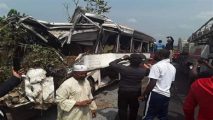
Yaoundé steps up road safety enforcement, but deadly crashes persist 0
Cameroon has stepped up road safety checks and prevention measures on major highways, but deadly crashes continue to expose the limits of enforcement efforts aimed at reducing fatalities over the long term.
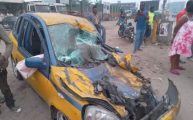
The latest accident occurred Sunday, Aug. 23, in Sikoum, between Douala and Edéa, killing seven people and injuring 10, according to an official toll reported by state-owned newspaper Cameroon Tribune. The crash came in the middle of a special nationwide road safety campaign and has renewed questions about how effectively current measures can address persistent risks on the country’s roads.
The accident occurred in the morning on National Road No. 3, or RN3, the main highway linking Yaoundé and Douala. A passenger bus carrying residents of the same Douala neighborhood was returning from Bafia via Yaoundé after they attended a funeral when it collided head-on with a dump truck, according to the state-owned newspaper.
Esther Ngo Yemba, the Transport Ministry’s divisional delegate for Sanaga-Maritime, said preliminary information indicated that the bus driver may have fallen asleep at the wheel. The vehicle then reportedly drifted out of its lane and struck the oncoming truck.
All 17 people killed or injured were aboard the bus. Transport Minister Jean-Ernest Masséna Ngalle Bibehe traveled to Edéa after the accident and visited the injured at the city’s regional annex hospital.
A Road Safety Campaign Already Stepped Up
The Sikoum crash occurred during a special road safety and prevention campaign that began June 25 and is scheduled to run through Sept. 30. The nationwide operation is intended in part to reduce accidents during the vacation period and ahead of the start of the school year.
Authorities have recently intensified enforcement on some of the most exposed routes. At the campaign’s halfway point, the Transport Ministry reported 35 accidents on certain highways since June 1 that it attributed to dangerous parking or improper use of vehicles carrying general and hazardous goods.
In response, Ngalle Bibehe ordered a special operation to remove improperly parked vehicles from major highways in a statement signed Aug. 14. RN3, which connects Cameroon’s two largest cities, is among the main roads covered by the operation.
On Aug. 20, the fourth day of the operation between Yaoundé and Douala, ministry teams identified several cases of illegal parking despite earlier awareness campaigns. For the ministry, the objective is not simply to remove vehicles that violate parking rules but to prevent them from creating conditions that could lead to collisions.
The Sikoum accident also came just days after another deadly crash highlighted a different road safety risk. During the night of Aug. 13-14 in Nomalé, in the Ndikinimeki district, 16 people were killed and about 40 injured when a passenger bus collided with a truck loaded with planks that was stopped on the roadway, according to the official toll.
At Nomalé, the stationary truck was one of the key factors in the accident. At Sikoum, preliminary information instead points to suspected driver fatigue.
The Challenge of Lasting Behavioral Change
The two crashes illustrate the range of risks facing road users. Dangerous parking is one threat, but it forms part of a broader chain that includes driver fatigue, behavior behind the wheel, vehicle condition, compliance with transport rules and traffic conditions.
That complexity is one of the central challenges for Cameroon’s current road safety policy. Authorities have increased checks, removed improperly parked vehicles and continued awareness campaigns, yet some high-risk behavior persists.
RN3 illustrates the problem. Even with the Transport Ministry concentrating part of its enforcement efforts on the highway, serious accidents continue to claim lives. The question is therefore no longer simply whether controls exist, but whether they can produce lasting changes in behavior.
The issue is particularly relevant because the government says the current campaign has coincided with a decline in road deaths. While that would indicate an overall improvement, it has not eliminated mass-casualty crashes.
The Nomalé and Sikoum accidents alone killed 23 people in less than two weeks and injured dozens more. That does not invalidate the broader decline in fatalities reported by authorities, but it shows that lower overall road deaths have not eliminated high-risk situations. Some routes remain particularly exposed, while dangerous behavior continues to have deadly consequences.
With the new school year approaching, the special road safety campaign is entering a critical phase. Authorities still have several weeks to turn individual enforcement operations into measures that address the underlying causes of crashes.
The challenge for the government is to ensure that stronger enforcement produces a sustained reduction in serious accidents rather than a cycle of temporary operations followed by the return of the same dangerous practices.
Source: Sbbc