Featured
 Cameroon cannot be governed by absence: It is time for the CPDM to prepare a new leader
 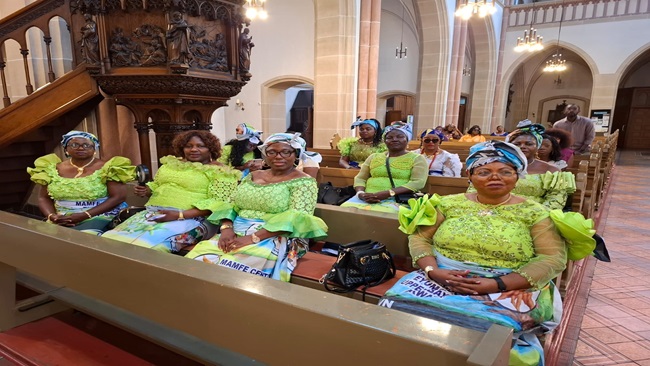 Nyene Mawn in Germany: Manyu Women leading, Manyu girls rising, Manyu communities thriving
 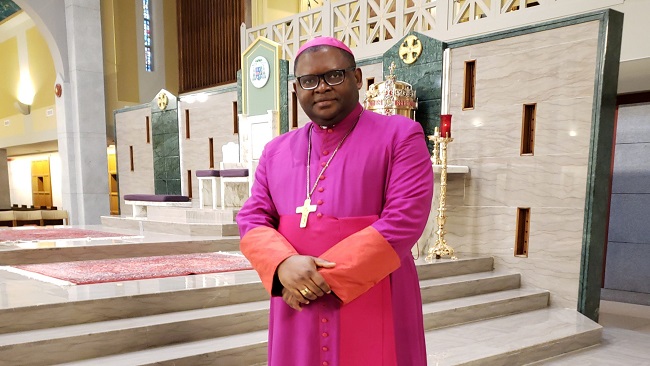 Archbishop Nkea, Bishop Bibi and Samuel Eto’o: Social media popularity should not come at the expense of truth
 - Cameroon Concord News to put up an obituary announcement on Biya soonest
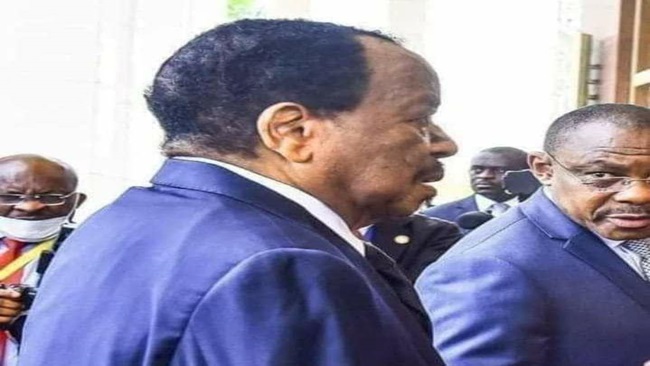 Biya’s Health: CPDM political bureau must act before uncertainty becomes crisis
Most Commented Posts
 4 Anglophone detainees killed in Yaounde
18 comments Chantal Biya says she will return to Cameroon if General Ivo Yenwo, Martin Belinga Eboutou and Ferdinand Ngoh Ngoh are sacked
13 comments The Anglophone Problem – When Facts don’t Lie
12 comments Anglophone Nationalism: Barrister Eyambe says “hidden plans are at work”
12 comments Largest wave of arrest by BIR in Bamenda
10 comments
Featured
-
Southern Cameroons Crisis: Armed clashes kill 1, injure several in Buea
-

Cameroon cannot be governed by absence: It is time for the CPDM to prepare a new leader
-

Cameroon rights commission warns corruption threatens indigenous livelihoods
-
Iran Supreme Leader makes new appointments to top military posts
-

MECA Manchester welcomes Superstar Maxy Manorh
-
Nyene Mawn in Germany: Manyu Women leading, Manyu girls rising, Manyu communities thriving
-

Indomitable Lionesses dump champions Nigeria out of WAFCON
11, August 2026
Cameroon cannot be governed by absence: It is time for the CPDM to prepare a new leader 0
by soter • Cameroon, Editorial, Headline News, Politics
On June 7, 2026, President Paul Biya left Yaoundé with his wife for what the Presidency described as a “brief private stay in Europe.” Sixty-five days later, on August 11, he remains outside Cameroon.
The number matters. But the deeper issue is not the length of one presidential trip. It is what such a prolonged absence says about the resilience of the Cameroonian state.
A modern republic cannot depend on the physical presence of one individual to maintain political certainty. Nor can a country of nearly 30 million people be expected to operate indefinitely on assumptions, rumours and official assurances that everything is under control. The question before Cameroon is therefore no longer simply: When will Paul Biya return? It is: How long can the country continue without a credible transition plan?
President Biya has governed Cameroon since 1982. His political longevity is extraordinary, but longevity cannot itself be a substitute for succession. At 93, and after decades in power, the question of what comes after Biya should no longer be treated as an act of disloyalty. It is an unavoidable matter of national responsibility. The ruling CPDM party above all, should understand this.
The CPDM party has spent decades presenting itself as the guarantor of stability. But genuine stability is not the indefinite preservation of one political personality. Genuine stability is the ability of institutions to function, markets to have confidence, citizens to know who is responsible for decisions and the country to move from one generation of leadership to another without uncertainty or crisis. That is precisely why the CPDM should begin the process of ushering in a new leader.
This is not necessarily a call for the party to abandon its political identity or erase the legacy of Paul Biya. It is a call for the party to recognize that Cameroon is bigger than one man and the CPDM must be bigger than one presidency.
The economic cost of prolonged uncertainty is easy to underestimate. Investors do not only look at macroeconomic statistics; they look at predictability. Businesses need to know who is making decisions, whether policy will remain consistent and whether political succession can occur peacefully. Government itself needs clear authority. Public institutions need confidence. Citizens need to believe that the machinery of the state is working deliberately rather than simply continuing on autopilot. That perception matters.
Reuters has reported that Biya’s prolonged absence has already generated political concern, while his government has provided no clear timetable for his return. The CPDM itself held a senior-level meeting in July as criticism surrounding the absence mounted. Military leadership changes announced during the absence have added another layer of uncertainty.
None of this means that the Cameroonian state has collapsed. It means something more subtle and potentially more dangerous: the country is being forced to confront how dependent its political system remains on a single individual. That is an institutional weakness, not a personal accusation. The CPDM has an opportunity to correct it.
Instead of treating every discussion of succession as an attack on the President, the party should treat succession planning as an essential component of responsible governance. It should openly identify, debate and prepare a new generation of leadership capable of governing Cameroon in the decades ahead.
The alternative is to wait until circumstances make the decision for everyone. That would be irresponsible.
Cameroon has a young population, enormous economic potential and serious security and development challenges. It cannot afford a political system in which the most important question facing the nation is whether its president will return from a private European stay whose duration was never publicly defined.
Nor should the answer be to manufacture rumours about the President’s health. Those rumours are neither a substitute for facts nor a foundation for responsible politics. The stronger argument is simpler: even a healthy president eventually leaves office and a serious political party prepares for that day before it arrives. The CPDM has had more than enough time to prepare. It now has a choice.
It can continue defending the permanence of one man and hope that the system survives every new test. Or it can demonstrate that the party understands the difference between loyalty to a leader and loyalty to a nation. The latter requires courage.
The CPDM should begin an orderly, constitutional and transparent process of political renewal. It should identify credible new leadership, establish a clear succession framework, strengthen the institutions that must outlive President Biya, and give Cameroonians confidence that the country’s future does not depend on the whereabouts of one individual.
Paul Biya’s historic contribution to Cameroon can be debated by history. But the future of Cameroon cannot be postponed until history is ready to write his final chapter.
The time has come for the CPDM to usher in a new leader—not because Cameroon has ceased to need stability, but because Cameroon now needs stability that does not depend on one man.
By Soter Tarh Agbaw-Ebai