Featured
 A year after Biya’s disputed re-election, CPDM remains without a timetable for next year’s polls.
  Ruling CPDM Party: When a political message runs out of the road
  Dion Ngute in Buea: Peace cannot be a slogan; Prime Minister must go beyond dialogue
  A new phase for the Southern Cameroons struggle?
  The Cameroonian army must put its conscience to the test
Most Commented Posts
 4 Anglophone detainees killed in Yaounde
18 comments Chantal Biya says she will return to Cameroon if General Ivo Yenwo, Martin Belinga Eboutou and Ferdinand Ngoh Ngoh are sacked
13 comments The Anglophone Problem – When Facts don’t Lie
12 comments Anglophone Nationalism: Barrister Eyambe says “hidden plans are at work”
12 comments Largest wave of arrest by BIR in Bamenda
10 comments
Featured
-
A year after Biya’s disputed re-election, CPDM remains without a timetable for next year’s polls.
-
Nigeria: Tinubu confirms 32 dead after military plane crash
-
Martinez Zogo trial resumes with missing Amougou Belinga phone back in focus
-
Algeria cuts diplomatic ties with UAE
-

Football: Ireland players refuse handshakes with Israelis in UEFA Nations League
-
Ruling CPDM Party: When a political message runs out of the road
-
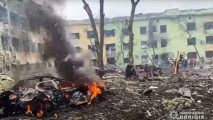
Russia launches major attack on Ukraine’s energy grid, causing power cuts
5, October 2026
A year after Biya’s disputed re-election, CPDM remains without a timetable for next year’s polls. 0
by soter • Cameroon, Editorial, Headline News, Politics
Paul Biya’s silence is becoming a political statement in its own right. A year after his so-called re-election, his ruling CPDM party remains without a clear public timetable for next year’s polls. The party that has dominated Cameroon for decades appears increasingly uncertain about the political calendar, while its own political bureau and its own Central Committee reportedly feels sidelined by a presidency increasingly associated with the powerful Minister-Secretary General, Ferdinand Ngoh Ngoh. That is not a normal situation for a ruling party.
In a political system built around the authority of one man, presidential silence cannot easily be dismissed as an accident, an oversight or mere administrative delay. When the head of state says little at precisely the moment when his party, government and electorate need clarity, the silence itself acquires meaning.
Biya’s silence is not accidental. It is deliberate in its political effect, whether or not its original cause is known.
For months, Cameroonians have been left to speculate. Is Biya preparing a major political decision? Is there a struggle over succession and control of the electoral timetable? Has power increasingly shifted toward those operating around the Unity Palace? Or is Biya simply unable, unwilling or not yet ready to publicly address the questions confronting his party and country?
The authorities have offered little that convincingly settles these questions. And that vacuum matters and includes the passing into eternity on Sunday of Clément Atangana, president of Cameroon’s Constitutional Council in France.
In politics, information does not disappear simply because a government refuses to provide it. It is replaced by speculation. The longer the silence continues, the more room there is for rumours to become political narratives. This is particularly true when the speculation concerns the president’s health.
It would be irresponsible to present rumours about Paul Biya’s health as established fact without credible evidence. But it would be equally irresponsible for the authorities to ignore the political consequences of a prolonged absence of presidential communication. When a president becomes unusually silent, when his ruling party appears uncertain about its own timetable and when questions about who is actually driving decisions begin to dominate public discussion, the government cannot reasonably expect citizens to remain indifferent.
We of the Cameroon Concord Group believe and fervently too that silence does not prove illness. But silence can make the speculation about illness harder to contain. That is the uncomfortable political reality facing the Biya system today in Yaounde.
The CPDM’s apparent unease is therefore significant. A ruling party even in North Korea or Iran should not have to guess about the intentions of the president under whose authority it operates. Its militants, officials and potential candidates need clarity. The electorate deserves clarity. The state itself requires clarity.
Instead, Cameroon appears to be drifting into another period in which uncertainty at the top is becoming a political fact. And the deeper problem is not simply whether Paul Biya is healthy or ill. The deeper problem is that Cameroon has built a political system so heavily dependent on one individual that even his silence can produce institutional paralysis and national anxiety. That is the real indictment.
If Biya is fully in command, he can end the speculation with a clear political message. If important decisions are being prepared, the public deserves to know enough to understand the direction of the country. If the CPDM has a timetable, it should not have to discover it through rumours or leaks. And if there are genuine concerns about the president’s capacity to govern, the responsibility of the state is not to hide behind silence but to provide institutional clarity.
After more than four decades at the centre of Cameroonian politics, Paul Biya knows better than all of us in the Concord Group that presidential silence is never politically empty. Every day that it continues, it says something. The question is no longer simply what is Paul Biya going to say? The more consequential question is why is a president whose political authority has shaped Cameroon for so long choosing not to say it? Until that question is answered, speculation will continue to fill the vacuum. And increasingly, Biya’s silence itself is becoming the story.
To this I put my name
Soter Tarh Agbaw-Ebai