Featured
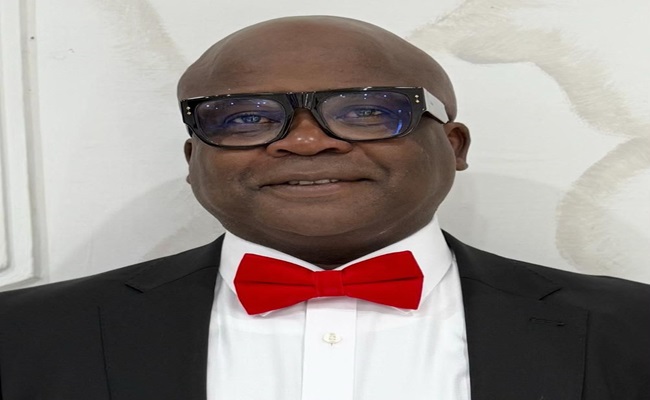 SOBA is not an ATM: John Kameni’s ambition meets the verdict of 259 SOBANS
 Martinez Zogo murder: Biya must go, and he must go now!
 Cameroon must not be left on autopilot
 Mamfe and the anger of the ancestors: have we forgotten the dead who built our tomorrow?
 The role of the diaspora in Cameroon’s development efforts
Most Commented Posts
 4 Anglophone detainees killed in Yaounde
18 comments Chantal Biya says she will return to Cameroon if General Ivo Yenwo, Martin Belinga Eboutou and Ferdinand Ngoh Ngoh are sacked
13 comments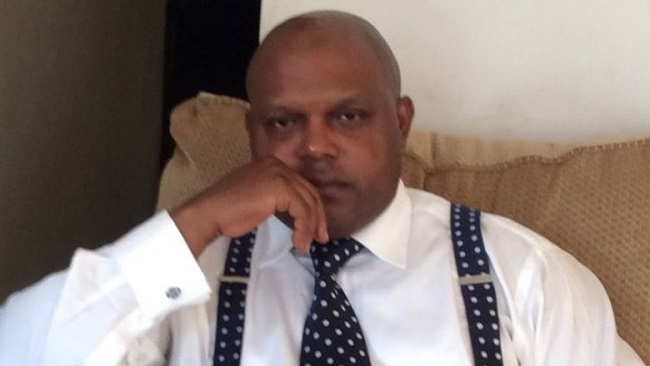 The Anglophone Problem – When Facts don’t Lie
12 comments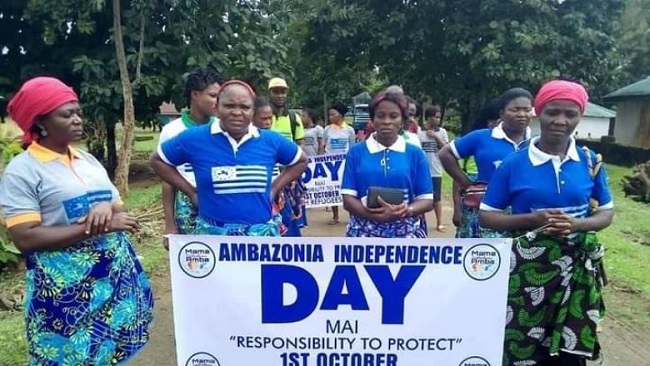 Anglophone Nationalism: Barrister Eyambe says “hidden plans are at work”
12 comments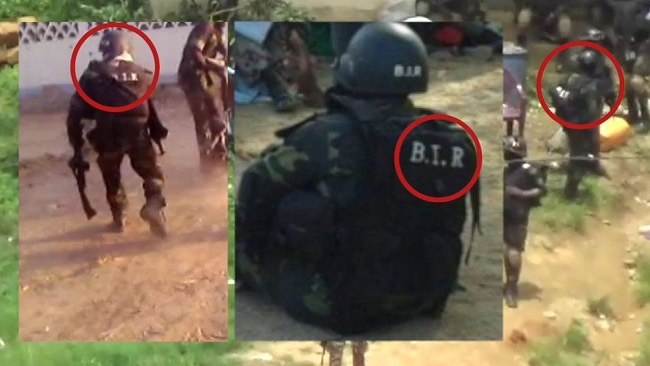 Largest wave of arrest by BIR in Bamenda
10 comments
Featured
-

SOBA is not an ATM: John Kameni’s ambition meets the verdict of 259 SOBANS
-

Debt service to absorb 43.5% of Biya regime’s revenue in 2026
-
Iran’s courts order US to pay $290 billion in damages
-

There are reasons why Manyus must stop rewarding mediocrity with public office
-

Watat Lovet elected National President of SOBA
-

US Security support for Cameroon may become linked to mining access
-

Parliamentary and local elections to test CPDM support
24, November 2026
SOBA is not an ATM: John Kameni’s ambition meets the verdict of 259 SOBANS 0
by soter • Editorial, Education, Headline News, Life
When vaulting ambition and the unquenchable thirst for power becomes greater than the commitment to service, even brotherhood becomes a campaign slogan.
There are political defeats, there are humiliating political defeats and then there is what happened to Barrister John Sichui Kameni at the SOBA General Assembly on November 21, 2026. Lovet Watat swept to victory with 259 votes against Kameni’s 88. Chaiii! God forbid! a margin of 171 votes. Not a photo finish. Not an electoral accident. Not a controversial technical victory. A resounding rejection by SOBANS who understood that the presidency of their fraternity is an obligation to serve, not an opportunity to acquire influence, manage money or satisfy a bloated ego and an overgrown appetite for institutional importance and public relevance.
The verdict was emphatic: 259 to 88. One might have expected the defeated candidate and his supporters to accept the democratic judgment with dignity. Instead, the campaign has left behind a more uncomfortable legacy: casting doubts about the vote; questions about an extraordinary fundraising operation, the mobilization of financial support from outside the apparent membership of the fraternity and an unsettling preoccupation with controlling the narrative of who is qualified to lead SOBA.
The unprecedented campaign fundraiser
Let us begin with the extraordinary fundraising appeal circulated under the title:“Fund Drive to Support JK for SOBA PG Elections.”The appeal invited well-wishers and friends of Dr Barrister John Sichui Kameni to contribute towards his presidential campaign, explaining that their donations would facilitate the mobilization of electors to the November General Assembly. Read that again. A campaign fundraiser ostensibly designed to finance the mobilization of electors in an alumni association election! Since when did the presidency of SOBA become such an expensive political enterprise that a candidate needed to solicit substantial financial contributions from an extended network of benefactors to pursue an alumni office? The published list contains 30 entries amounting to FCFA 4,318,610. Among the contributions are FCFA 500,000 from Austin Ntangsi, FCFA 500,000 from Jake Mayah, FCFA 500,000 from Senator Otte, FCFA 500,000 from Bony Dashaco, FCFA 250,000 from Dr Namanga Ngongi, FCFA 250,000 from Dona Achu and FCFA 200,000 from Nguty Walters. These are not insignificant sums in an alumni election. Nor is the apparent scale and organization of the fundraising exercise something SOBANS should dismiss as an innocent administrative detail.
The fundamental question is not whether friends may support a candidate. Of course they may. The question is why an election within a fraternity of former students required a publicly advertised financial mobilization operation of this magnitude and what precisely the money was intended to accomplish.
The appeal itself says the money would facilitate the mobilization of electors. That language deserves scrutiny. Who were these electors being mobilized? What expenses were being financed? Was there a budget? Who authorized the expenditure? Was an independent financial statement produced after the election? And, crucially, which contributors were SOBANS and which were not? The published list does not establish the membership status of every contributor. That is precisely why the campaign should disclose it. If substantial financial support came from non-SOBANS, members are entitled to ask why outsiders were financing an election whose leadership and mandate belong to SOBANS. An alumni association is not a political constituency to be sponsored by wealthy patrons. Its leadership must derive legitimacy from members, not from the generosity of financiers who may reasonably expect access, influence or gratitude. SOBA is a brotherhood, not a privately sponsored political project.
What exactly was the ambition about?
The most revealing feature of this campaign may not have been the fundraising itself, but the extraordinary intensity with which the presidency was pursued. Why was this particular office so attractive? What did Kameni believe he could accomplish as President General that he could not accomplish through ordinary service to the association?
There is a particularly important context. Sasse College is approaching its 90th anniversary. The celebrations are expected, according to estimates circulating among SOBANS, to involve resources potentially running into FCFA 300m–400m. That estimate must be independently established. Nevertheless, the scale of the anticipated celebrations makes financial governance, institutional oversight and the separation of personal ambition from collective resources especially important.
Who will control the anniversary budget? Who will authorize expenditure? Who will receive sponsorships and donations? Who will award contracts? Who will account for the money? These are not trivial questions. An anniversary of this magnitude should be an institutional undertaking, not an opportunity for any individual or faction to establish financial control. It would be unfair to assert, without evidence, that Kameni sought the presidency specifically to control the anniversary funds. But it would be equally irresponsible for SOBANS not to demand transparent safeguards against any such possibility. The 90th anniversary belongs to Sasse College and its wider community. It does not belong to a presidential candidate, a campaign team or a collection of wealthy patrons. God forbid that such a historic occasion should become another arena for personal ambition!
Brotherhood is not a slogan
Protus Mbah Mbah’s campaign statement, grandly titled “Brotherhood Is Not a Campaign Costume,” lectured Watat about accountability, conduct, mutual respect and institutional credibility. Its five-point manifesto repeatedly invoked the virtues of fraternity and service while presenting Kameni as the candidate with a superior leadership record. There is something almost theatrical about this. Brotherhood cannot be invoked selectively when an election is being lost. Accountability cannot be demanded from an opponent while one’s own campaign finances remain unexplained. Institutional credibility cannot be defended through beautifully designed posters alone. If brotherhood is sacred, then transparency must also be sacred. If accountability matters, then every candidate’s fundraising arrangements deserve scrutiny. If service is the measure of leadership, then candidates must demonstrate what they have actually contributed to SOBA rather than simply proclaiming their entitlement to lead it. The statement asked Watat to reconsider his ambition and rally behind Kameni. The SOBANS answered that proposition with 259 votes against 88.That was their response to Protus Mbah’s sermon.
Allegations are not evidence
During the campaign, allegations circulated concerning attempts to introduce additional names into the Buea Mother Chapter voters’ list, including a reported payment covering 45 purported members. There were also allegations of improper inducements and attempts to influence electoral administration.
These claims require documentary verification. The electoral commission should publish its findings, explain any disputed voter-registration decisions and make clear whether any complaints were substantiated. If a receipt dated November 1, 2026 was presented in connection with the alleged registration of additional members, the relevant documents should be examined. The reported fact that some of the individuals were university students does not, by itself, establish whether they were eligible or ineligible voters. Likewise, allegations of bribery must not be converted into established facts merely because they circulated on social media. But neither should legitimate questions be buried beneath campaign rhetoric about unity. A fraternity that cannot investigate allegations involving its electoral process cannot credibly lecture its members about institutional integrity. The numbers have spoken. Let the ambition rest.
The result deserves to be examined in its proper context. Watat secured 259 votes. Kameni received 88. The winner obtained approximately 75% of the 347 votes cast. That is an emphatic democratic mandate.
It is also an indictment of the assumption that money, endorsements, elaborate publicity and an aggressively cultivated campaign network can substitute for the confidence of ordinary members. SOBANS were not buying a political advertisement. They were electing someone to serve their fraternity.
The new President General has an opportunity to demonstrate that SOBA can be governed differently: with transparent finances, properly constituted committees, stronger chapter engagement, institutional continuity and a clear separation between the association’s money and the personal interests of its officeholders. His first major test will be the 90th anniversary preparations. There must be an independently constituted anniversary committee, an approved budget, transparent procurement, documented sponsorship arrangements, regular financial reporting and an independently audited final account. No single individual should enjoy unchecked control over hundreds of millions of francs, irrespective of title or personal reputation. The anniversary must unite generations of SOBANS and not become a financial battleground.
A final word to John Kameni
Barrister Kameni, the presidency has been decided. You lost, and you lost decisively. There is no disgrace in contesting an election and losing. There is, however, a responsibility to accept the verdict and reflect on why so many members preferred another candidate. You have every right to remain an active member of SOBA, to contribute your legal expertise and to serve the Sasse community. But the fraternity is not indebted to you with a presidency simply because you invested money, time, energy or personal ambition in pursuing it. Nor does the failure to win an election diminish the value of genuine service. What would diminish it is allowing disappointment to become resentment or treating the fraternity as though it has denied you something that was rightfully yours.
And to those who financed the campaign, the same principle applies: your generosity does not purchase a claim on SOBA’s leadership or its future. Let the 90th anniversary be about Sasse College, its history, its teachers, its students, its alumni and the generations yet to come. Let the money be properly accounted for. Let the institution be bigger than any individual. The message from the General Assembly could hardly be clearer. SOBA is not a political ATM. The presidency is not an investment opportunity. The anniversary is not anybody’s private treasury. And brotherhood is certainly not a costume to be worn when power is within reach and discarded when the votes are counted. Chaiii! 259 to 88. The SOBANS have spoken. Let us move on.
By Soter Tarh Agbaw-Ebai
Chairman/Editor-In-Chief
Cameroon Concord News Group