

12, September 2018
UN says World Hunger Levels Rise for Third Year Running 0
World hunger rose in 2017 for a third consecutive year, fueled by conflict and climate change, the United Nations warned on Tuesday, jeopardizing a global goal to end the scourge by 2030.
Hunger appears to be increasing in almost all of Africa and in South America, with 821 million people – one in nine – going hungry in 2017, according to the State of Food Security and Nutrition in the World 2018 report.
Meanwhile, 672 million adults — more than one in eight — are now obese, up from 600 million in 2014.
“Without increased efforts, there is a risk of falling far short of achieving the SDG target of hunger eradication by 2030,” the report said, referring to the U.N. Sustainable Development Goals, adopted by member nations in 2015.
It was the third year in a row that global hunger levels have increased, following a decade of declines.
The report’s editor Cindy Holleman said increasing variation in temperature; intense, erratic rainfall and changing seasons were all affecting the availability and quality of food.
“That’s why we are saying we need to act now,” said Holleman, senior economist for food security and nutrition at the Food and Agriculture Organization (FAO).
“Because we’re concerned it’s not going to get better, that it’s only going to get worse,” she told the Thomson Reuters Foundation.
Last year, almost 124 million people across 51 countries faced crisis levels of hunger, driven by conflicts and climate disasters, the U.N. said.
Many nations struggling with prolonged conflicts, including Yemen, Somalia, South Sudan and Afghanistan, also suffered from one or more climate shocks, such as drought and floods, the report said.
On Monday, the charity Save the Children warned 600,000 children in war zones could die from extreme hunger by the end of this year as funding shortfalls kick in and warring parties block supplies from getting to the people who need them.
The U.N. said South America’s deteriorating hunger situation might be due to the low prices of the region’s main export commodities – particularly crude oil.
A lack of food had caused an estimated 2.3 million people to flee Venezuela as of June, the U.N. has said.
Uncertain or insufficient access to food also contributes to obesity because those with limited financial resources may opt for cheaper, energy-dense processed foods that are high in fat, salt and sugar, the report added.
Being deprived of food could also lead to psychological and metabolic changes, said Holleman.
“The emotions and anxieties associated with food deprivation could then lead to disorders and bingeing when you do have food,” she said, adding that experiencing this in fetal and early childhood increases the risk of obesity later in life.
Paul Winters, associate vice-president of the International Fund for Agricultural Development (IFAD), said reducing hunger required targeted approaches that went to the roots of chronic poverty.
“That requires having data on where they are, what their limitations are… and making sure we actually do investments that are transformative,” he said. “One of the big concerns is some (donor) countries are shifting much more to humanitarian aid which is important but doesn’t build resilience and address the underlying cause.”
Reuters



















12, September 2018
Southern Cameroons Crisis: UN Secretary General won’t talk on Visa Denials 0
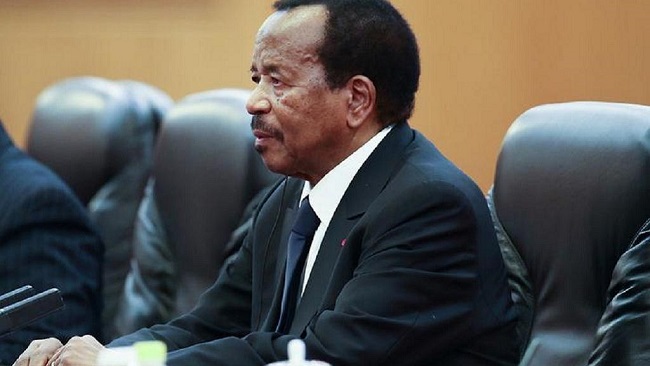
Visas have reportedly been denied to UN invited witnesses from Nigeria and Cameroon but UN Secretary General Antonio Guterres and his deputy have said and done nothing, despite formal written questions from the much respected Inner City Press Guterres banned from the UN for 70 days.
As the Cameroon government of 36 year President Paul Biya slaughters civilians in the Anglophone regions as well as in the North, it re-engaged Washington lobbying firm Squire Patton Boggs and Mercury Public Affairs, documents show. The UN belatedly acknowledged to Inner City Press, which Guterres had roughed up on July 3 right after it spoke to Cameroon’s Ambassador Tommo Monthe and on August 17 declared banned for life from entering the UN.
For close to two years, the situation in Southern Cameroons has continued to deteriorate and nobody, not even the government, believes that it is time to change course.
The killings have continued on both sides, but the government still holds that a swift military victory is possible before the presidential election that will take place next month. The hardship in the two English-speaking regions of the country has increased exponentially over the last year and all what is on the minds of government authorities is keeping the people in check.
Yaoundé authorities seem to be frozen in time. In other places, the rule is for dialogue to ensure that things do not deteriorate, but ever since the conflict started, the government has kept on insisting on using an iron fist instead of an olive branch.
Many analysts are wondering when the killing and madness will come to an end. They hold that a different approach could have produced different results and this issue could have been laid to rest a long time ago.
The little infrastructure the two regions possess is deteriorating on a daily basis as both parties do what they can to prove that they have an upper hand. Today, the road leading to Bamenda from East Cameroon has been destroyed by Southern Cameroonian fighters and this is going to cost the region a huge fortune.
By Chi Prundence Asong with files from Inner Press