
24, February 2018
Most Americans have grim outlook on US direction 0
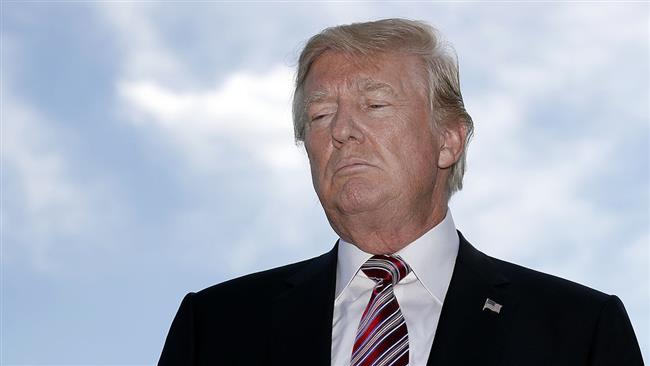
A majority of Americans think the direction of the United States has worsened over the last year, mainly due to a surge in racism and violence fueled by President Donald Trump, according to a new survey.
Some 53 percent say the country’s overall direction is pretty grim, despite improvements in the economy, according to a poll released Friday by the Associated Press-NORC Center for Public Affairs Research.
Despite that gloomy outlook, Americans are more likely to see the US economy as having improved rather than worsened in the past 12 months, 39 percent to 24 percent, the poll found.
“Well, I hold a job again,” said 67-year-old David Peterson of Torrance, California, a quality assurance manager at an aerospace company who was forced to work at a security job for a year. “But recent events would point toward things getting worse. … It’s a lot of violence in the news. A lot of violence in the country. A lot of natural disasters.”
Americans’ view of the nation has darkened in the 13 months since Trump took office, amid devastating mass shootings, a deadly race riot in Charlottesville, Virginia, record-setting hurricanes and Trump’s volatile White House and his feud with North Korea.

The poll also found that most people, nearly two-thirds, continue to disapprove of how Trump is handling his job as president, while just 35 percent approve.
Even among Democrats, just 8 percent of whom say they approve of how Trump is handling his job overall, 21 percent say they approve of his handling of the economy. Among Republicans, three-quarters approve Trump’s overall performance while 82 percent back his performance on the economy.
A recent US poll released last month showed that most Americans think Trump’s first year in office was a failure and that he has divided the nation.
Trump ended his first year in office in January with the lowest average approval rating of any elected president in his first year.
Source: Presstv















24, February 2018
European Union to double funding for military force in West Africa’s Sahel region 0
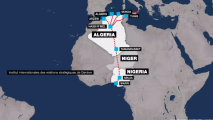
The European Union is to double the budget allocated to a multi-national force in West Africa’s Sahel region as part of a declared mission to crack down on militancy and human trafficking there.
Europe fears that growing instability in the Sahel region of Africa — an arid land mass lying to the immediate south of the Sahara Desert and stretching east-west across the breadth of the African continent — could worsen the already high levels of human trafficking toward Europe and create a springboard for militant attacks on the West.
“There is a direct European interest in restoring stability to the region,” a senior EU diplomat said as quoted by media reports published on Friday. “There is a general awareness now that the future of the European Union is also the future of Africa.”
The deaths of two French soldiers in Mali this week and four US soldiersin Niger in October last year, where most Americans did not know the United States had forces, has highlighted the security threat in the vast scrublands spanning from Mauritania to Chad.
To address the mounting security threats, Brussels and Washington have devised a two-sided strategy, including military and development aid in Africa.
The West created the G5 Sahel force — made up of troops from Mali, Niger, Chad, Burkina Faso, and Mauritania — to counter militancy in the region. The Western-backed force is to receive more than 400 million euros (494 million dollars) to be able to meet its declared objectives.
The new budget is almost double the 250 million euros it has now.
France, which has more than 4,000 troops in the region, has been frustrated that it is the only EU member with combat troops on the ground, although others have contributed trainers.
Meanwhile, the International Committee of the Red Cross (ICRC) warned that the military approach alone would not be effective and called for greater efforts to relieve the roots of the conflict, namely poverty, poor governance, and climate hazards.
“When you add more weapons, you add more suffering,” Patrick Youssef, the deputy head of the ICRC’s operations for Africa, told Reuters. “That needs to be accompanied with real measures to alleviate the suffering that is the main reason why this war was created.”