
22, February 2018
Nigeria aids refugees fleeing from Southern Cameroons 0
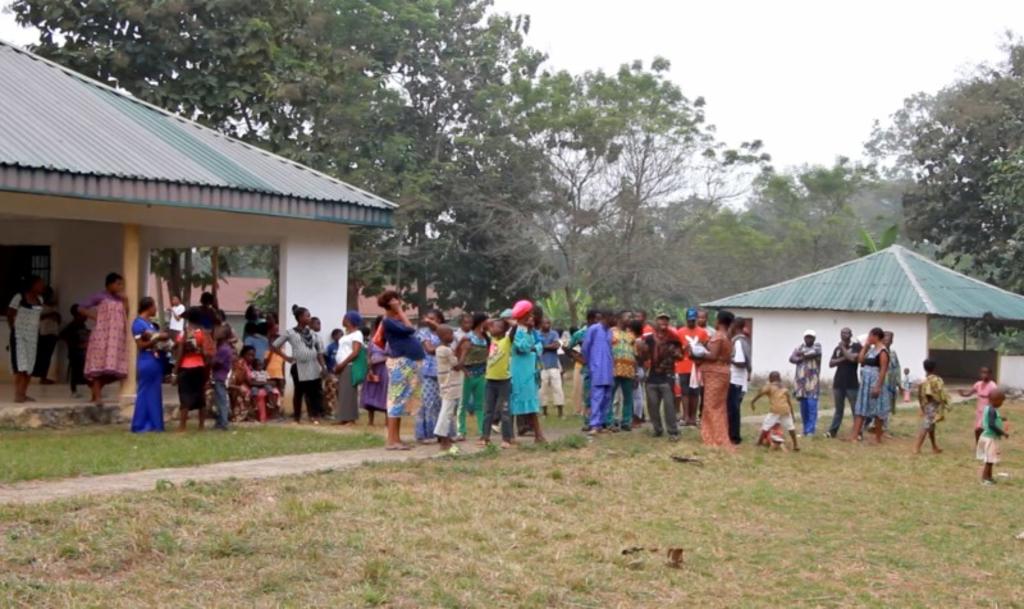
More than 25,000 refugees have travelled across the border from Cameroon to Nigeria and dozens continue to arrive every week. Caritas Nigeria is appealing for urgent support to fight an emerging humanitarian crisis as a growing number of refugees have been forced to flee political upheaval and armed conflict in neighbouring Cameroon.
“The situation is dire,” said Fr Evaristus Bassey, director of Caritas Nigeria. “According to some of the refugees, they escaped on bush paths with only the clothes they were wearing.” Caritas Nigeria says assessments show more than 25,000 refugees have travelled across the border from Cameroon to Nigeria and dozens continue to arrive every week. Caritas has launched an international appeal to provide 10,000 refugees in Cross River State with food, clean water, mosquito nets and other aid.
Fr Bassey said the influx was having a serious impact on already impoverished Nigerian communities.“Many refugees are staying with relatives or friends they have known on the Nigerian side,” he said. “Typically many of these villages are rural and housing conditions are poor and congested. Some of these communities in peace time had no functional latrines except designated spots for open defecation. Water sources are from the stream.”
The armed insurgency in Cameroon is largely driven by the Ambazonian group which is demanding the full restoration of statehood for what was a former British colony in southern Cameroon from 1922 to 1961. Their objective is the dissolution of the 1961 Union of Southern Cameroon with French Cameroon.
English speaking parts of Cameroon have long complained of marginalization by the French-speaking dominated government, which has deteriorated into a brutal crackdown. Caritas Cameroon’s Fr Kisito Balla Onana said, “Our English-speaking brothers and sisters are in distress.
“Two weeks ago I went to the field with one of the bishops. We visited deserted villages where the houses were burned down. Many of their inhabitants had left and were living in extremely difficult conditions. Caritas brought them clothes, food and a small sum of money.”
Many refugees have fled their homes to Nigeria to escape the conflict which has destabilised the country and destroyed lives and livelihoods.
Caritas Nigeria says services are stretched and there is inadequate accommodation, food, water and sanitation available.“We want to urgently provide humanitarian relief to those in dire need, before this crisis becomes too monstrous and difficult to handle,” said Fr Bassey.
Caritas Nigeria conducted rapid assessments across some of the affected areas that have received a large influx of refugees from Cameroon. The assessment revealed that the Cameroonian refugees in Cross Rivers State were mostly based in the communities within Nigeria that are sharing borders with Cameroon.
Most refugees are living in host communities with relatives, in abandoned government quarters or uncompleted buildings and even open space. They have been dependent on the generosity of impoverished host communities for donations of food and clothing as most of them fled for their lives.
“Caritas Nigeria carried out an assessment two years ago on the Oban corridor in 18 communities because of an environmental program we wanted to initiate,” Fr Bassey said. “The clean water and hygiene conditions were appalling. These are aggravated now with the present crisis.”
While Caritas has carried out assessments in Cross River State where the refugees have the largest concentration, it is seeking input and guidance in other areas where refugees are being housed.
“Caritas has already made assessments in the Oban Corridor and the Boki and Ikom axis,” said Fr Bassey. “Caritas will soon carry out market surveys and establish relationships with vendors for food vouchers. The main challenge though is that markets are far from these communities and transportation is a huge challenge in transporting materials.”
The Nigerian Church is planning a national collection and Caritas Nigeria is appealing for urgent donations of food, clothing, blankets, medicine, cooking utensils and WASH materials.
Fr Bassey said in Nigeria systems and institutions often respond quickly to a crisis but pressure from the international community might assist Nigeria to face up to the challenge over the longer term.
He said language barriers with French speaking Cameroon made co-operation challenging across borders and the Nigerian government would need a lot of support if the situation escalates into a full-blown crisis.
Source: Reliefweb.int















22, February 2018
Biya regime creates new military region based in Bamenda 0
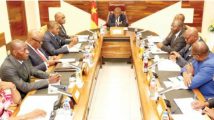
Cameroon has a new military region created to cater for security needs in the west and northwest region, the state-owned CRTV has reported.
President Paul Biya signed directives reorganizing the country’s defense forces leading to the splitting into two of the former military region [Région militaire interarmées – RMIA] RMIA 2 which is based in Douala.
The new region becomes the fifth (RMIA 5) and is headquarted in capital of the northwest region Bamenda. It is to be headed by General Agha Robinson Ndong while General Julius Caesar Ellie has been appointed commander of its Gendarmerie region (RG5).
The measure is seen as a clear plan to deal with the raging Anglophone crisis that has rocked the country since October 2017. Separatists in the region continue to engage in deadly clashes with security forces.
Under the banner of the so-called Ambazonia republic, separatists are pushing a breakaway of the Anglophone regions (northwest and southwest) from French-majority Cameroon.
The government has insisted that the region remains secured and has declared the separatists terrorists. Last month, Nigeria deported about 47 separatists to Yaounde, the deportees included a known separatist leader, Julius Sisuku Ayuk Tabe.
Nigeria has also been bearing the brunt of the crisis in Cameroon with the continuing influx of refugees. The United Nations refugee agency, UNHCR, has reported that thousands of people have arrived in Nigeria over the past few months.
Cameroon’s Anglophone crisis
What began in 2017 as peaceful protests by Anglophone activists against perceived marginalization by Cameroon’s Francophone-dominated elite has become the gravest challenge yet to President Paul Biya, who is expected to seek to renew his 35-years in power in an election next year.
Government repression – including ordering thousands of villagers in the Anglophone southwest to leave their homes – has driven support for a once-fringe secessionist movement, stoking a lethal cycle of violence.
The secessionists declared an independent state called Ambazonia on Oct. 1. Since then, thousands have fled to Nigeria, including 2,300 who fled in a single day on Dec. 4 fearing government reprisals after raids by separatists militants killed at least six soldiers and police officers.
At the end of World War One, Germany’s colony of Kamerun was carved up between allied French and British victors, laying down the basis for a language split that still persists.
English speakers make up less than a fifth of the population of Cameroon, concentrated in former British territory near the Nigerian border that was joined to the French-speaking Republic of Cameroon the year after its independence in 1960. French speakers have dominated the country’s politics since.
Source: Africa News