
14, August 2023
What Difference Does Jesus Christ Make? (Part Three) 0
We ended our previous section by pointing out that human brokenness, or existential wretchedness, could often time serve as the raw material thanks to which the need for God enters into the drama of human existence. As disheartening as the state of sin is, when we have the courage to turn to God, human sinfulness becomes a graced opportunity of encounter from which good fruits, such as patience with the faults of others; tolerance; a more understanding heart; a more God-like charity, the discovery of my dependence on God; et cetera, could ensure. Additionally, we pointed out that even from the midst of human misery, suffering and sin, God is never out of the picture, for the grace of the light of faith is enriched by the grace of the light of glory, albeit that, like Moses, we can only see God’s back and not his Face – that which we would have really loved to see!
As we intimated, the request for Moses to see the Face of God persisted throughout Israel’s history: It is your Face O Lord that I seek, do not hide your Face from me (Psalm 27:8-9). Moses’ quest remained unfulfilled and was kept as a promise of hope, hope for a future in which the greatest longing of the human heart would ultimately be met, in spite of human brokenness. In the Christian tradition, this sense of hope borne from the longing for God, what St Benedict referred to as the Quaerere Deum, has often resulted opening up a new perspective in terms of how we see the human being and the drama of sin in human existence. Augustine of Hippo captured this sense of hope borne from the midst of human sinfulness when he declares in his characteristic quotable fashion: every saint had a past; and every sinner has a future. In effect, the silver lining in my sinfulness is the hope that I can become different. I can become better. I can start all over at any point in time. The Lord is continuously calling me and never gives up on me to come work in his vineyard (Matthew 20:1-16). In the final analysis, Christian hope reminds me that even my best can become better in Christ Jesus the Lord.
Returning to the figure of Moses, in Deuteronomy 18:15, we read: A prophet like me will the Lord, your God, raise up for you from among your own kindred; that is the one to whom you shall listen. And again, we read: I will raise up for them a prophet like you from among their kindred and will put my words into the mouth of the prophet; the prophet shall tell them all that I command. (Deuteronomy 18:17). As Ratzinger explains, a curious melancholy hangs over the conclusion of the Book of Deuteronomy: “The promise concerning ‘a prophet like me’ has not yet been fulfilled. And it now becomes clear that these words do not refer simply to the institution of prophecy, which in fact already existed, but to something different and far greater: the announcement of a new Moses. It had become evident that taking possession of the land in Palestine did not constitute the chosen people’s entry into salvation; that Israel was still awaiting its real liberation; that an even more radical kind of exodus was necessary, one that called for a new Moses.” (Ratzinger, Jesus of Nazareth, Vol. 1, p. 3). In effect, what is outstanding and enduring about the figure of Moses are not the mighty deeds performed, curial as these were to Israel’s liberation. What serves as the capstone of the life of Moses was him pointing to the face of God as that which ultimately meets the desires of the human heart, that which finally resolves the wedge between willing and willed, between desire and fulfillment, as explained by Maurice Blondel in his philosophy of human action.
In this light, the Deuteronomistic Promise thereby opens the door to the leitmotif of a new Moses that would finally unveil the Face of God to the world, bringing to realization the greatest longing of the human heart. This is the unfinished business of Moses that the new Moses had to accomplish. As Ratzinger again explains, “Israel is allowed to hope for a new Moses, who has yet to appear, but who will be raised up at the appropriate hour. And the characteristic of this ‘prophet’ will be that he converses with God face-to-face, as a friend does with a friend. His distinguishing note will be his immediate relation with God, which enables him to communicate God’s will and word firsthand and unadulterated. And that is the saving intervention which Israel – indeed, the whole of humanity – is waiting for.” (Ratzinger/Benedict XVI, Jesus of Nazareth, Vol. I, 5). In this life, Moses, and together with him the faith of Israel, can only go so far, as far as seeing the back of God (Exodus 33:23). But as we pointed out in part two of this series, the human heart is not contented with the back of God. The human heart wants more. And herein arises the need for a new Moses.
This figure of a new Moses, thereby, sets the stage for that is genuinely novel and consummating, for the meeting of the more of the human heart. Anything less would not satisfy the greatest aspirations of the human heart. In this light, the new Moses must therefore be granted what was denied the first, if this new Moses is to resolve the impasse that characterizes human existence, the distraught that continues to mark human life. The new Moses must therefore be greater than the first Moses, capable of going beyond the back of God to the face of God. As Ratzinger further teaches, “this is the context in which we need to read the conclusion of the Prologue to John’s Gospel: ‘No one has ever seen God; it is the only Son, who is nearest to the Father’s heart, who has made him known’ (John 1:18). It is in Jesus that the promise of the new prophet is fulfilled. What was true of Moses only in fragmentary form has now been fully realized in the person of Jesus: He lives before the face of God, not just as a friend, but as a Son; he lives in the most intimate unity with the Father” (Ratzinger/Benedict XVI, Jesus of Nazareth, 6).
At this point, it becomes obvious that the event of the Transfiguration as recorded in Mathew 17:1-13, take on a much more profound meaning for the Christian. While it is true that Jesus obviously wanted to strengthen the resolve of the apostles before the scandal of the Passion, it is likewise true, and even more so, that with the event of the Transfiguration especially when read via Jewish hermeneutics as embodied in the figures of Moses and Elijah, we are dealing with the zenith of Israel’s religious struggle, and hopefully, ours as well. (To be continued).
By Maurice Agbaw-Ebai
















14, August 2023
Biya is 90: Whether or not he runs for another term in 2025, succession is clearly an inevitable question 0
Since 2016, the conflict in Cameroon between armed separatists and government forces has killed more than 6,000 people and displaced over 500,000 in the country’s north west and south west regions, where 2.2 million people need humanitarian assistance. The government’s hybrid approach to the crisis, combining political and security measures, has failed to appease local aspirations for autonomy, federalism, or even secession.
Compounding the problem, Cameroon – which has long been a stable authoritarian regime – looks poised to enter a process of leadership change that will make it more challenging to find a negotiated solution for the conflict.
Breakdown of federalism
English-speaking Cameroonians make up approximately 20 percent of the country’s population. To understand the causes of the conflict with the predominantly Anglophone population of the country’s Northwest and Southwest, one must examine both remote and immediate causes.
The crisis, like most similar clashes across the continent, is a product of the artificial borders drawn by colonial powers, along with the failures of decolonization and post-independence state-building. In Cameroon, as elsewhere, these failures were exposed by ethnic, tribal, and cultural cleavages that fueled resistance to a centralized state – making ethnicity a root cause and accelerator of political conflict.
The situation became clear in the 2018 presidential campaign, when incumbent President Paul Biya defeated Maurice Kamto in a free but not fair election. The ballot’s aftermath exposed the ethnic dimension of tensions between the Bamileke and Bamoun, who inhabit western Cameroon, and the Bassa, perceived by many as the country’s hegemonic ethnic group, buttressed by a centralized political structure viewed by much of the populace as illegitimate.
In the 19th century, present-day Cameroon was a German protectorate. After World War I, it was divided by a League of Nations mandate into two unequal parts – British Cameroon and French Cameroon – under the administration of those two colonial powers.
By the late 1950s, as decolonization in Africa accelerated, the newly independent states tried to use these inherited administrative structures to forge national identities in a continent fragmented along multiple ethnic, religious and geographic divides, and constrained by the arbitrary colonial-era borders.
French Cameroon gained independence in 1960, becoming the Republic of Cameroon. Inhabitants of the Trustee Territory of Southern Cameroon were given a choice: they could join recently independent Nigeria as a federated state or combine with the Republic of Cameroon, also as a federation. In a United Nations plebiscite organized in 1961, the latter option was chosen, transferring sovereignty to the Federal Republic of Cameroon. Many in the Anglophone states, however, accused French Cameroon of ignoring the principles of federalism, instead maintaining the centralized practices set forth by the unitary Constitution of 1960.
Escalating crisis
Federalism was formally overturned in 1972, under President Ahmadou Ahidjo, who changed the name of the country to the United Republic of Cameroon. In 1984, President Biya went one step further and truncated the official designation to the Republic of Cameroon, reverting to the original term under French administration. Anglophones reacted by challenging the decision in the courts.
Resentment and grievances generated by the failure of the federal principle resurfaced in 2016, triggered by the imposition of French as the language of education, the courts and administration. Since the Constitution grants equal status to the English and French languages, Anglophones perceived the imposition of French-speaking teachers, lawyers and judges as a form of marginalization. Initially, discontent came in the form of peaceful protests and strikes, with calls for the restoration of federalism.
The turning point in the crisis, starting its inexorable escalation into an armed conflict, came in January 2017, when the Cameroon Anglophone Civil Society Consortium, an umbrella of civil society organizations, started to organize a stay-at-home boycott campaign called Operation Ghost Town Resistance. In October, secessionist groups declared the independence of the Federal Republic of Ambazonia in Cameroon’s Northwest and Southwest regions. The declaration stated that Anglophone Cameroon had been recolonized rather than decolonized and was a case of black-on-black colonization.
The declaration started a shift in which civil society actors were replaced by political actors, demands for autonomy were dropped in favor of independence, and armed struggle became a viable option. The Ambazonia Defense Forces, as the armed wing of the separatist movement called itself, took control of portions of the territory. President Biya deployed the army in the Anglophone regions, promising to crush the rebellion.
Hybrid approach
To overcome the crisis, the Cameroonian regime has resorted to a mixture of political and security measures. The strategy is to appease groups demanding more autonomy, while militarily defeating the separatists.
After the 2017 strikes, the government established a National Commission to promote bilingualism and multiculturalism. In 2019, President Biya launched a national dialogue on unity and peace. More importantly, at least from a formal standpoint, in 2019 the parliament granted the Northwest and Southwest special status. Based on “their linguistic particularity and historic heritage,” these areas were given more autonomy to run local affairs, while receiving funds earmarked from the central government for local and regional governments.
In theory, the devolution of more power, responsibility and resources to regional bodies could be a remedy for the crisis. In practice, however, the decentralizing initiative failed. Firstly, the central government did not follow through on its 2019 promise to provide the funds and autonomy for real local government. Spending decisions still depended on approval from the capital, while centralization continued to rule even mundane aspects of people’s lives (for example, students completing their degrees claim they are forced to travel to Yaounde to get an official certificate).
Secondly, a political radicalization had taken place, as many Anglophones internalized secessionist denunciations of Yaounde’s “annexationist” impulses and came to believe that autonomy was no longer enough, leaving formalized federalism or independence as the solution.
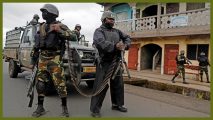
The Cameroonian regime also took hard measures to address the crisis. In 2017, the government imposed a 90-day internet ban on the Anglophone region, which bruised an already fragile economy and inflamed feelings of marginalization. The government also deployed the Rapid Intervention Battalion – an elite internal security unit of the Cameroonian army that reports directly to the president – to fight the separatist forces.
Crisis accelerators
A convergence of factors suggests that finding a negotiated, sustainable solution to the current crisis may be difficult.
The first is that Cameroon’s Anglophone regions are endowed with significant natural resources, including timber, oil and fertile land. While the competing political claims for autonomy and independence are historically rooted, the competition for resources often acts as a grievance “accelerator,” as can be seen in other separatist regions in Africa where economic self-determination is salient.
A second factor is the political and regional divisions within the Anglophone regions themselves. While in 2016 various groups united behind the goal of defending their common Anglophone identity against the central state, differences regarding the means and ultimate ends are now evident. While some would accept the autonomy granted under special status, others want a return to the two-state federation and a third group insists on the armed struggle to win independence. Moreover, there are now multiple separatist militias operating in the region, feeding an escalating spiral of violence against civilians by both militias and security forces.
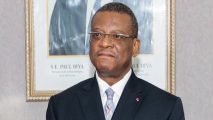
Paul Biya
During his 41 years in power, authoritarian President Paul Biya has moved the country toward further centralization, despite promises of autonomy for Anglophone minority regions. He is now 90 years old, and the transfer of power to his successor is likely to be bumpy. © Getty Images
A third factor is the regional context. The security outlook in West Africa has deteriorated over the past decade, amid a vicious cycle of terrorism, organized crime, food insecurity and displacement. In Cameroon and Nigeria, terrorist groups are active in the northern regions, while separatist militias operate in areas immediately to the south. Some have begun to cooperate among themselves, as seen by the 2021 alliance between the Ambazonia Defense Forces and the armed wing of the Indigenous People of Biafra, a Nigerian-based separatist movement.
Finally, social media are playing a growing role in the conflict, as parties turn to the digital sphere to air their grievances and spread information or disinformation. Digital platforms are particularly important for the interaction they allow with diaspora communities, which are key sources of intellectual and financial support. However, social media should be treated as a vehicle or medium, rather than as a root cause of conflict.
The end of stable authoritarianism
The Anglophone crisis must also be analyzed in the context of Cameroon’s political system, which is a case study of stable authoritarianism. Since winning independence more than six decades ago, the country has only had two presidents. President Biya, who came to power in 1982, is Africa’s longest-tenured leader after Teodoro Obiang, who has ruled Equatorial Guinea since 1979.
As in other African countries, Cameroon’s authoritarianism survived the so-called third wave of democratization, which took place in the 1990s. While the country formally adopted multipartyism, the Cameroon People’s Democratic Movement (CPDM) retained its hegemony and Mr. Biya has continued to win every presidential ballot since he came to power.
Not surprisingly, the consolidation of personalized and resilient authoritarianism went hand in hand with centralization. In 1982, as mentioned, the president used his power to establish a unitary and more centralized state. At the epicenter of power was the presidency, where President Biya exercised the direct power of appointment for all senior posts. Presidential term limits were removed from the Constitution in 2008, a year marked by violent protests over high food and fuel prices, which Mr. Biya seized upon as a pretext to stay in power indefinitely. A clause granting regions the power to elect governors was also deleted from the country’s constitution.
Even had President Biya behaved more moderately, the very nature of Cameroon’s regime – especially its dependence on dense patronage networks – was not conducive to decentralization, let alone federalism. Decision-making powers and funds have been tightly concentrated in national governing bodies, to the detriment of regional and municipal governments.
Scenarios
The Anglophone crisis is a cautionary tale about the centralized state model that has prevailed across Africa since independence. That model often ignores the importance of ethnic, cultural and religious identities. When these identities are perceived as being threatened – in Cameroon’s case, through fears of cultural marginalization in the educational, judicial and administrative systems – they generate local resentment of central authority and autonomic or separatist claims, which in the Anglophone regions are based on historically rooted notions of a common identity and territory.
Moreover, Cameroon’s regional crisis of legitimacy is now being reproduced at the national level. President Biya is 90 years old. Whether or not he runs for another term in 2025, succession is clearly an inevitable question. This outlook makes it more challenging to find a negotiated and peaceful solution to the Anglophone crisis. Periods of leadership transition (and the struggles they trigger) under resilient and personalized authoritarian regimes are often unpredictable. Given the several failed attempts at international mediation, and in light of widespread Anglophone skepticism about the government’s commitment to decentralization, the conflict seems bound to continue.
Source: gist report online