
4, April 2023
Southern Cameroons Crisis: Archbishop Nkea says despite escalating violence reconstruction plan is working 0
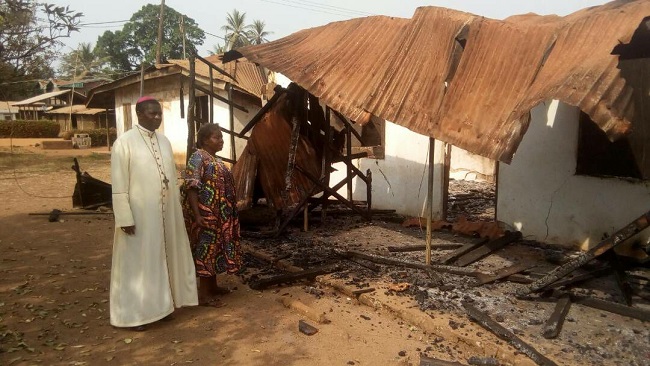
Cameroon’s reconstruction plan for the troubled English-speaking regions is working despite ongoing violence, according Archbishop Andrew Nkea Fuanya of Bamenda.
The plan was established on April 3, 2020, to rebuild infrastructure that have been shattered by a separatist war in the African country’s North West and South West regions.
Cameroon’s two English-speaking regions which constitute 20 percent of the country’s 27 million people has been the center of fighting to create a new country, which separatists call Ambazonia.
The crisis began in 2016, when teachers and lawyers in the two regions took to the streets to protest what they perceived as the over-bearing influence of French in British system schools and common law courts which have existed since the former British Cameroon joined with French Cameroon in 1961. (The two Cameroons had been a single German territory until the end of World War I, when it was divided by the two Allied powers.)
The government responded to the protests by firing on the demonstrations with live ammunition, leading to the separatist rebellion the next year. The separatist war has left at least 6000 people dead and over a million displaced, according to the International Crisis Group.
As of June 2019, at least 80 percent of schools in the two regions were closed, according to UNICEF, affecting over 700,000 children.
The health sector has also been hard hit. In 2020, the then-coordinator of the Presidential Plan for the Development of the two regions, Paul Tasong, told Crux that “in 2016, we had some 170 doctors in the hospitals and health centers. By 2019, that situation fell to 71 doctors, and the specialists became very rare. And we noticed that the rate of women giving birth to children at home in 2016 was slightly above 2 percent in the two regions, but unfortunately by 2019/2020, this situation degraded, and up to 9 percent of women gave birth to children at home. This is catastrophic. The same situation is reflected in the rate of vaccinations in the two regions.”
The Reconstruction Plan calls for the repair or replacement of 350 schools, 90 health centers, and 40 bridges. In addition, over 12,000 homes that have been destroyed will need to be replaced. Some 700 farmers will also have to be recapitalized and 200,000 people who lost official documents – including school certificates, national certificates and civil status documents –will have to be assisted in replacing them.
Speaking March 29 during a visit by Balungeli Confiance Ebune, the Chairman of the Steering Committee of the Presidential Plan, to the St. Joseph School in Bamenda, Nkea said the plan was ‘building back better.”
“We [the Catholic Church] have benefitted in a very big way from the renovation of schools, and to ensure that children go back to school in better conditions than before,” the archbishop said.
A typical example was the St. Joseph nursery and primary school in Bamenda’s Old Town. It had been destroyed, but has now been completely reconstructed.
“The reconstruction respects the principle of building back better,” Nkea said.
He noted that it wasn’t only the Catholic Church that has benefitted for the reconstruction plan. Other Christian denominations and religions have benefitted as well, including the city’s Islamic primary school.
The archbishop emphasized that “the plan is working, and those still skeptical should understand.”
He called on all to work together to ensure that “we get back our society in a better way than it was before.”
During an evaluation meeting to assess the level of reconstruction, Ebune called on young people to “continue to join the active forces of the nation for long lasting peace and development to be achieved.”
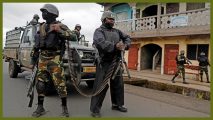
But experts have questioned the government’s decision to rebuild in the middle of continued fighting. On the same day the archbishop was making his remarks, the military was engaged in what critics have described as a scorched earth policy in Kumbo, one of the largest towns in Cameroon’s North West region.
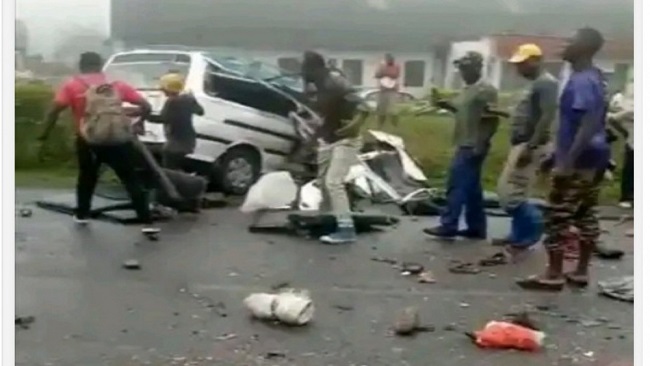
A Catholic sister who requested not to be named for security purposes told Crux that “separatist fighters in Kumbo carried out deadly attacks targeting the military on March 29. The fighters detonated an explosive device that hit an armored car, and it was followed by a rocket-propelled grenade that they used on the military unit. The military retaliated by burning homes and property.”
Professor Verkijika Fanso of the University of Yaoundé told Crux that it was practically impossible to effectively carry out reconstruction while the fighting seems to be intensifying.
“Let them first stop the war,” he said. “Just [on March 29], several homes were burnt in Kumbo. How do you reconstruct while destroying at the same time?”
Source: Crux













4, April 2023
Global Economy Trends in Nearshoring and Green Industry Can Help Boost Growth in Latin America and the Caribbean 0
Latin America and the Caribbean economies have proven relatively resilient in the wake of increasing debt stress, inflation and rising global uncertainty. But new headwinds in the form of lower commodity prices, higher interest rates in developed countries and China’s unsteady recovery could potentially turn the region’s prospects bleak.
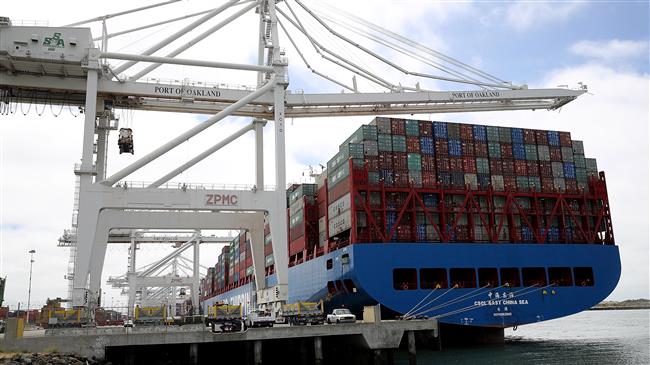
In order to boost much needed growth, countries should preserve their hard-won resilience and seize the unique opportunities global economy trends offer in nearshoring – moving production closer to home markets, and the green industry, according to a new World Bank report, “The Promise of Integration, Opportunities in a Changing Global Economy”.
The report estimates regional GDP will grow by 1.4 percent in 2023, a lower-than-expected rate. Rates of 2.4 percent are expected for 2024 and 2025, too low to make significant progress in poverty reduction.
“The region has largely recovered from the pandemic crisis but unfortunately is back to the low growth levels of the previous decade,” said Carlos Felipe Jaramillo, World Bank Vice President for Latin America and the Caribbean. “Countries need to urgently accelerate inclusive growth, so that everyone benefits from development, and this will require maintaining macroeconomic stability and taking advantage of the opportunities trade integration offers today.”
After recovering from the pandemic, the region has managed with relative success the multiple crises caused by the Russian war in Ukraine and the uncertainties surrounding the global economy. Both poverty and employment are mostly back to pre-pandemic levels, while average inflation, excluding Argentina, is expected to decline to 5.0 percent in 2023 after reaching 7.9 percent in 2022.
According to the report, the region´s overall resilience is the result of hard-won progress in macroeconomic management over the past two decades. Preserving this progress will be paramount.
However, on average, fiscal imbalances remain high, expected at 2.7 percent of GDP in 2023, further eroding already tight fiscal space, and debt levels are estimated to reach 64.7 percent of GDP this year, slightly down from 66.3 percent in 2022. Furthermore, the recent bank failures in the US and Europe introduce additional uncertainty. Its resonance in LAC´s banking system and capital flows remains to be seen.
“The LAC region remains one of the least integrated, while trade openness and FDI flows have mostly been stagnant or decreasing over the past 20 years; countries should find ways to gain attractiveness and take advantage of the nearshoring trends,” said William Maloney, chief economist for Latin America and the Caribbean at the World Bank. “In addition, leveraging the region’s extraordinary comparative advantage in sustainable energy production, commodities necessary for emerging green industries, and the region’s unique natural capital offers a new potential source of growth, but will require policies to facilitate access to global markets, capital, and technology.”
The report suggests a series of integration advancing policies countries should consider to seize these opportunities. This includes long term policies such as reducing systemic risks, boosting traditional and digital infrastructure investments, and improving human capital, as well as short-term options such as preserving macro stability, promoting customs and transport regulatory advances, and improving export and investment promotion agencies.