
13, April 2023
French Cameroun: Villagers Say Elephants Devastate Farmlands, Plead for Help 0
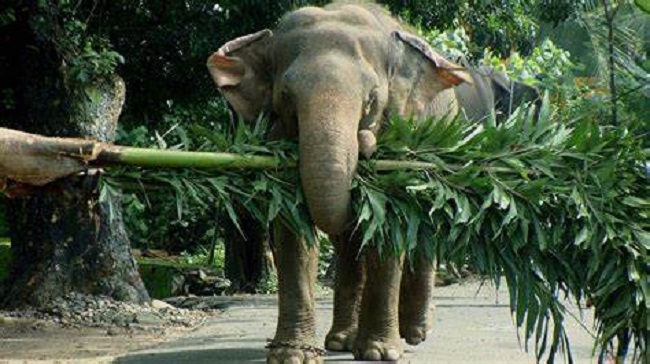
Villagers in southern Cameroon are complaining about the destruction of farmland by wild elephants in areas bordering Gabon and Equatorial Guinea and are calling on authorities to help.
Villagers say elephants have chased people away and made it impossible for farmers on both sides of the border to plant this season’s crops. Officials blame farmers for occupying the elephants’ habitat, provoking human-wildlife conflict.
Officials on Cameroon’s southern border with Gabon and Equatorial Guinea say scores of villagers came out in market squares at Vema and Nkol-Efoulan on Thursday, protesting the destruction of several hundred hectares of their farmland by elephants.
The villagers say the stray elephants chase civilians and make it impossible for farmers to plant on either side of the border with Gabon and Equatorial Guinea since the planting season started six weeks ago.
Speaking to VOA via a messaging app, Justin Enam Ntem, the traditional ruler of Nkol-Efoulan village, said locals are angry and hungry because they can no longer go to their farms since the elephants positioned themselves about 500 meters south of the village from the border with Gabon this week. He said seven of the several hundred hectares of plantain, banana and cassava plantations belonging to his family have been destroyed by the stray elephants.
Ntem said it was difficult for villagers, who are scared and escaping from their homes and farms, to know the number of elephants that are destroying their crops.
The villagers say no civilian has died in an elephant attack but warn that hunger will loom if the government does not step in to force the animals back to their natural habitats.
The Cameroonian government says there are more than 220 forest elephants in the nearly 700,000-hectare Campo Ma’an National Park located near the border area with the other two countries.
The New York-based Wildlife Conservation Society and the National Parks of Gabon report that Gabon harbors about 95,000 forest elephants. Equatorial Guinea says it has about 900 elephants.
The three countries say elephants have been destroying plantations on both sides of their common border within the past six months. Cameroon says at least eight of its border villages and several hundred plantations, especially in Vema and Nkol-Efoulan villages, have reported regular attacks.
The elephants are leaving their habitat because of a lack of food and water due to climate change and the occupation of their living environment by civilians, according to Cameroon’s Ministry of Forestry and Wildlife.
Cameroon, Gabon and Equatorial Guinea say many plantations opened by the governments and civilians reduce the elephant habitat.
Kenneth Angu Angu, a forest program coordinator with the International Union for Conservation of Nature, said central African nations should work together to stop conflicts between humans and elephants.
“We need the governments of the countries to sit together and reinforce cross-border projects so that they can contain these elephants not to encroach in communities and in agricultural land,” said Angu, who spoke to VOA by phone from Abidjan, Cote d’Ivoire. “But if it is the communities that are encroaching, we start asking the questions: why are they doing so? Is it that their lands are no more fertile? Is it because there is poverty? So, this is where you would have livelihood activities to enable the communities to remain in their respective lands,” he added.
He said human-wildlife conflict remains a major conservation concern in elephant range countries.
Despite the attacks, Cameroonian wildlife groups have been urging civilians not to kill the animals, which are classified as endangered.
Source: VOA





















14, April 2023
French Cameroun: Journalists Call for Protection After Mayor Issues Death Threats 0
Two journalists in northern Cameroon are calling for government protection after witnesses say a mayor publicly threatened to kill them for investigating corruption in road construction contracts. The Cameroon Journalists Trade Union has condemned the threat, which came after the killings in January of two reporters who were outspoken on corruption.
The journalists say Sali Babani, the mayor of Maroua, a city near the northern border with Chad and Nigeria publicly threatened several times this month to kill reporters there.
The Cameroon Journalists Trade Union in a statement April 8 said the mayor threatened freelance reporter Ousman Alh Boubakari for asking about accountability on development projects.
Boubakari had accused the mayor on Facebook of abandoning some road construction projects in Maroua.
Mahamat Hamidou said that during a public ceremony at Kakatare last week, he heard Babani threatened to punish or kill journalists for reporting that some public projects have been abandoned. Hamidou said Cameroon’s government should investigate why the mayor threatened to kill journalists instead of explaining why the road projects have not been completed as the Maroua Council promised.
The journalists’ union said the mayor also threatened to kill Douala-based Channel 2 International’s correspondent, Aminou Alioum.
Alioum and Boubakari said they received several anonymous calls threatening violence if they do not stop critical reports against the mayor.
Alioum told VOA that Boubakari received death threats from Babani for reporting that some roads in Maroua and construction work on the Kakatare junction in the same city have been abandoned. Alioum also said the mayor threatened him for taking pictures of the abandoned projects. He said the death threats from Babani add to other threats and intimidation reporters along Cameroon’s northern border with Chad and Nigeria regularly get from Boko Haram militants.
Babani refused to respond to VOA’s questions on the threats, which journalists also took to the police.
The spokesperson for Cameroon’s police would not comment on the threats, but told VOA it was their duty to protect all citizens.
Alioum and Boubakari said the threats will not stop them from carrying out their work as reporters but joined the journalists’ union in calling for the government to ensure their safety.
Cameroon’s government has not yet commented on the journalists’ plea for protection.
Babani’s threats of violence against the media come less than two months after two journalists were killed in Cameroon.
The mutilated remains of Martinez Zogo, a popular radio announcer and journalist, were found January 22 in Yaoundé.
Police arrested 20 people in connection with the killing, including senior police intelligence officers and a well-known media mogul, Jean-Pierre Amougou Belinga.
On his radio program, Zogo had accused Belinga and several government ministers of planning to kill him for his reporting on their alleged corrupt deals.
Radio presenter Jean-Jacques Ola Bebe was also found shot dead on February 2 outside his home in the capital.
Like Zogo, Bebe was an outspoken critic of government corruption.
Source: VOA