
20, April 2021
Idriss Deby’s Death: Is Chad talking to Cameroon? 0
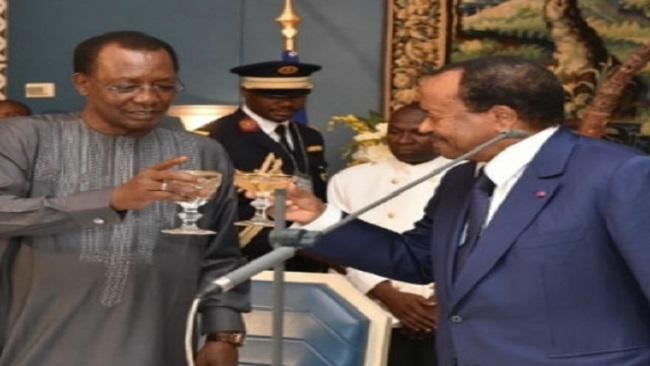
As Chad’s president, Idriss Deby, exits the political scene in uncertain circumstances, many in the world have begun thinking that Chad might be talking to Cameroon.
The Chadian president had won a landslide victory in a predetermined presidential election like his Cameroonian counterpart, Paul Biya.
The beleaguered Chadian leader was dealing with an insurgency just like his Cameroonian counterpart and had vowed to crush it.
But can the Chadian situation be a lesson to Cameroonian authorities? This will be the subject of the next editorial as things play out in Chad.
Cameroon has been touted as an oasis of peace in a desert of chaos for many decades, but for some time now, the country has gradually been ranking itself among the most dangerous, corrupt and chaotic countries to live in as descent and frustration spread across the country like wildfire.
Four years ago, the country’s president, Paul Biya, erroneously declared war on the country’s English-speaking minority which was simply demonstrating to bring its sorry plight to the attention of the government and the international community and what Mr. Biya and his collaborators thought would be wrapped up in a week has now lasted four years with more than 7,000 young Cameroonians already sent to an early grave in a war that has no raison d’etre.
As the government and militia have transformed the country into an open air killing field, the country’s economy has taken a nosedive, with millions of Cameroonians seeking employment and thousands losing their jobs in the country’s two English-speaking regions where the killings are going on unabated.
The number of internally displaced person has continued to swell, while millions have fled to neighboring Nigeria where they are living rough and waiting for the fighting to end for them to return to their country, though their homes have been razed by government soldiers who are wont to inflicting collective punishment on the population each time an army soldier is killed.
But it is not only Southern Cameroons that is going through such an apocalypse. The northern part of the country has been the theater of violent confrontations between government troops and Boko Haram fighters who have bombed many civilians into an early grave.
While the government has been active in the North hoping that it could roll back Boko Haram fighters who are believed to come from Nigeria, government forces have succeeded to alienate Northerner due to massive and bloody killings and abuse of the civilian population which now sympathizes with Boko Haram fighters who are sometimes viewed as liberators.
Noted for its corruption, the government has never really sought to address those issues that are really threatening national unity and integration. The North, like many parts of the country, has been neglected, with very little development projects being implemented in that part of the country.
Tribalism and nepotism are really tearing the country apart as most senior government positions are only occupied by the president’s tribesmen and those loyal to him and his ruling crime syndicate known as the CPDM.
However, it is not the government’s nepotism that is the issue but the results it has posted over the last four decades. Cameroonians would not be bothered if those occupying those strategic positions were really delivering desired results.
While across the country the unemployment rate is high, it is a lot higher in the northern region of the country where there are no companies, no roads, no hospitals and no social services and financial assistance that can even cushion the impact of the economic hardship.
The frustrations in the North are legion and the pain is excruciating. The North has lost almost everything it had during the Amadou Ahidjo days and this is really painful.
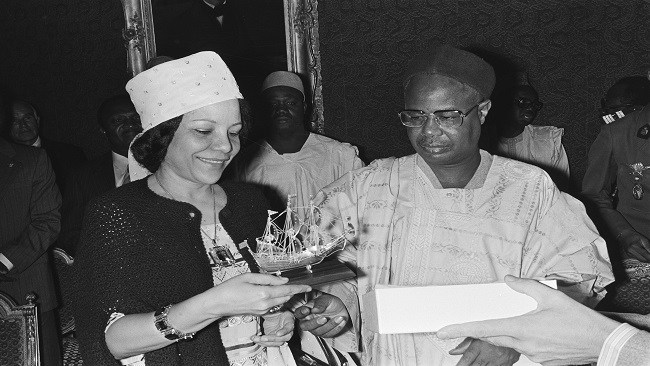
Northerners have grudges and they want to get their pound of flesh sooner rather than later. The Biya regime had killed thousands of Northerners, especially senior northern military officials, following a coup d’état in 1984 that led to the country’s first president, Amadou Ahidjo, fleeing to Senegal where he died and is currently lying in an unmarked grave.
This bitterness and the corruption which have robbed the northern population of many services has pushed the frustrated northern population to set up a militia which is now armed and willing to fight the Yaounde government that has never incorporated dialogue into its national development and integration strategy.
The new militia is enjoying huge support from muslim countries such as Saudi Arabia, Quatar, Egypt and the United Arab Emirates which surely have a hidden agenda that may result in the long term destabilization of the country.
Cameroon is falling apart and the way things are shaping up, if care is not taken, it might end up like Zaire, currently the Democratic Republic of Congo, where since its brutal dictator, Mobutu Seseseko, fell in 1994, the country has been unstable and the number of militia has grown by leaps and bounds and the country has become the epitome of political chaos.
The international community must stop looking the other way as Cameroon continues its unfortunate but sure descent to the bottom of the abyss of chaos and corruption.
With new armed groups cropping up on a daily basis, it is obvious that the country which is now on life support may one day implode and the consequences could linger for a very long time.
By Soter Tarh Agbaw-Ebai















20, April 2021
Chad: Expect things to get messy as rebels vow to keep fighting 0
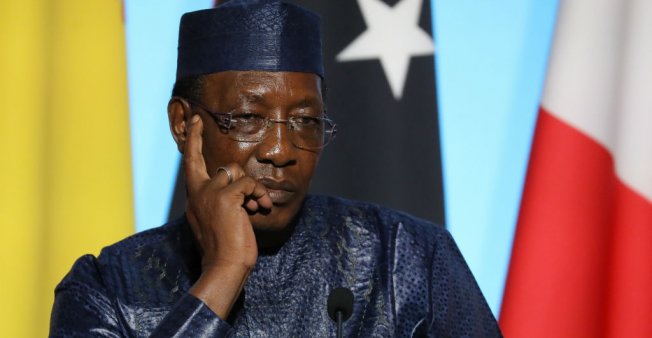
The rebels that launched the offensive against the Idris Deby regime have rejected the transition government led by one of Deby’s sons, four Star General Mahamat Idriss Déby Itno and have vowed to pursue the offensive.
“We categorically reject the transition,” said Kingabe Ogouzeimi de Tapol, spokesman for the Front for Change and Concord in Chad (FACT) on Tuesday. “We intend to pursue the offensive.”
A state funeral for Deby will be held on Friday, the presidency said.
The stunning announcement about the president’s death came just hours after electoral officials had declared Deby, 68, the winner of the April 11 presidential election, paving the way for him to stay in power for six more years.
Deby “has just breathed his last defending the sovereign nation on the battlefield” over the weekend, army spokesman General Azem Bermandoa Agouna said in a statement read out on state television.
The army said a military council led by the late president’s 37-year-old son Mahamat Idriss Deby Itno, a four-star general, would replace him.
Deby’s campaign said on Monday that he was headed to the frontlines to join troops battling “terrorists”.
Four Star General Mahamat Idriss Déby Itno, 37, son of the slain Chadian President Idriss Déby, will replace his father as head of a military council, the army announced on April 20, 2021.
The circumstances of Deby’s death could not immediately be independently confirmed due to the remote location. It was not known why the president would have visited the area or participated in ongoing clashes with the rebels who opposed his rule.
Rebels based across the northern frontier in Libya attacked a border post on election day and then advanced hundreds of kilometres south across the desert.
‘A courageous friend’, says France
France on Tuesday paid tribute to Deby as a “courageous friend” and “great soldier”, while urging stability and a peaceful transition in the African country after his shock death.
“Chad is losing a great soldier and a president who has worked tirelessly for the security of the country and the stability of the region for three decades,” the office of President Emmanuel Macron said in statement, hailing Deby as a “courageous friend” of France.
The statement also emphasised France’s insistence on the “stability and territorial integrity” of Chad as it faces a push by rebel forces towards its capital, N’Djamena.
Defence Minister Florence Parly praised Deby as an “essential ally in the fight against terrorism in the Sahel” while emphasising that the fight against jihadist insurgents “will not stop”.
One of Africa’s longest-serving leaders
Deby came to power in a rebellion in 1990 and is one of Africa’s longest-serving leaders.
Although ruling Chad with an iron fist, he was a key ally in the West’s anti-jihadist campaign in the troubled Sahel region.
On Monday, the army had claimed a “great victory” in its battle against the rebels from neighbouring Libya, saying it had killed 300 fighters, with the loss of five soldiers in its own ranks during eight days of combat.
Deby was a herder’s son from the Zaghawa ethnic group who took the classic path to power through the army, and relished the military culture.
His latest election victory – with almost 80 percent of the vote – had never been in doubt, with a divided opposition, boycott calls, and a campaign in which demonstrations were banned or dispersed.
Deby had campaigned on a promise of bringing peace and security to the region, but his pledges were undermined by the rebel incursion.
The government had sought Monday to assure concerned residents that the offensive was over.
There had been panic in some areas of N’Djamena on Monday after tanks were deployed along the city’s main roads, an AFP journalist reported.
The tanks were later withdrawn apart from a perimeter around the president’s office, which is under heavy security during normal times.
“The establishment of a security deployment in certain areas of the capital seems to have been misunderstood,” government spokesman Cherif Mahamat Zene had said on Twitter on Monday.
“There is no particular threat to fear.”
However, the US embassy in N’Djamena had on Saturday ordered non-essential personnel to leave the country, warning of possible violence in the capital. Britain also urged its nationals to leave.
France’s embassy said in an advisory to its nationals in Chad that the deployment was a precaution and there was no specific threat to the capital.
‘After Deby, the flood’
‘Expect things to get messy’
Douglas Yates, a professor in African Studies at the American Graduate School in Paris, told FRANCE 24 that Deby’s death had come as a total surprise.
“Two days ago news had come out from the US embassy that they were evacuating personnel because there were rebels marching on the capital, and frankly the thought was ‘(Deby) will defeat them’, because he has systematically defeated every attempted coup before now.”
Yates said that although Deby was hardly known to be a great democrat, “he was a real soldier and in some ways, this was a worthy death for him. To die involved in the battle was better for him I think than to die in his bed from Covid.”
The professor said much of Chad’s unrest stems from Deby’s own people in the east with discontent rising over Deby not distributing enough oil wealth to them.
“Frankly, there’s probably not enough oil wealth to go around to everyone, but basically there were people who were unhappy, who felt like they were not getting their share and that’s been a repeated pattern in attempted coups.”
On the issue of Deby’s replacement, Yates said: “Expect things to get messy during the transition.”
“He had been in power so long, and eliminating any rivals and imprisoning his democratic opposition. What you have [now] is a large number of people who would like to be the president of Chad rather than one unified opposition leader.”
“Like Napoleon had said: ‘After me, the flood.’ And certainly after Idriss Deby, the flood.”
“One thing is certain, France has just lost one of its key allies in the region.”
(FRANCE 24 with AP, AFP and REUTERS)