3, March 2021
Southern Cameroons Crisis: Yerima seeks to raise awareness of rape by French Cameroun soldiers 0
Systematic Rape as a means of French Cameroun warfare in Ambazonia
The Human Rights Watch report on Cameroon dated 26 February 2021 titled “Survivors of Military Assault Await Justice” was unambiguous and uncomplimentary on the actions and conduct of the Cameroon army. The report detailed the rape and abuse of more than 20 women by the Cameroon army in the village of Ebam in the South West Region of the country during raids carried out last year. The United States Embassy to Cameroon today released the following message: “The United States is deeply disturbed to learn of reports of a military raid in Ebam, Southwest Region, on March 1 of last year that resulted in violence against civilians. We condemn all violence in which civilians are targeted. We call for an immediate investigation into the alleged incident and for perpetrators to be held accountable. That this attack, if found to be true, could go unacknowledged for a year speaks to the important role civil society and media organizations play in helping governments meet their obligations to their people.”
Statistics of actual mass or gang rape of Ambazonian women and girls are difficult to come by for obvious reasons. But there is no doubt, based on concurrent first-hand accounts, that what HRW reports is only the tip of the iceberg. The wartime rape cases reported by HRW points to systematic rape aimed at destroying the identity of the people of the Southern Cameroons (Ambazonia). It is indistinguishable from the same crime that was perpetrated in Rwanda by Hutu soldiers against Tutsi women and girls, and in Bosnia by Serbian soldiers against Bosnian Muslims. Incidents of rape by French Cameroun troops in Ambazonia are more frequent than people are aware of or than is generally known. These cases go unreported because surviving victims internalize the occurrences and do not talk about them. Many surviving rape victims do not come forward to tell their traumatic experience because of the shame and stigma associated with the deed. They suffer in silence and bear for years their severely traumatic experience. There are no available local trauma centres providing counselling in private.
Massacres and other murders as well as systematic rape of women and girls are the well-attested shameless methods by which the ‘professional’ and ‘elite’ troops of French Cameroun conduct their colonial war in the Southern Cameroons (Ambazonia). That colonial war claims deaths in tens of thousands. It inflicts suffering, wholesale destruction, refugee flows and other forcible displacement of large numbers of people. It causes gross human rights violations. It creates thousands of orphans, widows, widowers and breaks up family ties. People are systematically subjected to indignity, and to torture and other cruel, inhuman or degrading treatment. The world seems inert. The people appear to have resigned themselves to an attitude of fatalistic cynicism.
Women and girls are forced into sexual relationships by their torturers holding them captives. This results in forced impregnation and contamination with HIV and other sexually transmissible diseases. Women and girls are sometimes gang-raped to death or murdered after being raped to destroy evidence of the deed. Survivors go through emotional and psychological trauma. Rape and defilement are systematically used as a weapon and tactic of war by French Cameroun barbarian troops. They are used explicitly in efforts: to destroy population, to dislocate bonds within families and communities, to maximize humiliation and shame, to break resistance by instilling fear and terror in communities or in freedom fighters, to torture and inflict injury, to extract information, to degrade, to punish the rape victim for some alleged acts by their families, and to vent anger on the people of Ambazonia and humiliate them.
Rape always entails direct physical harm, trauma, and social ostracism for the victim. In many instances, it is also a health death sentence for the victims since they are deliberately infected with HIV and other sexually transmissible infections. Furthermore, gang rape invariably leads to vaginal destruction and traumatic fistula of the vaginal tract, bladder and rectum. Vaginal destruction is now classified as a war crime. Long term medical complication of such rape includes uterine prolapse, serious injury to the reproductive system like infertility or complications associated with miscarriages and self-induced abortions. The central element of rape is power. Rape is thus used to punish, intimidate, coerce, humiliate and degrade Ambazonian female victims and by extension Ambazonian men. As if this is not enough evil, French Cameroun troops enforce a war policy prohibiting treatment for women and girls suffering from war-related rape or other injuries. They violently eject them out of any health facility. The result is fear by affected women and girls to seek medical help. Their condition becomes irremediable. They eventually die in silence.
Rape most often occurs during search operations, during which those troops frequently engage in collective punishment against the civilian population, most often by beating or otherwise assaulting residents, and burning their homes. Rape also occurs frequently during reprisal attacks on civilians following ambushes by freedom fighters. In some cases, the victims are accused of providing food or shelter to freedom fighters or are ordered to identify or disclose the location of their male relatives as freedom fighters. In some attacks the selection of victims is apparently opportunistic and the women, like murdered civilians, are raped simply because they happen to be in the wrong place at the wrong time.
The French Cameroun regime is scared to death of its military and never credibly investigates any rapes or even massacres committed by them. The silence of the regime and its unwillingness to prosecute and punish those responsible leads to the inevitable conclusion that this form of torture is sanctioned as a matter of government policy. At least, the government of that country signals that the practice of rape is tolerated, if not condoned, and encouraged. The regime is in the habit of dismissing reports of massacres, and a fortiori, of rapes. It peddles the lie that its troops act ‘professionally’. The troops themselves habitually eliminate witnesses likely to provide evidence of rapes and massacres. The rape and killing of women and girls are a common occurrence though extremely difficult to document on account of the secrecy of the incidents, lack of pathologist evidence, and difficulty of evidence gathering for rape prosecution.
Wartime rape is a criminal offence under the international law of war, which also applies to Cameroun. The criminalization of rape under that law is meant to safeguard human dignity. The rape of women and girls is prohibited in armed conflict. It is deemed a war crime under the provisions of international humanitarian law. The jurisprudence of the International Criminal Tribunal for Rwanda characterizes wartime rape as a crime of genocide because of the intent to destroy in whole or in part a particular population group. Furthermore, the systematic mass rape of Ambazonian women and girls meets the statutory definition of systematic harm to a population or ethnical group within the meaning of the Convention on the Prevention and Punishment of the Crime of Genocide. Persons who commit or order the commission of grave breaches of international humanitarian law are individually responsible in respect of such breaches.
We call for international condemnation of this crime as a violation of international human rights and humanitarian law and appeal to:
• the international community to make vigorous and repeated representations to French Cameroun government, both bilaterally and multilaterally, in connection with these rapes and other grave human rights violations,
• all States, organizations and programmes of the UN system, specialized agencies and other international organizations to urgently provide humanitarian assistance to all in need of it in Ambazonia,
• the UN to urgently take practical measures to assist and counsel the girls and women concerned ,and to mandate investigations into the facts of each individual case, and
• the UN Special Rapporteur on the Rights of Womento devote particular attention to the issue of rape by French Cameroun troops in the Southern Cameroons (Ambazonia).
We urge community groups on the ground to continue to ascertain and record the magnitude and extent of rape by the French Cameroun occupying forces in the Southern Cameroons (Ambazonia).
Dabney Yerima
Vice President
Pro-independent Leadership Government


4, March 2021
Southern Cameroons Crisis: Calls for Vatican to join mediation efforts 0
Civil society groups in the Anglophone regions of Cameroon are urging the Vatican to join a Swiss-led peace process, as the security situation in the central African nation deteriorates further. Local activists believe that Pope Francis has more influence over the Cameroon leadership than any other leader or country. Their plea follows a recent visit by the Vatican Secretary of State, Cardinal Pietro Parolin to Cameroon’s president, Paul Biya, and the Anglophone North West and South West.
The International Crisis Group estimates that the Anglophone conflict has claimed 4,000 lives, while local NGOs believe as many as 12,000 civilians have been killed. Attacks by Cameroon armed forces, including the burning of villages, has forcibly displaced an estimated 700,000 people out of an Anglophone population of six million. The violence and a school boycott have kept more than a million children from school for years. The Norwegian Refugee Council has described it as the world’s most neglected conflict for the second year in a row.
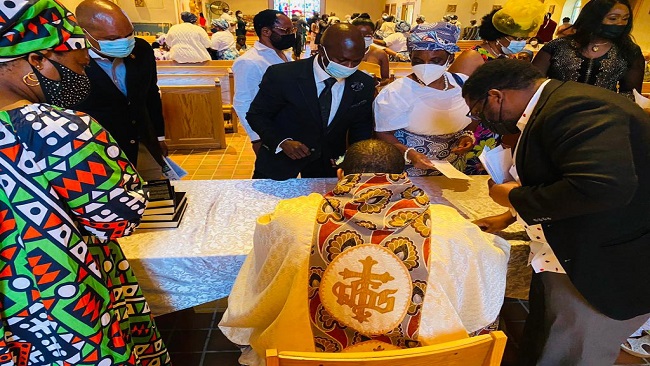
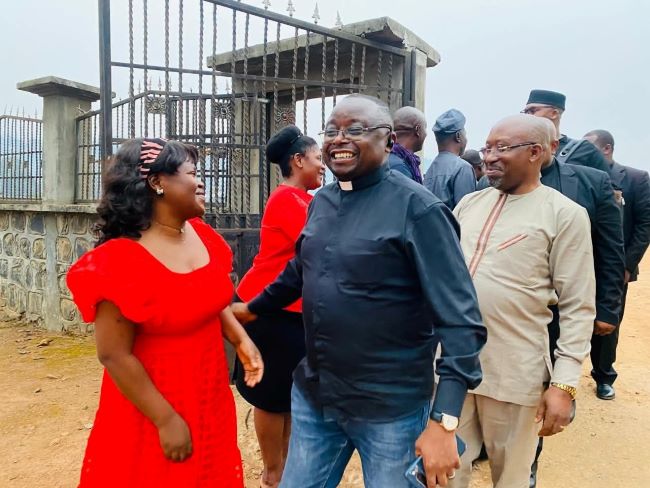
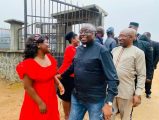
Cardinal Parolin met President Biya on January 29th, followed by a visit to the Anglophone region. The Papal envoy celebrated Mass with Archbishop Andrew Nkea Fuanya in the mainly Anglophone Bamenda archdiocese in the North West and South West.
The Cardinal also attended a meeting at which local people described the atrocities being endured by unarmed civilians. He told the audience, “How can the body of Christ be neutral in the midst of injustice?” He conveyed Pope Francis’s concern, offering to mediate negotiations.
Anglophone journalist Mimi Mefo writes, “By this very act, the Holy See has departed from the condemnations made by the international community for the last four years, to take concrete action on the ground.”
The Swiss NGO, Humanitarian Dialogue (Swiss HD), is trying to bring the Yaounde authorities and Anglophone representatives together in peace talks. Initially, Yaounde denied the country was in crisis. More recently, the government has refused to negotiate with armed groups which it labels terrorists. Africa Intelligence reports that officials around Biya continue to believe their military strategy will prevail. Consequently, the government is transferring weapons from the Far North, where Cameroon is fighting Boko Haram, to the Anglophone regions (as reported in Foreign Policy). This policy leaves civilians in the Far North vulnerable to attack by Islamist militants.
Local civil society groups (who must remain anonymous for their own safety) are calling on the Vatican to join and actively support Swiss HD in offering to mediate inclusive peace negotiations. In addition, the Ambazonian Coalition Team has written to the Vatican, urging The Holy See to engage fully with the Swiss HD mediation process.
In 2019, Catholic bishops from around the world lobbied Biya to stop the bloodshed and enter talks. The government has previously declined an offer by local bishops to mediate. According to Anglophone media sources, Christians are no longer free to attend Mass in some mission stations, and all sides are accused of harassing the church and priests. Anglophone priests have been kidnapped, and several have been killed.
Judith Nwana, co-chair of the Coalition for Dialogue and Negotiations, comments, “The Cameroon government has never committed in good faith the willingness to negotiate. They will only accept international mediation and negotiations if pressured by the international community. The Vatican can leverage its influence within the international, political and diplomatic arena to make that happen because the atrocities being committed on Southern Cameroonians is no other than a genocide. The Coalition for Dialogue and Negotiations is hopeful that Southern Cameroonians and armed leaders would accept a multilateral mediation initiative led by the Vatican, the United States, and other allies for a negotiated settlement to be reached, one that is credible, without any pre-conditions and addresses the root cause(s) of the civil war.”
Background to the conflict
The Anglophone area is also known as the former British Southern Cameroons, because of the UK’s colonial legacy. The unrest began in 2016 when the Francophone government tried to impose French law on Anglophone courts practicing English common law. Yaounde officials also sent French-speakers to teach a French curriculum in Anglophone schools which traditionally teach a UK curriculum.
However, Anglophone grievances stretch back to independence, when it is alleged that promises to ensure the British Southern Cameroons remained a separate entity were broken. In a subsequent referendum, English speakers were not given the option of forming a sovereign country. In the 1970s, the Francophone government dissolved the federal system, leaving the Anglophone regions (20% of the population) marginalised.
Research by impartial human rights groups confirms that the Cameroon armed forces are implicated in atrocities, including destroying villages, and killing and torturing civilians, while Anglophone militia are accused of intimidating and killing civilians who defy them. Evidence of the mass rape of twenty women in Ebam by government troops has just been published by Human Rights Watch. The UN Office for the Coordination of Humanitarian Affairs (UNOCHA) reports that state security forces killed nine people, including children and the elderly, in Mautu in SW, and shot dead four teenagers in Meta Bamenda, in January.
The Biya government’s refusal to engage with moderate English-speaking civil society is thought to have contributed to increasingly violent tactics by Anglophone militias fighting for international recognition of a sovereign nation called Ambazonia. UNOCHA reports allegations that a school principal was killed by non-state armed groups in January, and that schools and teachers continue to be attacked and threatened.
In January, the US Senate passed an unprecedented bipartisan resolution condemning the violence and empowering the Biden administration to apply individually-targeted smart sanctions such as asset freezes and travel bans on those on all side who are implicated in human rights abuses. Despite pressure from Lord Alton, among others, the UK has resisted calls to follow the US Senate lead.
Source: Independent Catholic News