
19, June 2025
CPDM Alliance: going, going, gone 0
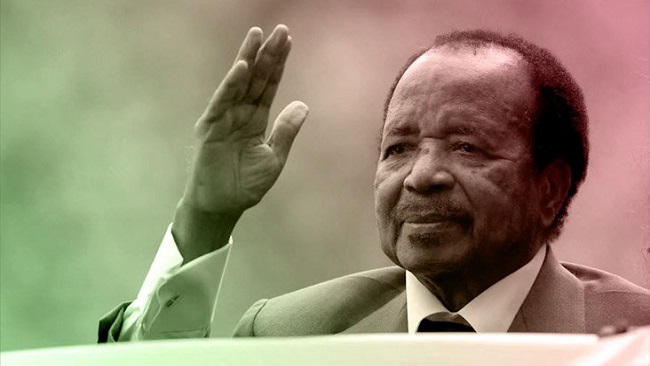
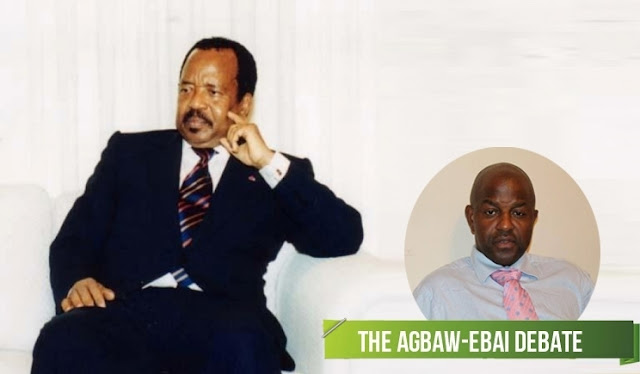
President Paul Biya’s once-solid alliances in Cameroon’s Greater North region are fracturing as the 2025 presidential election draws near. Political heavyweights in the region are breaking ranks, threatening the longstanding pact that has delivered Biya massive electoral support.
Issa Tchiroma Bakary, Minister of Employment and Vocational Training and leader of the National Front for the Salvation of Cameroon (FSNC), fired the loudest warning shot. On June 13 in Garoua, his home turf, Tchiroma delivered a blistering speech against the regime he officially supports. He stood before a loyal crowd and spoke in the local language, blaming the government for the North’s misery—rampant unemployment, grinding poverty, and institutional neglect.
“How can people work when they apply for jobs, but never get hired, never get help, and nothing is done for them? We are in misery. Someone seeking happiness will tell you to vote to stay poor. Isn’t that a misfortune? It is a misfortune,” Tchiroma declared. He added, “If one day, I, Issa Tchiroma, ask you to vote for what brings you misery, then I am wicked.”
Tchiroma’s message went further. He called on Northerners to unite and break free from 42 years of hardship. “We haven’t solved your old problems. But if we unite now, we can solve them for good. The Lord has awakened us—it’s time to act. When the time comes, put in your envelope what will end our misery,” he urged, his words carefully coded but clear.
RDPC Reacts: Calls for Tchiroma’s Ouster
The ruling Cameroon People’s Democratic Movement (RDPC) erupted in outrage. Hervé Emmanuel Nkom, a senior party official, demanded Tchiroma’s immediate removal from government. “We must draw consequences from shifting positions. We can’t move forward with uncertain allies,” Nkom said on Bnews. “After this statement, the minimum is that Issa Tchiroma Bakary leaves the government,” he insisted, arguing no one can serve inside the system while attacking it from outside.
Political analyst Philippe Nsoa called Tchiroma “consistently inconsistent.” On Le Club, Nsoa noted, “For 16 years as minister, Tchiroma only praised Paul Biya. Now he makes a dramatic U-turn, but it’s not his first.”
Wider Political Realignment in the North
Tchiroma’s stance signals a deeper shift in the Grand North. The region’s near-automatic support for Biya is fading as new voices call for change. The National Union for Democracy and Progress (UNDP) will meet on June 28 in Yaoundé, with internal factions demanding a split from the RDPC. Bello Bouba Maïgari, UNDP’s leader, faces mounting dissent.
Abdouraman Babba Hamadou, a prominent Northern figure, recently called for a “national republican surge” ahead of 2025. In a widely shared op-ed, he wrote, “To reclaim our country in the next election, we must unite supporters of change from all backgrounds. Let the wind of change blow across Cameroon!”
Tchiroma and Babba Hamadou may not share a party, but both urge the Grand North to rally for change, challenging its reputation as a regime stronghold.
ANDP Remains Loyal to Biya
Not all Northern leaders are abandoning Biya. The National Alliance for Democracy and Progress (ANDP), another longtime RDPC ally, stands firm. Party president Hamadou Moustapha declared unwavering support for Biya on August 3, 2024, in Tokombéré. “We will go to the presidential elections. Now is the time to thank the president. In the next election, President Biya will be our candidate. We have supported him and will support him again and again,” Moustapha said.
Despite the RDPC’s deep roots in the North, the open dissent of figures like Tchiroma, internal UNDP rifts, and activism from leaders like Babba Hamadou and Guibai Gatama raise a critical question: Can Paul Biya still count on the Grand North to keep his grip on power?
Source: Business in Cameroon












19, June 2025
Armenia’s PM accuses head of Church of fathering child 0
Armenia’s liberal government has never been an ally of the deeply conservative Armenian Apostolic Church (AAC), but when Prime Minister Nikol Pashinyan made extraordinary allegations against an unnamed senior clergyman, it blew open a deep divide.
“Your Grace, go fool around with your uncle’s wife. What do you want from me?” said Pashinyan.
He also accused the supreme spiritual leader – Catholicos Karekin II – of breaking his vow of celibacy and fathering a child, calling on him to resign. The BBC has approached the Church for comment but has not had a response.
Until now the Church and government had found a way to co-exist, but the row threatens to split an already polarised Armenian society still further – and affect the outcome of next year’s election.
It could also harm peace talks that have the potential to re-shape the entire region of the South Caucasus, after Armenia’s bitter defeat in a war against Azerbaijan.
Before their split, Pashinyan and the Catholicos attended public events and visited front lines together
Armenia is believed to be the first nation to make Christianity the state religion, after its king was baptised in 301AD. Although there is a separation of Church and state by law, the Armenian constitution recognises the AAC “as a national Church”.
The Church has not addressed the allegations but said the prime minister had sought “to silence its voice”. It has reiterated that the government has no say in the matters of Church governance.
If true, Pashinyan’s allegation would make the Catholicos unfit for office. Under the Church’s by-laws, only monks who took a vow of celibacy can be elected a Catholicos.
On these grounds Pashinyan now demands Karekin’s resignation, despite having no jurisdiction over the Church. He has presented no evidence but threatened to release it.
Pashinyan has also attacked other senior clergymen, including accusing one archbishop of having an affair, with the extraordinary allegation of “fooling around” with his uncle’s wife.
The opposition parties and two of Armenia’s former presidents, Levon Ter-Petrossian and Serzh Sargsyan, have rallied behind the Church and condemned Pashinyan’s move against it.
The government’s relationship with the Church deteriorated after the defeat in the 2020 war against neighbouring Azerbaijan, when Karekin II joined calls from various political factions for the prime minister to step down.
Pashinyan stayed in power, and the Church became a prominent anti-government voice.
Recently, Karekin II demanded the right of return for the Armenians who fled Nagorno-Karabakh, a region of Azerbaijan that it recaptured in 2023.
The prime minister’s allies are unhappy with such interventions, as they contradict the government’s position in the ongoing peace talks.
Pashinyan pushes for a swift peace treaty that would see both countries drop mutual claims. But Azerbaijani media seized on nationalist opposition demands as proof that Armenia is not ready for peace.
The Armenian Church has benefited from becoming a hub for dissent. With personal rivalries between the leaders of opposition parties, it is drawing in those disaffected with the authorities.
Political analysts in Armenia suggest this might be a real reason for the government’s sudden attack on the Church leader.
The next general election has been scheduled for June 2026, and the anti-Church campaign could be a pre-emptive strike against the stronghold of conservative opposition.
The prime minister himself has linked his position to politics: “We returned the state to the people. Now we must return the Church to the people.”
When a powerful benefactor spoke out in support of the Church this week, the government swiftly moved against him.
Russian-Armenian billionaire Samvel Karapetyan threatened to “intervene in the campaign against the Church in our own way” if opposition politicians failed to defend it.
Hours later, his residence was raided and on Wednesday he was charged with “making public calls to overthrow the government”. He denies the charge.
Source: BBC