
18, August 2026
Zambia’s Hichilema wins re-election with 60% of vote 0
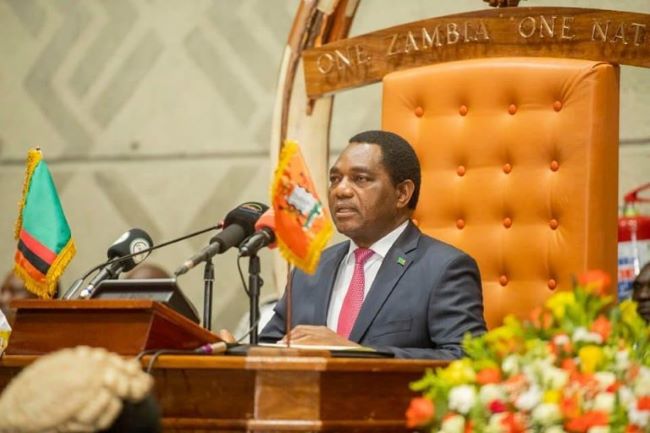
Zambia’s President Hakainde Hichilema won re-election with 60 percent of votes cast last week, the electoral commission announced Tuesday, after a race critics said was tightly managed by his government.
Thursday’s election in the copper-rich nation was largely peaceful but the run-up was tainted by opposition claims of intimidation, arrests, violence and irregularities.
The result was widely expected, with Hichilema — in power since 2021 — facing a crowded field of 13 challengers led by a former provincial minister, Brian Mundubile, making his first bid for the presidency.
Mundubile, 55, secured nearly 38 percent of the vote, Electoral Commission of Zambia chairperson Mwangala Zaloumis said.
Five of the 226 constituencies had not been tallied, she said. However, “The outstanding results are not likely to materially influence the overall result of that election.”
In a statement after his victory was announced, 64-year-old Hichilema said: “We are truly humbled by the trust you have placed in our hands.”
He added: “To those citizens who preferred the ideas presented by our opponents, we hear you, and we will continue to work for you.”
Hundreds of his supporters wearing the red colours of his UPND party poured onto the streets of the capital Lusaka, singing and dancing in celebration and lighting firecrackers.
‘Militia activity’
On Monday, Mundubile alleged there had been irregularities in the counting, claiming — without providing evidence — that documents listing the results had been tampered with, which he said risked the “integrity” of the tally.
“There are also allegations that officials in Southern Province were pressured to modify figures, with some of the alleged communication said to have been made through local government structures,” he said in a video message posted on social media.
Hours earlier, his NRPUP party angrily rejected government claims that its members were involved in militia or insurgent activity.
This followed the government’s announcement late Sunday that police had arrested 11 people, including six opposition figures, in a raid against “militia activity”.
They were “in possession of high-grade military weapons, ammunition and other materials for use in armed insurrection,” it said.
The NRPUP said shots were fired in the raid, which took place at Mundubile’s home, and a parliamentarian was hit.
It “rejects with absolute disdain the spurious and entirely false claims made by the Zambian Government that the NRPUP, its leadership or its members have been involved in insurgency, militia activity or any related conduct whatsoever,” it said.
Suspension, ‘stolen ballots’
The electoral commission was criticised for suspending vote counting for around six hours on Friday following reports of violence against polling staff and the alleged theft of ballot papers.
The count resumed after it announced the “security threat” had been contained.
International observer missions, including the European Union, said the pause risked the credibility of the process as well as voter confidence.
They also warned at the weekend that restrictions on the opposition in the campaigning period may have contributed to an uneven contest.
Oxford Economics Africa said Monday events around the vote, including the arrests, had “raised serious questions about the integrity of the results”.
“Hopes of a calm and credible election in Zambia have been dashed,” the think-tank said, warning the country was “very tense”.
The vote was seen as a test of Hichilema’s first five years in office during which the economy has returned to growth.
While he touts debt restructuring and lower inflation as key achievements, critics say the gains have yet to translate into better living standards for ordinary people.
More than 70 percent of the 22 million population lives on less than $3 a day, according to the World Bank.
Zambia, Africa’s second-largest copper producer, has a long record of peaceful transfers of power through the ballot box, with every change of president since the return to multiparty politics in 1991 achieved through elections.
Source: AFP

















18, August 2026
Samuel Eto’o, a champion’s answer to his critics 0
There are moments in the beautiful game when victory is more than a score line. There are moments when a trophy becomes a statement, a response to doubt and a vindication of those who dared to believe. Cameroon’s historic triumph at the 2026 Women’s Africa Cup of Nations is one such moment.
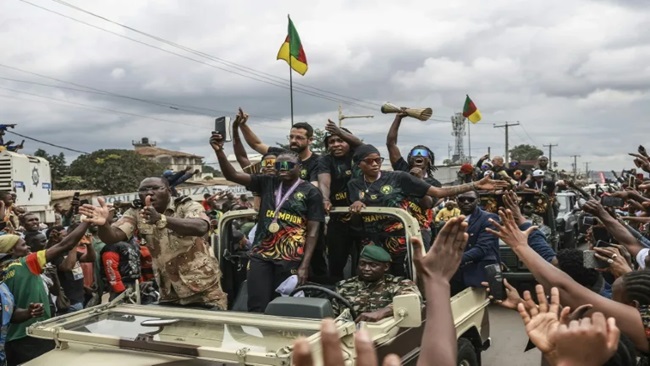
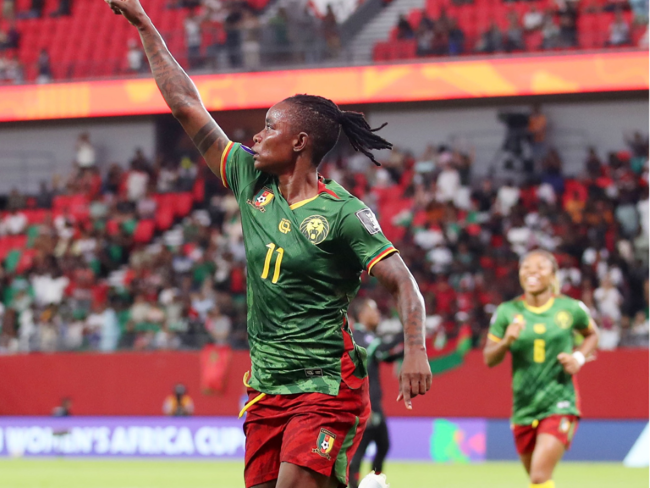
The Indomitable Lionesses’ 3–0 victory over Malawi on Sunday will be remembered as the day Cameroon finally conquered Africa in the women’s game. It was the country’s first-ever African women’s title—a landmark achievement that deserves celebration far beyond the football pitch. And at the centre of this remarkable story stands Samuel Eto’o.
The former captain of the Indomitable Lions has endured intense criticism during his tenure at the helm of Cameroonian football. His leadership has been questioned; his decisions attacked and prominent voices close to the political establishment like Mathias Eric Owona Nguini-the television and talk-show professor have openly called for his departure. For his detractors, the federation under Eto’o had become synonymous with disappointment and controversy. But football has a way of delivering its own verdict.
Cameroon’s qualification for this tournament was itself a story of redemption. The Lionesses initially failed to qualify, only to receive a second chance when the four highest-ranked losing teams were invited into the competition. Cameroon seized that opportunity with both hands. What followed was not merely survival—it was transformation.
Under the pressure of expectation and criticism, the Lionesses marched all the way to the final. There, against a Malawi side that had captured the imagination of the continent with its extraordinary fairytale run, Cameroon produced a commanding 3–0 performance to lift the trophy.
That victory belongs first and foremost to the players and coaching staff who made history on the pitch. But Eto’o, as the leader of the federation, deserves recognition for being at the helm when Cameroon finally reached this summit.
His critics may not suddenly disappear, nor should one trophy erase every legitimate debate about the administration of Cameroonian football. Leadership must always remain open to scrutiny. But criticism must also be balanced with acknowledgement when achievement arrives. And this achievement is enormous.
Samuel Eto’o does not need to answer his detractors with angry words, press conferences or political arguments. The Lionesses have provided the most powerful response possible: a trophy.
For decades, Cameroon has been a giant of African football, particularly in the men’s game. The Indomitable Lions have carried the nation’s colours to continental glory on multiple occasions. Now, for the first time, the women have written their own chapter in Cameroon’s football history. Eto’o can rightly celebrate this moment.
He inherited a football culture with enormous expectations and formidable challenges. Whatever the controversies surrounding his administration, guiding Cameroonian football to its first Women’s Africa Cup of Nations crown is a milestone that cannot be dismissed.
The Lionesses have shown that a second chance can become a historic opportunity. They have shown that setbacks do not have to define a team. And they have given their federation president something no critic can take away from him: a place in the story of Cameroon’s first African women’s championship.
Samuel Eto’o has heard the criticism. On Sunday, the Indomitable Lionesses answered it. And they answered it with gold.
By Soter Tarh Agbaw-Ebai