

23, January 2020
Biya regime claims US contribution to Gulf of Guinea Maritime Security broadens military cooperation with Cameroon 0
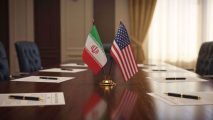
Starting in January 2020, the United States began its one-year secretariat of the G7++ Friends of Gulf of Guinea Group, with Gabon serving as co-secretariat. This group coordinates the support of international partners for the maritime security standards agreed upon by West and Central African heads of state at a summit in Yaoundé in 2013. The G7++ Friends of Gulf of Guinea Group helps secure the Gulf of Guinea against the threats of piracy, armed robbery, and other illicit maritime activities. By creating the conditions for improved maritime security, this group fosters prosperity and economic growth for all countries along the Gulf of Guinea.
This is only the latest example of U.S. partnership for the security and stability of Cameroon and the subregion. The United States has made significant contributions to Cameroon’s maritime security. In 2016, the United States funded the creation of six maritime operations centers in Limbe, Douala, and Kribi that enable naval operations at sea, and we will continue to provide maintenance and training for these centers this year. Through 2017, the United States provided several Defender class rigid hull boats to the Cameroonian military for maritime patrols. One of the Defender boats was used in the August 2019 rescue of over 100 shipwreck victims after a boat coming from Nigeria capsized near Limbe. In 2020, the Cameroonian Navy plans to purchase two 110-foot American patrol boats to greater extend its ability to patrol Cameroon’s economic exclusion zone.
Over the years, the U.S. has provided significant security assistance to Cameroon to achieve our mutual goals in maritime security in the Gulf of Guinea, countering violent extremism in the North, and supporting regional security initiatives. Our partnership remains strong. While we continue to aid Cameroon in its fight against Boko Haram and ISIS-West Africa, our role is changing as the threat from these groups evolves and the coordination and capabilities of Cameroon and regional partners mature. We are proud to support Cameroon and the Gulf of Guinea region this year in our role leading the G7++ Friends of Gulf of Guinea Group.
Source:hstoday.us














23, January 2020
Yaounde to receive the sixth US$76.1 million disbursement from the IMF 0
The Executive Board of the International Monetary Fund (IMF) today completed the fifth review of the arrangement under the Extended Credit Facility (ECF) for Cameroon. The completion of the review enables the disbursement of SDR55.2 million (about US$76.1 million), bringing total disbursements under the arrangement to SDR427.8 million (about US$590 million).
The Executive Board also approved the authorities’ request for a waiver of nonobservance of the continuous performance criteria on the non-accumulation of new external payments arrears, based on the corrective actions taken by the authorities.
Cameroon’s three-year arrangement was approved on June 26, 2017 for SDR 483 million (about US$666.1 million, or 175 percent of Cameroon’s quota— The arrangement aims at supporting the country’s efforts to restore external and fiscal sustainability and to lay the foundations for a more sustainable, inclusive and private sector-led growth.
Following the Executive Board discussion, Mr. Mitsuhiro Furusawa, Deputy Managing Director and Acting Chair, made the following statement:
“Cameroon’s performance under the ECF-supported program has been mixed. All end-June 2019 performance criteria have been met but four out of the five indicative targets for end-June were missed. Structural reforms are advancing but with delays.
“Cameroon is supporting the CEMAC’s regional external and financial stability through fiscal consolidation and enforcement of foreign exchange regulations. It will be important to also fully align the new Petroleum Code with the BEAC’s foreign exchange regulation.
“Staying the course on fiscal consolidation is essential for building fiscal and external buffers. The authorities are encouraged to broaden the non-oil revenue base, reduce discretionary tax exemptions, combat tax fraud and evasion, and enhance tax and customs administration. Completion of the Treasury Single Account reform and reduced recourse to direct interventions and exceptional spending procedures will help improve cash management and budget execution and strengthen fiscal transparency and budget credibility.
“Urgently addressing financial and fiscal risks associated with the National Oil Refinery (SONARA) is critical. SONARA’s corporate restructuring should be based on a thorough cost-benefit analysis of all available options. The planned audits of four large state-owned enterprises (SOEs) and the clearance of government cross-debts with state-owned enterprises and of government arrears will help mitigate contingent risks.
“Cameroon is at high risk of debt distress. To safeguard debt sustainability, it is important to strictly adhere to the disbursement plan for contracted-but-undisbursed loans and to limit nonconcessional borrowing to macrocritical projects for which concessional financing is not available.
“Enhancing the business climate and governance is key to promoting private sector-led and inclusive growth. Bold actions must be taken to strengthen contract enforcement, improve compliance with the Extractive Industry Transparency Initiative (EITI) recommendations and AML/CFT standards, reduce nonperforming loans, and resolve ailing banks. Further steps to diversify the export base and enhance investment efficiency remain essential to unlock Cameroon’s growth potential.
“Cameroon’s program continues to be supported by policies and reforms by the regional institutions in the areas of foreign exchange regulation and monetary policy and a recovery in regional net foreign assets that is critical to the program’s success.”
IMF Communications Department