

30, November 2019
Trump pulling Cameroon’s preferential trade status: Are human rights concerns the real reason or just a pretext? 0
President Trump has announced his intention to declare Cameroon ineligible for a trade program that allows African countries to sell goods to the United States on a duty-free basis. The reason? The Oct. 31 White House statement cited “persistent human rights violations being committed by Cameroonian security forces” as justification.
Trump’s actions might be a win for human rights activists, who have called for increased international pressure to end abuses in Cameroon. However, other U.S. interests might be driving Trump’s decision. Here’s what you need to know.
This U.S. trade program has a human rights linkage
The African Growth and Opportunity Act (AGOA) is a U.S. trade program created in 2000 for up to 49 potentially eligible countries in Africa. AGOA status allows eligible countries to export 1,800 types of products to the United States without the purchasers on the U.S. side having to pay import duties.
In exchange for duty-free access under AGOA, countries must have or be moving toward free-market economies, the rule of law and labor protections. AGOA also requires that countries not pursue “activities that undermine United States national security or foreign policy interests” or commit “gross violations of internationally recognized human rights.”
Robust human rights conditions are a critical feature of AGOA. The U.S. president may grant a country AGOA beneficiary status, subject to review and the possibility of termination for violations.
Does linking trade to human rights work?
Some scholars argue that linking trade to human rights performance could improve human rights. The threat of withdrawing trade benefits might deter governments from violating the human rights of their citizens. But this perspective does not take into account other U.S. interests that may influence decisions on AGOA eligibility and trade benefits.
New Afrobarometer data shows Africans want elections — especially if they bring change at the top
In our research on AGOA, Eric Reinhardt and I find that a country in which the United States has strong trade, investment and security interests is less likely to experience AGOA termination. If a country is highly nondemocratic or has experienced a successful coup d’etat, the United States is more likely to end its AGOA beneficiary status. However, the country’s human rights record has a less consistent and weaker effect on its AGOA status.
In fact, the decision to withdraw a country’s AGOA privileges appears to have little to do with even the most extreme human rights violations. Here’s what that means: Governments with a poor or worsening human rights record may be under-sanctioned. But countries with improving or good records may be over-sanctioned, depending on their relative importance to U.S. trade, investment and security interests.
Here’s how this played out in Kenya
Kenya’s experience in 2007 and 2008 illustrates this phenomenon. The U.S. government considered terminating Kenya’s status following a massive wave of post-election violence, which left about 1,200 dead and 600,000 displaced. U.S. officials knew that Kenya’s security forces had committed abuses, including extrajudicial killings and the torture and beatings of detainees.
But the United States decided not to terminate Kenya’s AGOA status. Why? Kenya was a leading participant in the global coalition against terrorism. In addition, business associations lobbied the U.S. trade representative’s office to retain Kenya’s AGOA eligibility to facilitate its members’ profitable AGOA apparel trade.
Another example occurred in 2018, when Trump suspended Rwanda’s duty-free access to the United States. He did so not because of Rwandan human rights violations but because the Rwandan government had banned the import of used clothing from U.S. firms.
Cameroon saw election violence — a year ago
Trump’s termination of Cameroon’s AGOA status comes one year after President Paul Biya won a seventh term in office. Biya, who has ruled Cameroon since 1982, won about 71 percent of the votes. But election violence and allegations of fraud and intimidation marred this election. Many Cameroonians were frightened to vote, because of insecurity that began in 2016, when security forces repressed largely peaceful demonstrations from the country’s Anglophone minority who demanded greater autonomy.
Cameroon has an election Sunday — and everyone already knows the winner
The violence was horrific. Government security forces used live ammunition against protesters and bystanders, killing at least a dozen people and injuring many others. The government detained and tortured others.
The conflict escalated as separatist leaders declared independence, establishing an aspirational country called Ambazonia in western Cameroon. According to the International Crisis Group, the conflict between government security forces and separatists has left 1,850 dead, displaced 530,000 and led tens of thousands to seek refuge abroad. Numerous schools closed, and more than 170 villages were destroyed. The local economy, accounting for one-fifth of Cameroon’s GDP, has been devastated.
The abuses haven’t stopped — but why is the Trump administration acting now? Cameroon recently released several political prisoners, including a key opposition leader, Maurice Kamto, and adopted a special status for Anglophone regions, a concession meant to reinforce the regions’ autonomy.
Despite the country’s overall human rights record, the United States previously considered Cameroon a key U.S. security partner in the fight against extremist groups such as Boko Haram, which is active in northern Cameroon. The government of Cameroon promoted U.S. national security interests, which insulated it from human rights sanctions.
That key security position changed nine months ago when the United States announced it would no longer provide military aid to Cameroon.
Human rights abuses by Cameroonian security forces certainly appear to violate the eligibility requirements of AGOA. However, terminating Cameroon’s status is more likely a reflection of a shift in U.S. interests in the region than it is a signal of Trump’s commitment to improving human rights.
Culled from The Washington Post












30, November 2019
Call for support for Ambazonian prisoners of conscience on Prisoners for Peace Day 0
War Resisters’ International has recently been joined by new affiliates. One of the new affiliates of our expanding network is the Ambazonian Prisoners of Conscience Support Network (APOCS Net). On this Prisoners for Peace Day, we feature APOCS Net’s work and encourage our followers to write to Ambazonian prisoners of conscience, alongside other prisoners for peace and conscience.
Below is a call for support from APOCS Net explaining their work and encouraging everyone to stand in solidarity with, and write to, Ambazonian prisoners of conscience.
The Ambazonian Prisoners of Conscience Support Network
The Ambazonian Prisoners of Conscience Support Network (APOCS Net) was started in January 2018 by Ambazonian diaspora organizers and allies in South Africa, the United Kingdom and the United States who wanted to help Ambazonians who had been rounded up and imprisoned in secret detention centers of the French Neocolonial regime in Cameroon.
The current generation of Ambazonian Prisoners of Conscience refers to people imprisoned for the expression of their conscientiously held belief that the fundamental human rights of the people of Ambazonia, formerly the United Nations Trust Territory of Southern Cameroons under United Kingdom administration, needs to be respected by all — including the French neo-colonial regime in Cameroon and its allies. The conflict between Ambazonia and Cameroon, which is the basis for the imprisonment of close to 3,000 Ambazonian political prisoners, has it roots in the military occupation of Ambazonia by Cameroon following an ill-fated UN plebiscite on a confederation between the two countries in 1961.
Six decades of disciplined protest have been based on the principles of nonviolence and the slogan “the force of argument, not the argument of force.” The recorded history of repression against indigenous Ambazonians, however, goes as far back as 1891 during the period of German colonization. Legendary leader Mountain King Kuva Likenye was deported from Buea to Wonya Mokumba because of his anti-colonial stance, where he fell ill and died soon after.
The number of Ambazonian political prisoners has skyrocketed since fall 2016, following nationwide protests to defend the Ambazonian common law–based judicial system from the Cameroonian regime’s attempt to replace it with what amounts to a colonial court system.
Leaders from all corners of Ambazonian civil society have been rounded up in the dragnet that followed this nonviolent uprising — teachers and teachers union leaders (including Vice Principal Penn Terrence and Mr. Wilfred Tassang, organizer with the Ambazonian Teachers’ Union, CAPTAC), lawyers and legal workers union leaders (including Barrister Shufai Berinyuy and Barrister Eyambe Elias, both organizers with the Ambazonia Legal Workers Union), journalists and press union leaders (including Mancho Bibixy, Tsi Conrad, Awah Paul and Felix Ngalim), student union leaders, doctors, and members of the traditional rulers association.
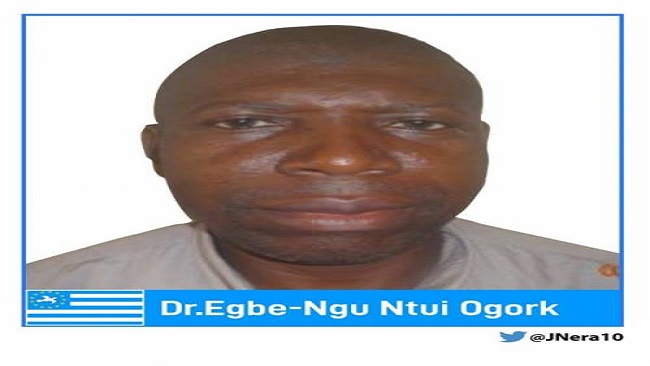
The most high-profile prisoner is Sisiku AyukTabe Julius, an open source tech developer known for his nonviolent leadership and philanthropic work, who in January 2018 was arrested along with his aides while meeting at the Nera Hotel in Nigeria, and forcibly returned to Cameroon in violation of the international legal principle of nonrefoulement.
In March 2019, the Federal High Court of Nigeria ruled that the abduction and deportation of these “Nera 10” and other prisoners by Nigerian authorities was illegal within Nigeria, and a violation of international law, and that they should be immediately released and returned to Nigeria. Yet they are still being imprisoned by the Cameroon regime.
These prisoners of conscience continue to provide leadership from behind bars, and APOCS Net works to support their physical and emotional well-being, to gather and disseminate information that is relevant to their struggle, and to organize solidarity actions in consultation with their needs and campaigns. We also work to support imprisoned human rights defenders in Cameroon, such as the Kamto 203 and l’Association pour la Défense des Droits des Etudiants au Cameroun (ADDEC), as well as other political prisoners in the rest of the Francafrique controlled territories. APOCS Net actively seeks to contribute to the building of a global network in solidarity with imprisoned human rights defenders all over the world.
Below is information on how you can write to the Ambazonian prisoners of conscience named in this article. Follow the links to read more.
The Nera 10:
Write to the Nera 10 prisoners at the following address:
Prison Principal Kondengui Yaoundé
B. P 100, YAOUNDÉ
Cameroon
NOTE: write to each prisoner individually, using their individual names; do not use the term Nera 10!
Write to Penn, Mancho and Tsi at:
Prison Centrale de Yaoundé
B. P 100, YAOUNDÉ
Cameroon