
30, January 2019
French Cameroun Crisis: Opposition Vows to Defy Paul Biya’s Government 0
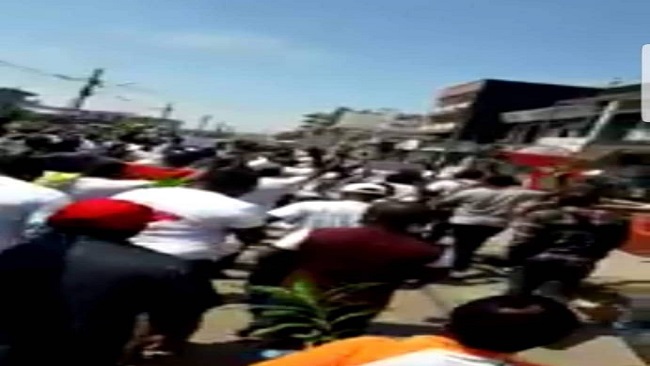
Cameroonians are taking their grievances against the regime of President Paul Biya to the world. Over the weekend, Cameroonians occupied the embassies of their country in Berlin and Paris, to support protests back home.
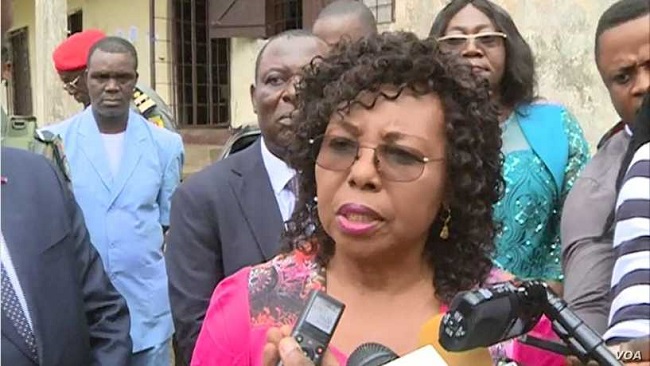
Protests continued on Monday in the capital, Yaounde, outside a police station, after at least six people – including opposition municipal council member and lawyer Michele Ndoki – were wounded and 117 people were arrested over the weekend in anti-government demonstrations. The government denied allegations that shots had been fired by security forces. But Ndoki and another opposition member, Celestin Djamen, suffered bullet wounds to the leg.
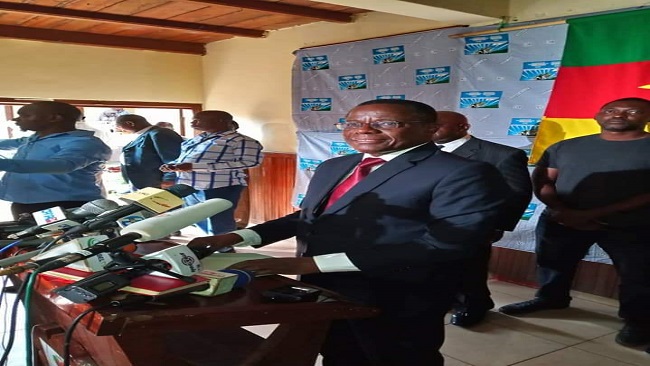
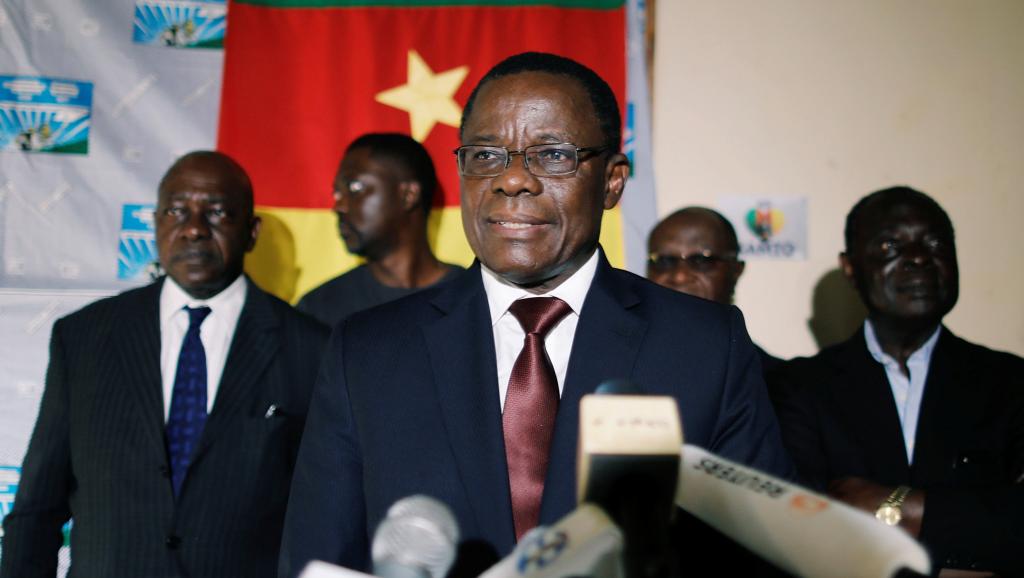
The government has reacted by accusing the opposition led by Maurice Kamto of wanting to destabilize the country. Territorial administration minister Paul Atanga Nji, responsible for licensing political parties, threatened to suspend Maurice Kamto’s Cameroon Renaissance Movement (MRC), for failing to respect Cameroon laws. “The MRC political party and its leadership have been very notorious in the disruption of public order since presidential elections were held in Cameroon,” he said.
The opposition won’t give up
Paul Biya, who has been in power for more than 36 years, won a seventh consecutive term in elections on October 7. But the poll was marred by fraud allegations, low turnout, and violence. Kamto’s party has held sporadic protests since then to dispute the result. The party leader himself, whom the government has refrained from arresting as yet, told his followers: “I am out to fight injustice. I am a son of the country who has decided to fight for and with his people until victory is achieved.”
Biya’s government has banned demonstrations and the security forces have not been shy in using force to disperse protesters. Human rights activist Ateba Bruno of the Cameroon Centre for Democracy says that not allowing peaceful protests is another way used by the government to stifle freedom of expression. “They refer to opposition parties as those who want to tarnish Cameroon’s image to the outside world. But after all that we have seen, I ask if it isn’t the opposition or the government who truly want to tarnish the image of Cameroon. We know exactly what is happening and we should stop such acts which do not honor our country,” he told DW.
Calling on the world to pay attention
The protests gained a new dimension over the weekend when Cameroonians briefly invaded andoccupied their country’s embassies in Paris and Berlin. In a video published on social platforms online, Daniel Essissima, one of around 50 protesters in the French capital, said that “Cameroonians are fed up with being taken for idiots.” About ten Cameroonians followed suit in Berlin, without inflicting as much damage to their embassy there as was the case in Paris. A large police squad removed the people from the Berlin premises in the early hours of Sunday.
The action taken by Cameroonians in France and Germany is a sign of growing resistance against Biya. The president is fighting on several fronts at once, including a revolt in the Southwest and Northwest Anglophone regions against what they perceive as discrimination by the Francophone majority. Armed separatists have been clashing with the Cameroonian military almost daily in the country’s equatorial forest.
A slew of problems for Biya
Attacks by Nigerian Boko Haram jihadists expanding into neighboring countries is another conflict Yaounde has to contend with. In the east, armed groups from the Central African Republic are an additional source of instability. All of this is putting a severe strain on Cameroon’s economy, further stoking grievances. And the loss, in November, of the right to host this year’s African Cup of Nations as a result of delays and concerns over violence was another serious blow to Cameroon’s prestige.
The ongoing conflicts have caused a drastic increase in the need for humanitarian assistance. United Nations Development & Humanitarian Coordinator Allegra Baiocchi recently said that the organization estimates that some 4.3 million Cameroonians, or one in six of the population, require lifesaving assistance.
Source: DeutschWelle












30, January 2019
Francophone Crisis: Two Journalists Detained While Covering Opposition Gathering 0
Authorities in Cameroon should immediately release journalists Théodore Tchopa and David Eyengue Nzima, the Committee to Protect Journalists said today. The two journalists, from privately owned daily newspaper Le Jour, were arrested yesterday while covering an opposition gathering in Douala, Denis Nkwebo, their deputy editor in chief and the president of the Cameroonian journalists’ trade union, told CPJ. Their arrest was also reported by local outlets and journalists on social media.
The journalists were detained at a house where opposition leader Maurice Kamto, who claims to have won the 2018 presidential election, and opposition activists were also arrested, Nkwebo told CPJ. They were mistaken for activists who were gathered at the house, said Nkwebo, adding that the journalists have since been transferred to the judicial police headquarters in the capital, Yaounde, 230 km (143 miles) away. Kamto and the activists are also still in custody, according to Nkwebo.
“Théodore Tchopa and David Eyengue Nzima are journalists who were arrested for simply covering a newsworthy event, and must be freed immediately without condition,” said Angela Quintal, CPJ’s Africa program coordinator, in New York. “Cameroonian authorities should stop trying to intimidate and censor journalists who have a duty to keep citizens informed about the political and economic situation.”
In a statement sent to CPJ, Charles Ngah Nforgang, the union’s spokesman, said first-hand reporting from the ground remained the main source of information for journalists and their presence at such gatherings could not be considered a crime.
CPJ’s calls and text messages to the offices of Cameroon’s deputy justice minister, Jean De Dieu Momo, and the newly appointed communications minister, René Sadi, went unanswered. The police’s national communications chief, Joyce Ndjem, said she does not give comment over the phone and CPJ should come to her office.
Cameroon was the third worst jailer of journalists in Africa, after Egypt and Eritrea respectively, with at least seven journalists behind bars for their work as of December 1, 2018, according to CPJ’s annual prison census.
Source: CPJ