18, March 2026
Yaoundé: Customs launches mobile device duty system to recover lost revenue 0
Cameroon’s Directorate General of Customs (DGC) has activated a new electronic mechanism for collecting import duties on mobile phones, tablets and other mobile devices, effective 16 March 2026, after customs revenue from these goods collapsed from 12 billion CFA francs to about 100 million CFA francs over a relatively short period.
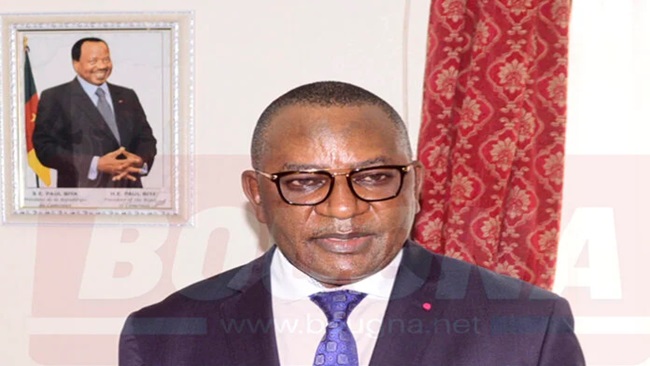
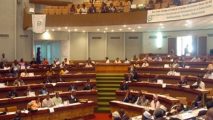
The system was launched during a briefing in Yaoundé presided over by Director General Fongod Edwin Nuvaga, bringing together major importers of mobile devices to present the new collection architecture ahead of its go-live date.
According to Customs, the reform is based on Article 7 of the 2019 Finance Law, which established an electronic mechanism for collecting duties on imported mobile terminals. A first implementation attempt in 2020 met with resistance and was shelved, before the mechanism was reintroduced following a successful test phase.
Importers liable, mobile money payments
Under the new framework, the legal taxpayer is the importer, not the consumer. Payments will be made via Mobile Money, Orange Money and other secure digital payment platforms, replacing the previous system based on communication credit.
Mobile operators will no longer collect and remit customs duties. Their role is now limited to blocking and unblocking devices within the new system.
Paul Olivier Libii, senior inspector at the DGC’s Division of Legislation and Disputes, detailed the system’s technical architecture, which connects three platforms: Camcis, the customs management system; a partner platform dedicated to device information management; and mobile operators’ operating systems.
“From the moment of importation, upload to the manifest all IMEI numbers of the devices you are importing; the manifest is then transferred electronically to Camcis. Once in the country, you validate a customs declaration, which will be automatically retrieved by the platform, which then analyses the IMEI numbers you uploaded,” Libii said.
Amnesty for active devices, regularisation for stock
Devices that had connected at least once to the networks of MTN, CAMTEL or Orange before 16 March 2026 are exempt from the new mechanism and benefit from fiscal amnesty.
However, devices in stock that had not connected to any network by that date must be regularised with the nearest customs office. Importers have two months to submit IMEI files for these devices, along with documents confirming regular customs clearance.
The framework for handling pending cases was outlined by Marcelin Djeuwo, Head of the DGC’s IT Division, during the briefing.
Libii described the system as a tool to enhance transparency, ensure fiscal compliance, reduce risks related to money laundering and terrorist financing, and protect the economy against fraud and contraband. The reform is also expected to modernise customs administration and sanitise the mobile device market.
Eight categories of mobile phones have been identified under the new framework, with the DGC indicating it remains open to additional proposals. Major importers present at the briefing expressed support for the reform, while Customs noted that the system’s success will depend on the buy-in of all stakeholders and targeted actors.
Source: Business in Cameroon




















20, March 2026
Smarter Water Use Could Feed 10 Billion and Create Nearly 250 Million Jobs 0
Rebalancing water use across the global food system is key to meeting future food demand sustainably and could generate 245 million long-term jobs, largely in Sub-Saharan Africa, according to a new World Bank Group report launched today.
The report – Nourish and Flourish: Water Solutions to Feed 10 Billion People on a Livable Planet – notes that current agricultural water management practices, marked by overuse in some countries and underuse in others, can only sustainably support food production for less than half the global population. By 2050, 10 billion people will need to be fed. Addressing both the overuse that depletes water in stressed regions and the underuse that leaves available water and productive capacity untapped in water-abundant regions will be essential to meet that demand sustainably.
It introduces a new framework for agricultural water management that links water availability with food production and trade. By categorizing countries based on water stress and their food import or export status, the framework helps identify where expanding rainfed agriculture can increase food production, where irrigation investments can unlock jobs and growth, where water use must be rebalanced to protect ecosystems and future productivity, and where trade offers a more sustainable path than local production.
“The way we manage water for food will have profound implications for jobs, livelihoods, and economic growth. By making smarter choices about where crops are grown, how water is allocated, and how trade supports food security, we can strengthen resilience, expand opportunity, and safeguard the resources which we all rely on,” said Paschal Donohoe, Managing Director and Chief Knowledge Officer of the World Bank Group.
Realizing these outcomes will require stronger private sector participation and financing alongside public investment, supported by effective policies, institutions, and regulations to boost food production, create jobs, and support sustainable growth. Public funding alone cannot deliver the sustained services, innovation, and scale needed to expand irrigation, improve performance, and maintain results. Farmers, who are the primary users of irrigation and its main investors, are already willing to co-invest when access to finance, quality equipment, markets, and digital tools reduces the risks and transaction costs they face.
“When investments in infrastructure and natural resources, business-enabling policies, and private capital mobilization come together, the impact can be greater than the sum of its parts,” said Guangzhe Chen, Vice President for Planet at the World Bank Group. “By linking global evidence with country realities, this framework can help policymakers navigate trade-offs and adapt food production to today’s water and climate realities—delivering food, jobs, and resilience together.”
Expanding irrigation where water is available, alongside modernizing existing systems, is estimated to require an additional $24–70 billion per year through 2050. Governments already spend roughly $490 billion annually on agricultural support, most of it on subsidies. Redirecting a portion of current spending—combined with regulatory reform, use of blended finance, and public-private partnerships—will crowd in private capital, including co-investment by farmers themselves, and support financially sustainable water and food security.
The World Bank Group works alongside countries, companies, partners and people to translate these insights into action by combining policy reform, public investment, and private capital to strengthen food systems, create jobs, and protect natural resources. It has committed to doubling annual agribusiness financing to $9 billion by 2030 and mobilizing an additional $5 billion per year under the AgriConnect initiative to help smallholders move from subsistence to surplus. Through the Water for Food and Water for the Planet pillars of its Water Strategy Implementation Plan, the World Bank Group addresses the twin challenge of water and food security by strengthening food production systems and improving farmer livelihoods.
Reported by the World Bank Group