20, June 2026
Promote 2026 opens in Yaoundé 0
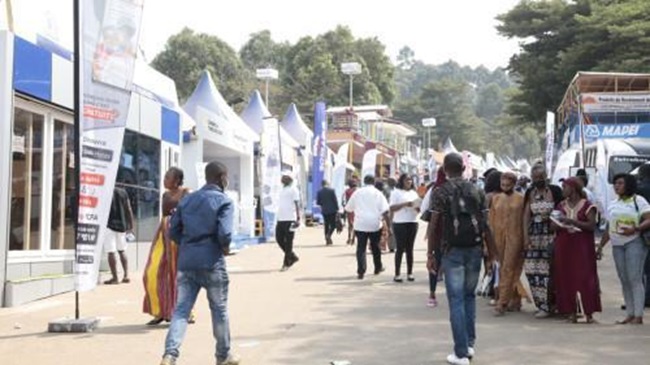
Cameroon’s small and medium-sized enterprises are showcasing their products and services at the 10th edition of Promote, the International Trade Fair for Business, SMEs, and Partnerships, which opened on June 12 at the Yaoundé Conference Center.
According to organizers, 236 local SMEs are taking part in the event, which runs through June 21 and remains one of the most important business gatherings in Central Africa.
Many of the participating companies received support from either the government or large private-sector firms. Afriland First Bank, one of Cameroon’s leading lenders and a longtime supporter of the event, sponsored the participation of 40 SMEs this year. The Ministry of Economy financed the attendance of another 100 local businesses.
Held under the theme, “Private Enterprises and the Business Environment: Navigating National and Global Economic Challenges,” Promote 2026 features a broad program that includes an exhibition, conferences, thematic workshops, business meetings, and networking activities.
Organized every two years by the Inter-Progress Foundation on behalf of the Cameroonian government, Promote has grown into the largest economic forum in Cameroon and the wider Central African region. The event now attracts about 1,000 exhibitors from both Cameroon and abroad.
Participants from the public and private sectors represent a wide range of industries, including agriculture and agribusiness, energy, manufacturing, construction, mining, infrastructure, information and communication technologies, healthcare, banking, finance, insurance, tourism, crafts, and communications.
Source: Business in Cameroon












21, June 2026
Trans-Saharan Gas Pipeline: an African dream that could reshape world energy markets 0
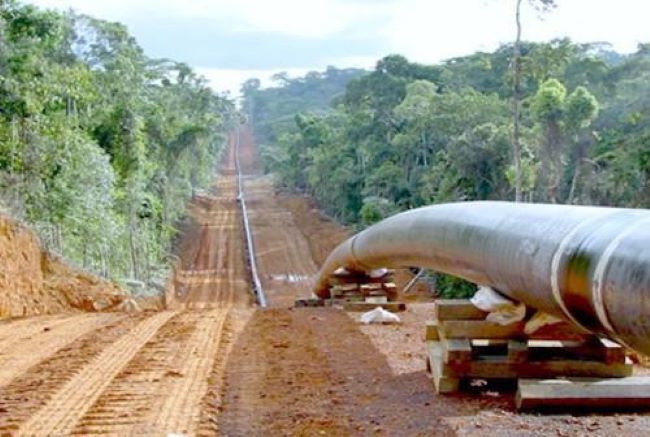
After several false starts, work on the Trans-Saharan Gas Pipeline (TSGP) officially restarted in early June amid the recent thawing of relations between Niger and Algeria. The megaproject linking Nigeria with the two countries began with an initial construction phase in early April in Algeria’s Adrar region.
Over 4,000 kilometres long, the pipeline will enable the transport of Nigerian gas through Niger and Algeria, where it can then be exported to European markets, namely through Italy and Spain by way of the Mediterranean Sea.
“This project is not at all new, but it’s ramping up,” said Brahim Oumansour, associate researcher at the Institute for International and Strategic Relations (IRIS). “Algeria and Niger have chosen to put their differences aside for a common goal, in a geopolitical context that is favourable to them.”
Long road to construction
The project of a pipeline between Algeria and Europe has existed since the 1980s. Since then, the project has experienced a long and winding road, with long pauses as it was relegated to the drawers of ministries and research departments. Nigeria, Niger, and Algeria first signed a deal in 2009 to “define the project” – with the first delivery of gas scheduled for 2015. After several years of delays, the project was revived in 2022 with the signing of a memorandum of understanding in Algiers.
“The feasibility studies for this gigantic project and the issue of financing took a long time,” said Algerian political scientist Hasni Abidi. “The three partner companies [Algeria’s Sonatrach, Nigeria’s NNPC and Niger’s Sonidep] had to find a financial arrangement. Niamey didn’t have the financial resources necessary for the construction.”
The project was also delayed because of diplomatic tensions such as those caused by Niger’s 2003 coup d’état which created a rift in relations between Niamey and its partners.
In mid-February of this year, Algerian President Abdelmadjid Tebboune welcomed the head of Niger’s junta, Abdourahamane Tiani, on an official visit in Algiers during which both sides hailed their “brotherhood”. The diplomatic engagement allowed for the revival of the ambitious project, which gained traction amid the energy supply shock created by the Middle East war and the destruction of energy infrastructure in the Gulf countries.
Corridor between two African gas giants
The TSGP’s ambition is to connect two natural gas powerhouses. Algeria is the leading producer in Africa, and Nigeria, which has the continent’s largest untapped reserves (6 billion cubic meters, equivalent to a quarter of Qatar’s reserves), is the third-largest. When combined, the two countries account for over half of Africa’s natural gas production and reserves.
“This is a very ambitious project, and one that will reshape the landscape of regional energy business,” said Abidi.
Dubbed the “project of the century” in Africa, the 4,128-kilometre-long pipeline begins in Nigeria’s Warri City and ends in Algeria’s Hassi R’Mel in the northern Sahara.
On a map, the pipeline appears as a nearly vertical line, with 1,000 kilometres running north through Nigeria, 840 kilometres through Niger and 2,300 kilometers through Algeria.
Some 1,800 kilometres still need to be built: 100 in Nigeria, 700 in Niger and 1,000 in Algeria.
Construction on the Algerian portion was officially launched on June 4 during a ceremony in the country’s southern Aoulef region attended by the three participating countries’ energy ministers.
Nigeria is scheduled to begin construction on its portion in early 2027, according to its minister of petroleum.
Financial and geostrategic godsend
The Trans-Saharan Gas Pipeline will enable the transport of around 30 billion cubic meters of natural gas annually from Nigeria to Europe via Algeria with its existing Transmet and Medgaz pipelines, which lead to Italy and Spain.
This volume represents about 11 percent of Europe’s annual imports of natural gas (270 billion cubic metres in 2025).
Other quantities of natural gas will be liquefied at Algeria’s Arzew and Skikda refineries before being exported to Europe in ships in the form of liquefied natural gas (LNG).
“Algeria wants to reinforce its status as a reliable energy partner for Europe, but its capacities are limited. The partnership with Nigeria should allow it to increase its volumes to meet European demand,” said researcher Brahim Oumansour.
One of Africa’s poorest countries, Niger intends to take advantage of transit rights for the gas and attract new infrastructure and energy investments, which create jobs.
Obstacles and limitations
Despite the project’s relaunch, several obstacles jeopardise its ambitious timeline which aims for completion by 2029.
The cost of the pipeline’s construction was approximately $13 billion when it launched in 2009. Since then, the cost has increased to around $20 billion, some energy sector experts estimate. The increasing cost of raw materials and the challenging desert terrain are largely to blame. The countries participating in the project have not yet disclosed the project’s current budget.
African and international banks might lend their support to the Algerian and Nigerian investments, but no confirmation has been given thus far.
The pipeline also has security issues since the infrastructure crosses zones, particularly in northern Nigeria and Niger, where armed groups and trans-border smuggling networks are active.
Competition from Morocco
Another major gas project spearheaded by Morocco, Algeria’s main regional rival, could overshadow the TSGP. The Africa Atlantic Gas Pipeline (AAGP) is a 6,000-kilometre-long project which includes 13 countries. The pipeline connects Nigeria to Morocco with the same objective as the TSGP: to export Nigerian gas to European markets.
The cost of the project is estimated at $25 billion.
“These two projects are in competition because they are aiming for the same customer,” Oumansour said. “Algeria is ahead, since the trans-Saharan project has made more progress. The Moroccan project depends on the construction of complex offshore structures and many more partners.”
These rival projects could both eventually win over the European market. The demand for natural gas in the European Union is higher than ever since the bloc turned its back on Russia for invading Ukraine. Iran’s chokehold over the Strait of Hormuz also reinforced European political will to strengthen nearby energy partnerships with Africa.
Yet the volatility of energy prices remains a significant risk factor for the viability of these large projects, Abidi said.
“These are colossal investments over the medium and long term. The price of gas has increased significantly, but it could fall again if Iran enters the gas market or if the war in Ukraine ends. The demand is currently there – but nothing guarantees the financial success of these projects.”
Source: France 24