11, July 2026
Canada positions Cameroon as key CEMAC partner 0
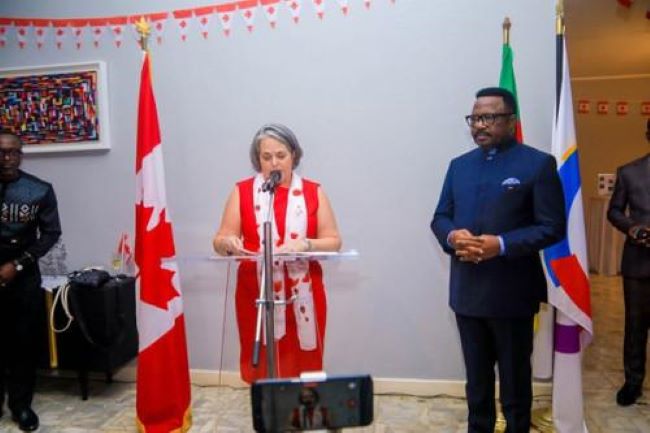
Canada wants to expand investment and business partnerships with Cameroon. Officials used this year’s Canada Day celebrations in Yaounde to present the country as a strategic economic partner in Central Africa.
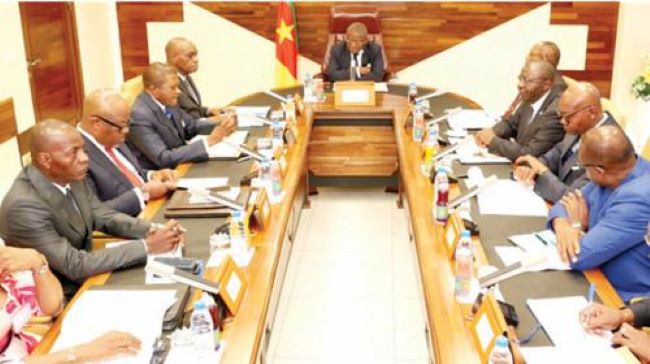
The reception, hosted by the High Commission of Canada on July 8, brought together members of the Cameroonian government, diplomats, parliamentarians and a visiting Canadian parliamentary delegation attending the 51st Session of the Parliamentary Assembly of La Francophonie (APF), which runs in Yaounde until July 12.
Speaking at the official residence of Canada in Yaounde, Canadian High Commissioner Marie-Claude Harvey said Ottawa is stepping up its economic engagement across Africa and sees Cameroon as a key partner because of its strategic location and economic potential.
“Here in Cameroon, we are working with you to strengthen the economy, support entrepreneurship and promote growth that is inclusive, particularly for women. Because investing in people is the best investment there is,” Harvey said.
She added that Canada’s renewed engagement with Africa aims to deepen economic partnerships with countries pursuing sustainable and inclusive growth.
“Thanks to its strategic position in Central Africa, Cameroon is a leading partner. We therefore wish to encourage more investment, innovation and mutually beneficial partnerships between our two countries,” she said.
Harvey also pointed to broader areas of cooperation between the two countries, including education, governance, innovation, entrepreneurship and cultural exchanges, while reaffirming Canada’s commitment to multilateralism at a time of heightened global economic and geopolitical uncertainty.
Parliamentary Delegation Visits Yaounde
The Canada Day celebration coincided with the visit of a high-level Canadian parliamentary delegation led by Marie-France Lalonde, president of the Canadian Branch of the Parliamentary Assembly of La Francophonie.
The delegation is taking part in the 51st Session of the APF, where representatives from 99 member sections are meeting to discuss issues including multilateralism, peacebuilding and sustainable development.
“Over the coming days, we will have the opportunity to exchange views with Francophone parliamentarians from every continent on issues that affect us all, including multilateralism, peace efforts and sustainable development. The relationship between Canada and the Francophonie is entering a pivotal period,” Lalonde said.
The gathering also provided an opportunity for Canadian officials to reaffirm their ambition to broaden economic cooperation with Cameroon by encouraging greater investment, innovation and private-sector partnerships.
Source: Business in Cameroon



















12, July 2026
Cameroon cocoa farm gate price rises 0
With one week to go before Cameroon’s 2025-2026 cocoa season ends on July 15, trading activity is picking up. Farmgate prices rose by 250 CFA francs per kilogram in two days, reaching their highest level since the season began.
According to data released by the National Cocoa and Coffee Board’s Commodity Information System, cocoa traded at between 2,750 and 2,850 CFA francs per kilogram on July 9, nearing the 3,000 CFA franc mark. On July 7, prices ranged from 2,500 to 2,600 CFA francs per kilogram, according to the same source.
The latest increase may reflect stronger buying activity toward the end of the season, although available data do not yet show how significant it is. More broadly, it continues a recovery that began about two months ago. Despite repeated increases across producing regions, prices remained below 2,000 CFA francs per kilogram until June 22. The 2025-2026 cocoa season officially began in Mbankomo on August 7, 2025.
A Less Favorable International Market
Current prices nevertheless remain far below the records set during the previous two seasons. In the 2024-2025 season, cocoa prices reached as high as 5,400 CFA francs per kilogram. A year earlier, during the 2023-2024 season, prices climbed to about 6,000 CFA francs per kilogram in some producing areas.
Those exceptional prices fueled high expectations for the 2025-2026 season. When the season began, Cameroonian authorities forecast farmgate prices of between 3,200 and 5,400 CFA francs per kilogram. Market conditions, however, proved significantly less favorable than expected.
The gap between the initial forecasts and actual prices is partly attributable to a reversal in the international cocoa market. After supply constraints pushed prices to historic highs, the latest available estimates from the International Cocoa Organization show that the global market moved back into surplus in the 2024-2025 season, following a historic deficit in 2023-2024.
Improved supply conditions, combined with slowing industrial demand in some consumer markets, helped ease upward pressure on prices. The increase recorded in Cameroon toward the end of the 2025-2026 season has provided some relief to farmers, but prices remain well below the exceptional peaks of the previous two seasons.
Source: Business in Cameroon