21, July 2026
Biya regime gives ship owner 15 days to clear wreck from Douala Port Channel 0
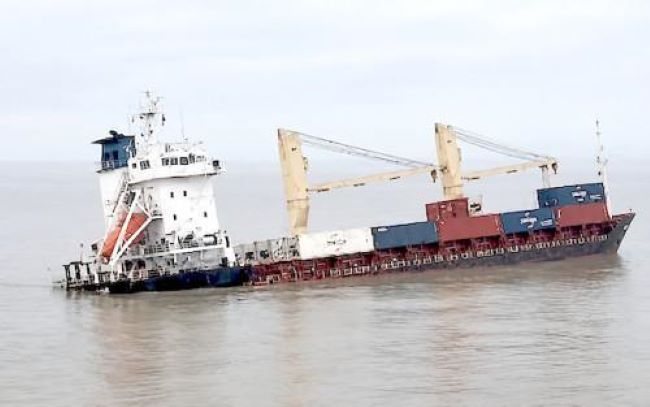
Cameroon has given the owner of the Black Rhino 15 days to remove the container ship from the access channel of the Port of Douala-Bonabéri after it ran aground following a collision earlier this month, as authorities seek to prevent further disruption at the country’s main maritime gateway.
The vessel, which is carrying about 150 containers, has remained stranded in the channel since the accident on the night of July 11-12. Within eight days, the shipowner must submit a final report prepared by its appointed experts, outlining the technical solution selected and a detailed recovery plan.
Specialists from marine salvage firms Wave Group and SMIT have already arrived in Douala. The MSM Dolores, a vessel that could assist in the operation, is also reportedly ready to depart from Bata in Equatorial Guinea.
The recovery plan must detail each stage of the operation, including stabilizing the vessel, removing containers, lifting and towing procedures, refloating operations, safety measures, pollution prevention, and the expected timeline.
If the shipowner fails to submit the plan within the deadline, the government will issue a formal eight-day notice. Should the company still fail to act, the authorities may carry out the operation themselves at the owner’s expense, in accordance with Cameroonian law.
Collision Blocks Part of the Access Channel
The measures were announced after a crisis meeting chaired on July 20 in Douala by Transport Minister Jean Ernest Massena Ngalle Bibehe.
The collision occurred during the night of July 11-12 in the port’s navigation channel. It involved the Sea Honor, a Tuvalu-flagged cargo ship leaving the port, and the Cyprus-flagged Black Rhino, which was entering the harbor.
The Black Rhino sustained damage near its bridge and was at risk of sinking. The Port Authority of Douala immediately activated its emergency response team.
The Sea Honor was freed and later towed to an anchorage area for repairs. To prevent it from sinking, the Black Rhino was intentionally grounded alongside the channel’s red buoy line, allowing maritime traffic to continue as much as possible. All 15 crew members were evacuated safely, and no fatalities were reported.
Navigation Restrictions Remain in Place
Although shipping resumed a few hours after the collision, the stranded vessel and its cargo continue to restrict navigation through the channel.
According to preliminary findings from the Port Authority of Douala, a steering failure aboard the Black Rhino may have caused the accident. However, that theory remains subject to the ongoing technical investigation.
The inquiry will determine the exact circumstances of the collision and assess the responsibilities of both vessels, their crews, and any other parties involved in the port maneuvers. Keeping the ship in the channel continues to pose operational risks by reducing maneuvering space, limiting access for some vessels, slowing traffic, increasing waiting times, and raising costs for shipping companies.
Authorities are also monitoring environmental risks, including potential hull damage, fuel leaks, and the possibility of containers falling into the water.
Strategic Trade Route at Stake
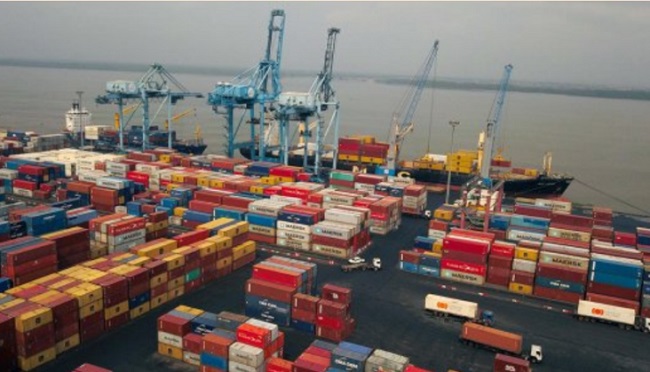
The Port of Douala handles most of Cameroon’s maritime trade and serves as the main gateway for cargo bound for Chad and the Central African Republic.
Any prolonged disruption to the navigation channel could therefore affect imports, exports, and supply chains in all three countries. The government’s ultimatum reflects its determination to speed up the recovery while ensuring that the shipowner bears the cost of the operation.
Beyond the immediate response, the accident has also highlighted the operational constraints of the Port of Douala’s busy and physically limited navigation channel, where incidents can quickly disrupt maritime traffic.
For the government, the priority is to remove the vessel as quickly as possible, maintain uninterrupted port operations, and preserve confidence among shipping companies.
Source: Business in Cameroon




















28, July 2026
Cameroon’s hydrocarbon imports rise to CFA274.3 billion 0
Cameroon spent CFA274.3 billion on hydrocarbon imports in the first quarter of 2026, a 2.5% increase from a year earlier, even as revenue from crude oil exports fell sharply, according to the National Economic and Financial Committee’s (CNEF) latest economic report.
Between January and March, crude oil exports generated CFA152.4 billion, down 14.4% from CFA178 billion during the same period in 2025. The figures underscore Cameroon’s energy paradox: although the country produces oil and natural gas, it remains heavily dependent on imported refined petroleum products to meet domestic demand.
Fuel imports totaled CFA267.7 billion in the first quarter of 2025. The additional CFA6.6 billion spent this year kept petroleum products as Cameroon’s largest import category, ahead of machinery and mechanical equipment worth CFA115 billion and vehicles valued at CFA82.8 billion.
Export Revenue Falls Despite Higher Oil Prices
The decline in crude oil export earnings came even as global energy prices strengthened. According to the World Bank, Brent crude averaged $103.7 per barrel in March 2026, up 42.8% from $72.6 a year earlier. European benchmark natural gas prices also rose 35.3% over the same period to $17.91 per million BTU.
The drop in Cameroon’s export revenue despite higher prices suggests lower export volumes or changes in the country’s export mix. However, the CNEF report does not provide enough data to determine the exact cause.
The first-quarter figures extend a longer-term decline. Crude oil export revenue, which peaked at CFA1.51 trillion in 2022, fell to CFA705.6 billion in 2025, a drop of more than 50% in three years. Liquefied natural gas exports have followed a similar trend, declining from CFA631.5 billion in 2022 to CFA363.3 billion in 2025, a 42.5% decrease.
Import Bill Remains High
Meanwhile, Cameroon’s spending on imported petroleum products remains structurally high. After reaching a record CFA1.15 trillion in 2022, hydrocarbon imports totaled CFA891.1 billion in 2025. The increase recorded during the first quarter suggests the country’s energy import bill will remain substantial this year. Petroleum imports alone were worth more than twice the value of machinery imports during the period.
The country’s dependence on imported fuels largely stems from the shutdown of the National Refining Company’s (Sonara) refinery following the fire that damaged part of its facilities. As a result, Cameroon exports crude oil while importing gasoline, diesel, kerosene and other refined petroleum products needed by households, businesses and public institutions.
That structure exposes the country to swings in global oil prices, shipping costs and exchange rate movements. It also puts pressure on foreign exchange reserves, the trade balance and public finances, particularly when the government subsidizes fuel prices to shield consumers from international market fluctuations.
BEAC Urges Faster Refinery Projects
The Bank of Central African States (BEAC) is urging Cameroon to accelerate the reconstruction of Sonara and move forward with the planned C-Star refinery in Kribi.
In its report on inflation trends in the CEMAC region through March 2026, the central bank said both projects are essential to reducing the country’s exposure to global oil price volatility and limiting its impact on domestic fuel prices. The government is no longer planning a simple repair of the Sonara refinery. Instead, it intends to completely rebuild and modernize the facility at an estimated cost of about CFA700 billion.
The project includes replacing facilities destroyed in the fire, which damaged four of the refinery’s 13 processing units and a crude oil storage tank. It also calls for adding new processing capacity, including a hydrocracker. The new equipment is expected to improve the refinery’s ability to process domestic crude and increase production of fuels for the local market.
Whether those investments move forward will play a key role in reducing Cameroon’s dependence on imported fuels. Without restoring domestic refining capacity, the country is likely to continue spending heavily on petroleum imports even as revenue from its own hydrocarbon exports continues to decline.
Source: Sbbc